









As the academic year commences across the nation, the dialogue surrounding the educational experience is undergoing a profound transformation. While academic benchmarks and standardized testing once dominated the discourse, a new priority has emerged at the forefront of the American educational landscape: the mental and emotional well-being of students. From the introduction of Social-Emotional Learning (SEL) in elementary classrooms to the complex digital stressors facing university students, the challenges of modern life are requiring a more nuanced, holistic approach to mental health support.
This comprehensive report examines the current state of student mental health through three critical lenses: the evolution of "mental health parenting" in early education, the psychological impact of a 24/7 sensationalist media cycle on young adults, and the often-overlooked "advocate’s paradox," where those leading the charge for mental health awareness struggle to maintain their own stability.
Main Facts: A Multi-Generational Shift in Wellness
The fundamental landscape of mental health in schools has shifted from a reactive model—treating issues only when they reach a crisis point—to a proactive, integrated model. At the elementary level, this is exemplified by the rise of Social-Emotional Learning (SEL). Educators are now teaching children emotional literacy, using tools like "gratitude jars" and breathing exercises to help them navigate stress before it manifests as behavioral or academic failure.
However, as students age, the stressors evolve. For college-aged students, the primary mental health challenge is often external and digital. The transition from the "nightly news" era to a 24/7, algorithm-driven media environment has created a constant state of "hyper-vigilance." Research indicates that while media consumption may not be the sole cause of clinical depression, it acts as a powerful catalyst, exacerbating existing symptoms of anxiety and PTSD.
Simultaneously, a new demographic of "student advocates" has emerged. These are young leaders who volunteer for organizations like Active Minds to dismantle the stigma surrounding mental illness. Yet, recent reports suggest a growing trend of burnout among these advocates, who often prioritize the collective well-being of their peers at the expense of their own psychological health.
Chronology: From Stigma to Systemic Integration
To understand the current state of student wellness, one must look at the trajectory of the last two decades. Historically, mental health was a taboo subject in both the home and the classroom.
The Decade of Awareness (2004–2014):
Ten years ago, the primary hurdle for organizations like Active Minds was simply convincing school boards and parents that mental health was a relevant factor in academic success. During this period, mental health was largely seen as a "private family matter." The dialogue was focused on crisis intervention rather than prevention.

The Integration Era (2015–2020):
The mid-2010s saw the formalization of SEL in public schools. This period marked a turning point where children began bringing the language of therapy and emotional regulation home to their parents. This bottom-up education forced a generational shift, as parents—many of whom were raised in "no-talk" households—were suddenly required to engage with their children’s emotional needs in a more structured way.
The Digital Deluge and Pandemic Pivot (2020–Present):
The COVID-19 pandemic accelerated these trends, exposing the fragility of the student mental health system. The return to in-person learning revealed deep-seated anxieties; for instance, educators noted that students who struggled during the pandemic often "cried silently" rather than asking for help, highlighting a breakdown in communicative resilience. Furthermore, the reliance on digital devices during lockdowns solidified the 24/7 media consumption habit that now defines the college experience.
Supporting Data: The Psychological Cost of Connectivity
The impact of modern media on student mental health is perhaps the most significant environmental factor facing young adults today. In interviews with experts such as Dr. Mary McNaughton-Cassill, a psychologist and researcher at the University of Texas at San Antonio, the data suggests a "chicken-and-egg" problem regarding media and anxiety.
Dr. McNaughton-Cassill’s research highlights that the sheer volume of information available today is unprecedented. Historically, information was scarce and difficult to obtain. Today, the challenge is not access, but the "sifting" of information. For the average college student, the amount of time spent awake and not engaging with media or other people is often less than one hour per day.
This lack of "unplugged" time is statistically correlated with increased rates of depression, particularly when combined with decreased sleep and reduced time spent outdoors. The media’s shift toward sensationalism—driven by the need for clicks and advertising revenue—means that students are constantly exposed to catastrophic framing. Unlike the neutral "public service" news of the mid-20th century, modern media outlets must maintain a high level of "crisis energy" to compete with entertainment platforms, leaving students in a state of perpetual physiological stress.
Official Responses and Expert Insights: Strategies for Resilience
In response to these burgeoning crises, mental health experts and student leaders are advocating for a multi-pronged strategy of "Mental Health Parenting" and "Solutions Journalism."
The Parenting Perspective: Breaking Generational Cycles
Parents are being encouraged to move beyond traditional disciplinary roles to become "emotional models." The most effective strategies currently being utilized include:
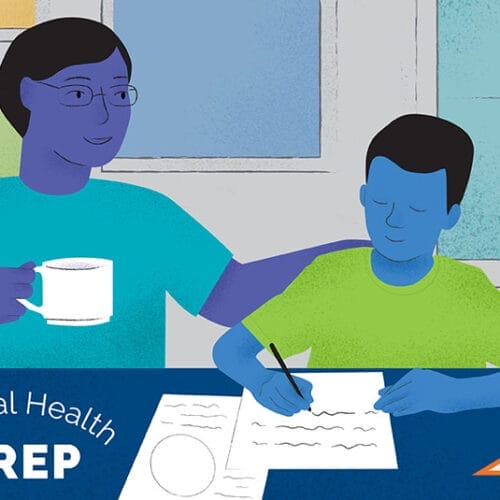
- Narrative Engagement: Using books and movies (such as Inside Out or The Worrysaurus) to provide children with a vocabulary for their feelings.
- The "No-Judgment" Rule: Establishing a home environment where curiosity replaces criticism. This involves asking open-ended questions like, "What feels like a good next step?" rather than offering immediate, unsolicited solutions.
- Visible Self-Care: Experts suggest that parents should model their own mental health maintenance. When a child sees a parent take a walk to "clear their head," it normalizes the idea that emotional regulation is a lifelong practice, not just a childhood lesson.
The Clinical Perspective: Media Literacy as Healthcare
Dr. McNaughton-Cassill suggests that students must treat media consumption with the same intentionality as physical diet. Her clinical recommendations include:
- Identifying Triggers: Recognizing whether graphic visuals or specific topics (e.g., environmental collapse) trigger nightmares or panic.
- Format Shifting: Moving from high-stimulation video feeds to lower-stimulation written or audio news sources.
- Solutions Journalism: Advocating for news that focuses not just on the "sky is falling" narrative, but on the potential solutions and long-term progress of social issues.
The Advocacy Perspective: Prioritizing the Protector
For student leaders, the official stance from organizations like Active Minds is shifting toward "sustainable advocacy." Student presidents are now being taught that their "best work comes from their best self." This involves a radical re-prioritization where self-care is not viewed as "slacking," but as a professional requirement for effective leadership.
Implications: The Path Forward for Educational Institutions
The implications of these findings are clear: mental health cannot be an "add-on" to the curriculum; it must be the foundation.
For elementary and secondary schools, the success of SEL programs suggests that emotional literacy will soon be as fundamental as reading or mathematics. However, the "silent criers" identified in post-pandemic classrooms indicate that schools must do more to normalize the act of asking for help. The goal is to move from a culture where asking for assistance is seen as a failure, to one where it is viewed as a necessary, daily skill.
For higher education, the challenge is more systemic. Universities must address the "digital exhaustion" of their students. This may involve creating "tech-free" zones or incorporating media literacy into the core curriculum to help students navigate the psychological traps of the attention economy.
Ultimately, the burden of this crisis does not fall on the students alone. It requires a synchronized effort from parents who model vulnerability, educators who prioritize emotional safety, and media consumers who demand a more responsible, solution-oriented narrative. As we move further into the 21st century, the measure of a successful student will no longer be just their GPA, but their ability to maintain equilibrium in an increasingly volatile world. The "gratitude jars" of today’s elementary students may well be the most important tools they carry into the boardrooms and newsrooms of tomorrow.