









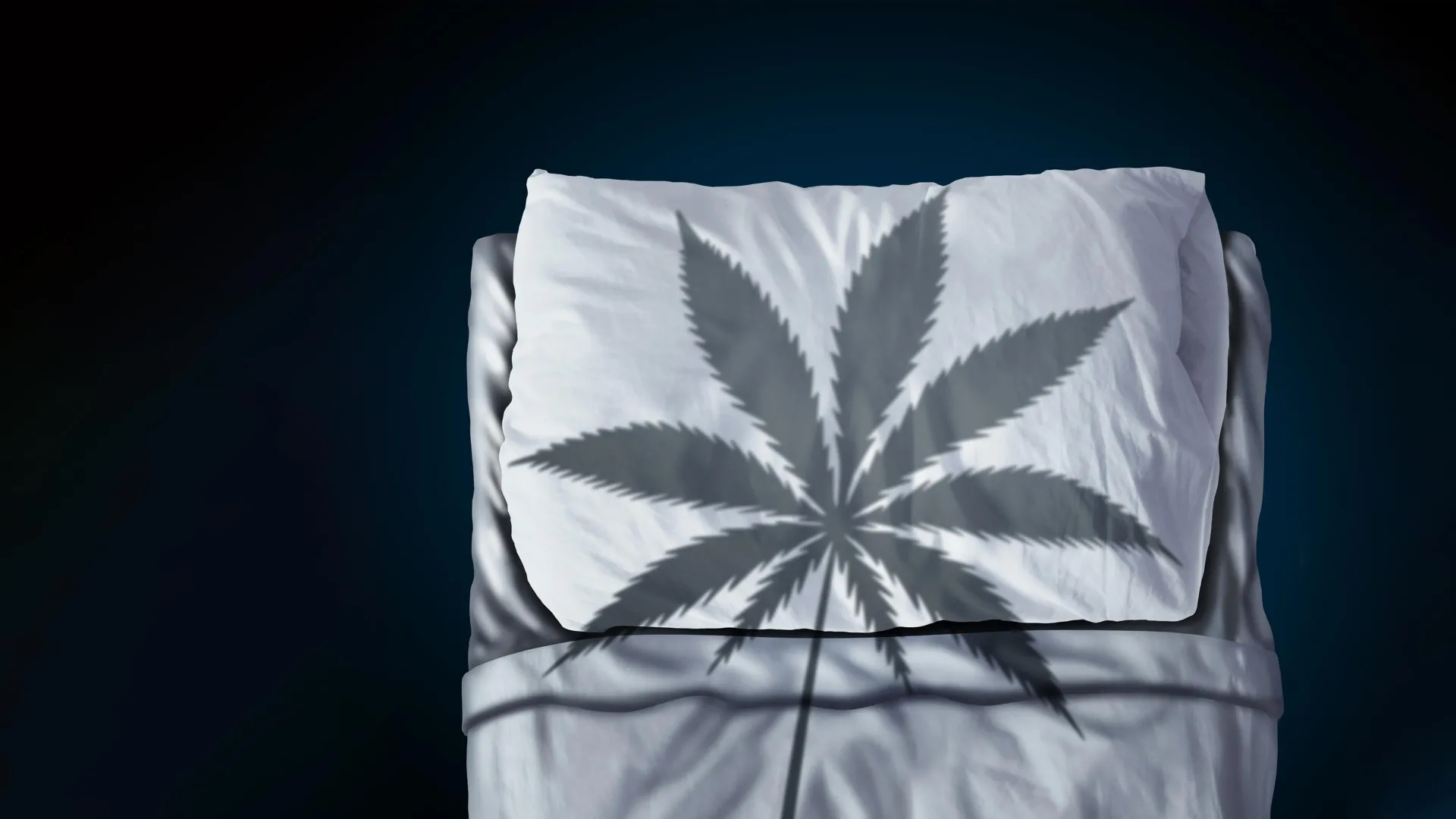
In the wellness aisle of local pharmacies and across the digital landscape of e-commerce, a new darling of the sleep supplement industry has emerged: Cannabinol (CBN). Often marketed as a "gentle," "non-psychoactive," and "natural" alternative to pharmaceutical sleep aids or high-potency THC products, CBN has been rapidly integrated into gummies, tinctures, and capsules. However, a groundbreaking study from the University of Connecticut, published in the November issue of the journal Drug and Alcohol Dependence, has cast a shadow over this rosy narrative.
The research suggests that the compound—a minor cannabinoid found in the cannabis plant—may carry risks of physical dependence and immune system suppression that have been largely overlooked by both regulators and the public. As the popularity of CBN skyrockets, scientists are sounding an alarm: the "natural" label may be masking a pharmacological profile that warrants significantly more scrutiny.
The Science of Dependency: Understanding the UConn Findings
The research, led by faculty and doctoral candidates at the University of Connecticut’s Elisabeth DeLuca School of Nursing, sought to bridge the knowledge gap regarding how the human (or in this case, murine) body processes CBN over repeated exposures.
Key Findings and Methodology
The study’s methodology involved a controlled trial using mice to observe behavioral and physiological responses to regular CBN administration. The subjects were treated with the compound twice daily over a three-day period. The researchers tracked two primary indicators of substance reliance: the development of tolerance and the presence of withdrawal symptoms.
The results were striking. As the administration continued, the mice exhibited a diminished response to the compound, a hallmark indicator of physiological tolerance. More concerning, however, was the reaction when the CBN was removed from their regimen. The mice displayed physical manifestations of withdrawal, including involuntary head twitching and paw fluttering—movements that mirror the physical shaking observed in humans during drug withdrawal.
Perhaps the most significant revelation was the functional similarity between CBN and THC (tetrahydrocannabinol). By training mice to identify the psychoactive signals of THC, researchers found that the subjects responded to CBN in a nearly identical fashion. This suggests that at a biological level, CBN may interact with the same endocannabinoid receptor pathways—specifically the CB1 receptors—that are central to the development of dependence in THC.
A Chronology of the CBN Boom
To understand why this discovery is so critical, one must look at the meteoric rise of minor cannabinoids in the consumer market.
- 2018: The Farm Bill Catalyst: The passage of the 2018 Agriculture Improvement Act (the Farm Bill) legalized the cultivation of hemp and the extraction of cannabinoids, provided they contained less than 0.3% Delta-9 THC. While the bill’s primary focus was CBD, it opened the floodgates for the extraction of other "minor" cannabinoids, including CBG, CBC, and eventually, CBN.
- 2020–2022: The Sleep Market Gold Rush: As CBD lost its "miracle cure" luster in the face of rigorous FDA oversight, the wellness industry pivoted. CBN began appearing in "sleep-targeted" formulations, with marketers leaning heavily into anecdotal reports that it provided a "sedative" effect without the "high" associated with marijuana.
- 2023: Regulatory Languor: Throughout this period, the FDA remained largely silent on the specific safety profiles of minor cannabinoids. This regulatory vacuum allowed manufacturers to market CBN supplements without the burden of proof typically required for pharmaceuticals.
- November 2024: The Scientific Correction: The publication of the UConn study marks the first significant pushback from the academic community, challenging the industry’s narrative that CBN is inherently safe due to its "natural" origins.
Supporting Data: The Immune System Connection
The UConn study did not merely focus on dependency; it also investigated the systemic effects of CBN on the body’s internal defenses. In a series of experiments, researchers simulated a bacterial challenge to observe how the compound impacted immune response.
The data revealed that subjects treated with CBN showed a reduced ability to mount an effective immune defense. This weakening of the immune system is a critical finding, as it suggests that the long-term, daily use of CBN supplements—often touted as a nightly health ritual—could inadvertently leave consumers more susceptible to common infections.
Furthermore, while the researchers did identify that CBN possesses anti-inflammatory properties at lower doses, the clinical reality is that many over-the-counter supplements contain concentrations that exceed these therapeutic thresholds. The data highlights a precarious balancing act: a dose that might suppress inflammation may simultaneously compromise the immune system, suggesting that the "therapeutic window" for CBN is likely much narrower than the current unregulated market suggests.
The Perspective of the Experts
Steven Kinsey, a professor in UConn’s Elisabeth DeLuca School of Nursing, has become a vocal advocate for consumer awareness. His perspective is rooted in a historical understanding of pharmacology.
"CBN is everywhere right now. Gummies, tinctures, capsules, and it’s marketed as a safe, herbal sleep supplement," Kinsey notes. He draws a direct line between the current marketing of CBN and the historical cycle of "wonder drugs" that were later found to be addictive. "We have seen this before. Over the last century, we’ve seen countless sleep aids that were introduced with glowing testimonials and ‘natural’ branding, only for us to discover decades later that they caused severe dependency issues."
Olivia Vanegas, the study’s lead author and a Ph.D. candidate, echoes these concerns, emphasizing the disconnect between product marketing and empirical evidence. "The marketing of minor cannabinoids is pretty wild right now," Vanegas states. "There are so many therapeutic claims about these drugs, but we really don’t know much about their potential risks, especially with repeated use."
The experts agree that the burden of proof currently sits with the consumer, who is essentially participating in an unmonitored longitudinal study by using these products nightly.
Implications for the Future of Sleep Science
The implications of the UConn research extend far beyond the laboratory. If these findings are replicated in human clinical trials, the multi-billion dollar sleep supplement industry may face a significant reckoning.
1. Regulatory Reassessment
The FDA is currently under immense pressure to categorize and regulate the "hemp-derived" market. The evidence provided by the UConn team could serve as the catalyst for mandated warning labels or, at the very least, a requirement for clinical safety data before a product can be marketed for chronic sleep issues.
2. The Shift in Consumer Behavior
"Buyer beware" is the current mantra from the research team. For the average consumer, this means rethinking the nightly gummy habit. If a compound is potent enough to induce sleep through the same pathways as THC, it is logical to assume that the body will adapt to it, necessitating higher doses to achieve the same result—the classic definition of a tolerance cycle.
3. Future Clinical Research
The scientific community is now challenged to move toward human trials. While mice provide a vital model for understanding neural and physical pathways, the subjective nature of human sleep and the complexity of the human endocannabinoid system require rigorous, double-blind, placebo-controlled human studies. Researchers must determine if the "withdrawal" symptoms seen in mice translate to psychological cravings or physiological discomfort in humans.
Conclusion: A Call for Caution
The narrative of "natural equals safe" has been a powerful engine for the growth of the cannabinoid industry. However, the University of Connecticut’s findings remind us that "natural" refers to the source, not the safety profile. Opium, nicotine, and cocaine are all, in a sense, "natural," yet their potential for harm is well-documented.
As CBN continues to occupy a prominent place in the medicine cabinets of millions, the medical community’s message is clear: the substance is not merely a benign herb. It is a psychoactive compound that interacts with the body’s most sensitive regulatory systems. Until more research is conducted into long-term dosing, potential for addiction, and immune system impact, consumers should approach CBN with a healthy dose of skepticism. The promise of a better night’s sleep is tempting, but it should not come at the cost of unknown, potentially long-term, health consequences.