








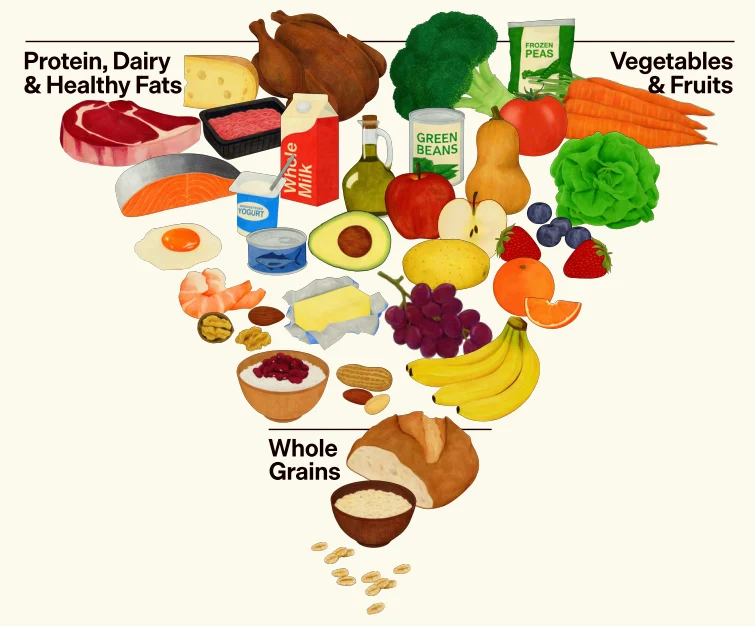
The release of the 2025–2030 Dietary Guidelines for Americans (DGAs) was met with immediate anticipation and, subsequently, significant scrutiny from the public health community. Designed to serve as the bedrock for federal nutrition policy, school lunch programs, and clinical dietary advice, the new guidelines arrive with a compelling tagline: “Eat real food.” On the surface, the document promises a rigorous pivot away from the ultra-processed landscape that defines the modern American diet. However, beneath this headline-grabbing ambition, experts warn of a disconnect between the written text and the accompanying visual aids—a disparity that could undermine years of cardiovascular health progress.
Main Facts: The New Nutritional Landscape
The 2025–2030 edition of the DGAs introduces a notable departure from previous iterations by explicitly calling out "highly processed foods." While the definition of food processing exists on a spectrum, the guidelines adopt a firm stance against sugar-sweetened beverages, salty and sweet packaged snacks, and refined carbohydrates like white bread. This emphasis on whole, nutrient-dense foods is widely regarded by nutritionists as a positive, long-overdue step.
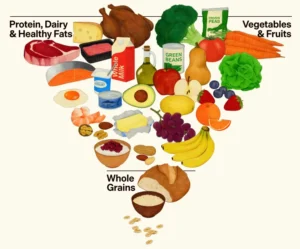
However, the rollout also marked the return of a pyramid-style graphic—a visual format that has historically held immense sway over public perception. This time, the pyramid has been "flipped," with a design that gives visual prominence to animal-based products, including steak, full-fat milk, and butter.
Crucially, while the graphic suggests a return to more traditional, animal-heavy dietary patterns, the actual text of the guidelines maintains the longstanding scientific consensus that saturated fat should be limited to 10% of total daily calories. This creates a striking paradox: the visual imagery encourages the consumption of foods that make staying within that 10% threshold mathematically difficult, if not impossible, for the average consumer.
A Chronology of the 2025–2030 Update
The creation of the DGAs is a multi-year, high-stakes endeavor overseen by the U.S. Departments of Agriculture (USDA) and Health and Human Services (HHS). Traditionally, the process begins with an independent Dietary Guidelines Advisory Committee (DGAC)—a panel of experts who synthesize the latest nutrition science.
- Evidence Synthesis: The 2025–2030 DGAC spent two years reviewing current literature, livestreaming their deliberations, and accepting public comments to ensure a transparent, evidence-based foundation.
- The Pivot: In a departure from historical precedent, the administration ultimately declined to fully adopt the independent committee’s final scientific report.
- The Supplemental Process: To finalize the guidelines, the government initiated a "federal contracting process" to select a new group of individuals to conduct a supplemental scientific analysis.
- The Release: The final document was published this week, featuring a more consumer-friendly, interactive digital presence, yet raising immediate red flags among the scientific community regarding the opacity of the methodology used by the contracted reviewers.
Supporting Data and the "Saturated Fat Math"
The conflict between the new "New Food Pyramid" and nutritional reality becomes apparent when one performs basic calorie and fat arithmetic. For a standard 2,000-calorie diet, a 10% limit on saturated fat equates to roughly 22 grams per day.
If a consumer follows the DGA recommendations for three servings of dairy per day, the math quickly unravels. A single 8-ounce cup of whole milk contains 5 grams of saturated fat; three-quarters of a cup of full-fat Greek yogurt adds 6 grams; and one ounce of cheddar cheese contributes another 6 grams. That total is 17 grams of saturated fat—before the individual has even consumed a main protein source or cooked with fat.
If that same consumer uses a tablespoon of butter (7 grams) or beef tallow (6 grams)—both of which are prominently featured in the new pyramid’s suggestions for cooking—they immediately exceed their daily limit. This "saturated fat math" demonstrates that the visual guide is not merely confusing; it is mathematically inconsistent with the guidelines’ own health-based constraints.
Furthermore, while the pyramid does include olive oil, it frames it alongside animal fats as an "option." Experts like Dr. Frank Hu, chair of the Department of Nutrition at the Harvard T.H. Chan School of Public Health, argue that this is a missed opportunity. "All plant oils have been shown to lower LDL cholesterol and cardiovascular risk compared with animal fats," Dr. Hu notes. By failing to distinguish between the cardiovascular benefits of unsaturated plant oils and the risks of saturated animal fats, the guidelines provide a roadmap that could inadvertently lead to higher cholesterol levels across the population.
Official Responses and Transparency Concerns
The lack of transparency regarding the supplemental analysis panel has become a central point of contention. Dr. Deirdre Tobias, who served on the original 2025–2030 Advisory Committee, has been vocal about the deviation from standard rigor. In a recent Q&A, she highlighted that the methodology behind the current guidelines lacks the replicability and freedom from non-scientific influence that defined previous cycles.
Concerns have been compounded by investigative reports, such as those from STAT News, which identified that several of the individuals involved in the supplemental review panel maintained financial ties to the beef and dairy industries. While these ties were disclosed within the supplemental document, their presence in a process that resulted in the increased visual prominence of meat and dairy has fueled skepticism regarding the influence of industry lobbying on federal health policy.
Implications for Public Health
The implications of these mixed messages are profound. Nutrition science is notoriously complex, and for the average American, the DGAs act as a primary source of truth. When the government provides a "New Food Pyramid" that contradicts its own scientific warnings about heart disease, it breeds confusion.
1. Increased Cardiovascular Risk
By failing to clearly prioritize plant-based proteins and unsaturated fats over red meat and full-fat dairy, the guidelines may inadvertently encourage diets that increase LDL cholesterol. The rise in cardiovascular disease remains a leading cause of mortality, and dietary habits are the most significant modifiable factor.
2. The "Protein Hype"
The new guidelines raise protein intake recommendations to 1.2–1.6 grams per kilogram of body weight—a 50% to 100% increase over previous minimums. While protein is essential, the lack of distinction between high-quality protein sources (like fish, legumes, and nuts) and those accompanied by high levels of saturated fat is concerning. Excess protein intake, when decoupled from quality, is often converted to fat by the body, contributing to the very weight gain the guidelines aim to mitigate.
3. Sustainability and Equity
Critics also point to the glaring omission of environmental and socioeconomic impacts. Food production is a major driver of climate change, and dietary choices are inextricably linked to the health of the planet. By ignoring the environmental footprint of heavy meat consumption, the guidelines miss a critical opportunity to align human health with planetary health.
4. A Disconnect from Real-World Behavior
Historically, Americans have struggled to follow the Dietary Guidelines. The 2025–2030 version, while more "consumer-friendly" in its presentation, risks alienating the public further by providing contradictory instructions. When health messaging is inconsistent, individuals are less likely to adopt sustainable, long-term changes.
Conclusion: Navigating the Confusion
The 2025–2030 Dietary Guidelines for Americans represent a paradox. On one hand, they take a necessary, modern stand against the prevalence of ultra-processed, sugar-laden foods. On the other, they backslide into outdated, industry-influenced representations of animal products that jeopardize heart health.
For the American consumer, the best advice remains to look beyond the "New Food Pyramid." Resources like the Harvard Healthy Eating Plate offer a more rigorous, evidence-based visual for daily nutrition. As the medical community continues to process these new guidelines, the burden of health literacy falls, unfortunately, back onto the individual. Consulting with a registered dietitian or a healthcare provider—rather than relying on a potentially compromised federal graphic—may be the most effective way to navigate the confusing landscape of modern nutrition. Whether this edition of the guidelines will actually move the needle on the nation’s health remains to be seen, but for now, it stands as a reminder that science and policy do not always walk hand in hand.