







By Jackie Keating, LCSW
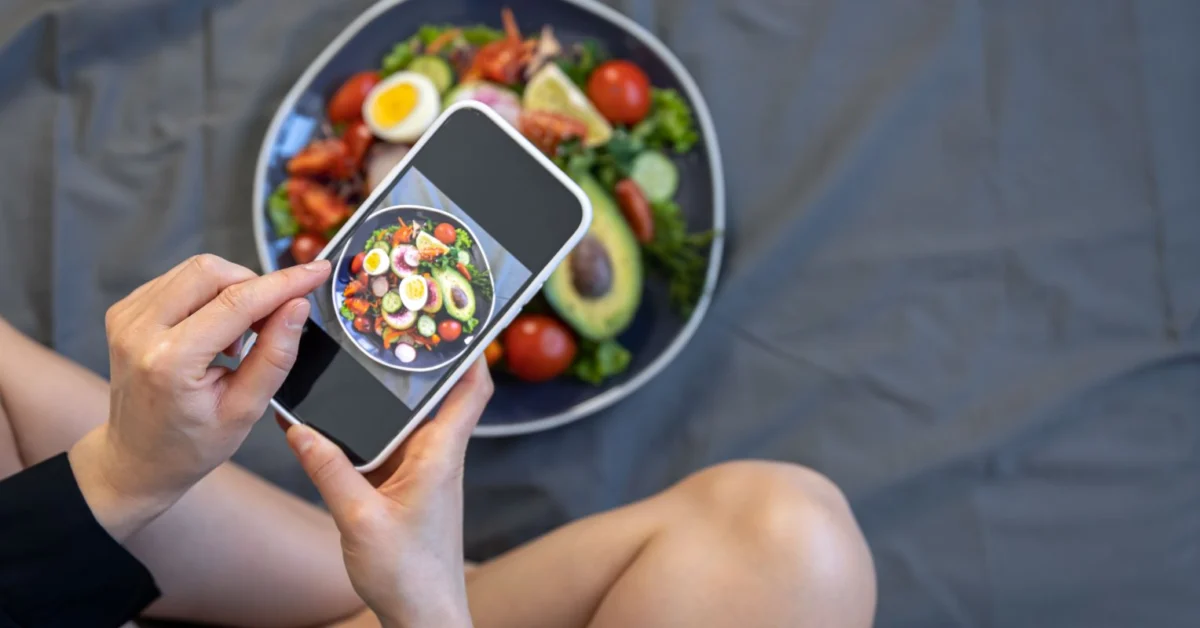
It is Sunday night, the quiet interlude before the chaos of the work week begins. You are lying in bed, the blue light of your smartphone illuminating your face as you scroll through an endless feed of curated reality. Within minutes, the algorithm serves up an influencer’s "What I Eat in a Day" video. The meals are visually flawless, devoid of carbohydrates, and strictly portion-controlled. You scroll further, and a creator is joking about their weekend party habits, while a "mom influencer" casually jokes that she requires wine to survive the stresses of parenting. Interspersed between these glimpses into other lives are aggressive advertisements for fitness programs, promising to "fix your life" in three simple, algorithmic steps.
The pressure does not end when you put the phone down. The next morning, a colleague mentions a restrictive new diet; a friend texts about the need to shed weight "for summer"; and a celebrity endorses a rigid, plant-based protocol. The messaging is pervasive, relentless, and increasingly dangerous. We are living in a digital ecosystem where diet culture—a system of beliefs that equates thinness and specific eating habits with moral value and health—is not just present; it is the dominant narrative.
The Architecture of Influence: How Diet Culture Monetizes Insecurity
Social media platforms are designed for connection, yet they have evolved into high-performance arenas for comparison. For many, these platforms are the primary source of health information, despite the fact that they are often fueled by commercial interests rather than clinical expertise.
The $160 Billion Wellness Machine
The wellness market is a titan of global industry. In 2024, it reached a staggering $160 billion valuation, with projections suggesting it could balloon to $360 billion by 2034 (Finklea, 2025). This massive influx of capital is driven by the weaponization of self-care. Digital creators, brands, and "fitness gurus" utilize the visual medium of short-form video to promote specialized products, restrictive habits, and exclusionary diet plans.
This model relies on a binary: if you follow the plan, you achieve the "glow up." If you do not, you are shamed. By demonizing specific food groups and fat-shaming those who do not conform to the aesthetic standard, the industry effectively converts individual self-esteem into corporate profit. The implication is as seductive as it is false: if you simply look like them, you will be as happy as they appear to be.
The Reality Behind the Filter
The "perfect" bodies seen on social media are rarely representations of health. Beneath the polished aesthetics often lie cycles of extreme restriction, compulsive exercise, and significant psychological distress. Research confirms the toll this takes on the viewer: nearly half (46%) of teens aged 13–17 report feeling significantly worse about their bodies after consuming social media content. Furthermore, those who spend more than three hours a day on these platforms are twice as likely to develop eating disorders compared to their peers with more balanced screen habits (REACH Institute, 2025).
The Invisible Overlap: Eating Disorders and Substance Use
While the public often views eating disorders (EDs) and substance use disorders (SUDs) as distinct issues—one characterized by control and the other by perceived excess—clinicians recognize them as two sides of the same coin. Both are essentially maladaptive coping mechanisms used to navigate emotional turmoil, trauma, and societal pressure.
The Coping Mechanism Connection
When an individual feels a lack of control over their life, they may turn to their plate or their substances to regulate their internal environment. The National Eating Disorders Association (NEDA, 2023) estimates that 50% of people struggling with eating disorders also misuse alcohol or drugs.
The relationship is inherently interdependent; an eating disorder can lower the body’s tolerance to substances, while substance use can exacerbate the nutritional deficiencies caused by an ED. Social media exacerbates this by glamorizing both. Platforms like TikTok and Instagram have normalized the "wine mom" trope and the "party girl" aesthetic, effectively teaching users that numbing oneself with substances is a standard, acceptable way to deal with the stress of maintaining a "perfect" lifestyle.
The Deadly Math: Consequences of Co-Occurring Disorders
The most alarming aspect of this intersection is the mortality risk. Anorexia nervosa already holds the highest mortality rate of any psychiatric illness. When an eating disorder is compounded by substance use, the risk of fatality is not merely additive—it is multiplicative.
A Four-Fold Increase in Risk
Recent data indicates that co-occurring alcohol and hard drug use nearly quadruples the mortality risk for patients with eating disorders (Mellentin et al., 2022). These individuals face a heightened danger from multiple vectors: physical organ failure from malnutrition, toxic interactions between substances and the body’s weakened systems, and an increased rate of suicidal ideation. According to the Substance Abuse and Mental Health Services Administration (SAMHSA, 2025), individuals with these co-occurring disorders show higher rates of severe psychiatric comorbidities, including generalized anxiety, clinical depression, and mood instability.
The Failure of Fragmented Care
Despite the obvious biological and psychological links between EDs and SUDs, our modern medical and therapeutic systems remain largely siloed.
The "Whack-a-Mole" Recovery Process
Patients often find themselves in a system where they are forced to choose a primary diagnosis. They may enter an ED treatment facility, only to be told they cannot be treated there because of their substance use. Conversely, they may enter a substance abuse program that fails to address the underlying nutritional and body-image trauma driving their addictive behaviors.
This leads to a "whack-a-mole" recovery experience: one issue is temporarily managed while the other is neglected, inevitably leading to relapse. For the patient, this is exhausting and demoralizing, often reinforcing the belief that they are "unfixable."
Towards an Integrative Future
To truly address this crisis, we must shift from a fragmented model of care to an integrative, biopsychosocial approach. Clinical care must move beyond addressing symptoms to treating the whole person. This means:
- Combined Treatment Modalities: Programs must be equipped to treat both disordered eating and substance use simultaneously.
- Cultural Literacy: Providers must be trained to recognize how diet culture and social media influence a patient’s self-perception.
- Digital Literacy Education: Prevention efforts must start with helping individuals—particularly youth—understand that the images they see on their screens are not reality, but curated products designed to exploit their insecurities.
We live in a world that profits from our struggles. The wellness industry has spent decades convincing us that we are "projects" that need to be fixed. Reclaiming our health requires rejecting the premise that our worth is tied to our weight, our habits, or our aesthetic. It requires a radical, compassionate, and evidence-based shift toward valuing mental and physical longevity over the fleeting, dangerous validation of a "like" button.
The path to recovery is not found in a 3-step program or a restrictive diet plan; it is found in the quiet, often difficult work of reconnecting with one’s own humanity, independent of the digital noise.
References
- Dane, A., & Bhatia, K. (2023). The social media diet: A scoping review to investigate the association between social media, body image and eating disorders amongst young people. PLOS Global Public Health, 3(3), e0001091.
- Finklea, K. (2025). The wrong influence: The link between diet culture and eating disorder. HopeHealth.
- Gordon, K. H., et al. (2023). Co-occurring substance use and eating disorders. Psychiatric Times.
- Hambleton, A., et al. (2022). Psychiatric and medical comorbidities of eating disorders. Journal of Eating Disorders, 10(1), 132.
- Holland, G., & Tiggemann, M. (2023). Social media and body image: A systematic review. PLOS Global Public Health, 3(3).
- Mellentin, A. I., et al. (2022). The impact of alcohol and other substance use disorders on mortality in patients with eating disorders. The American Journal of Psychiatry, 179(1), 46–57.
- National Eating Disorders Association. (2023). Statistics & research on eating disorders.
- Pierce, S., Joy, J. M., & Wiss, D. A. (2025). Abstinence-based treatment of comorbid eating disorders and ultra-processed food addiction. Frontiers in Psychiatry, 16.
- SAMHSA. (2025). Breaking the silence: What everyone should know about eating disorders.
- The REACH Institute. (2025). Mind over minutes: How youths’ screen habits are impacting their mental health.
- Xi, Z.-X., & Galaj, E. (2025). Novel potential pharmacological approaches in treating eating disorders comorbid with substance use disorders. Biomedicine & Pharmacotherapy, 189.