









Published November 8, 2026
In the modern fitness landscape, the conversation surrounding back health is often polarized. We obsess over "tech neck" caused by hours of hunching over smartphones, and we live in constant, justified fear of lower back strain—the leading cause of disability worldwide. Yet, nestled between these two highly publicized areas lies a critical, often ignored anatomical anchor: the mid-back.
According to Amber Sayer, a yoga teacher and certified personal trainer who specializes in programming for both sedentary desk workers and high-performance competitive athletes, the mid-back is the "missing component" in most training regimens. Neglecting this region doesn’t just lead to poor posture; it creates a structural imbalance that forces the lower back to compensate, often leading to chronic pain and reduced functional mobility.
The Anatomy of Stability: Why the Mid-Back Matters
To understand why your mid-back deserves attention, one must look at the complexity of the thoracic spine and its surrounding musculature. This region serves as the bridge between the cervical spine (neck) and the lumbar spine (lower back).
The muscles involved—including the middle and lower trapezius, rhomboids, latissimus dorsi, erector spinae, and serratus posterior—act as the body’s primary stabilization network. When these muscles are underutilized or weak, they fail to provide the necessary support for the rib cage and shoulders. Consequently, the lower back muscles are forced to take on a load they were never designed to carry.
"Think of your mid-back muscles as a silent partner in your physical life," says Sayer. "You don’t tend to think about them until there is a systemic failure in the chain. When the mid-back is weak, the entire kinetic chain suffers." By fostering endurance in this area, you aren’t just aestheticizing your posture; you are effectively offloading the lower spine and minimizing the risk of the compensatory strain that plagues so many modern professionals.
Chronology of Neglect: The Evolution of "Tech Posture"
The decline of mid-back strength has accelerated in direct correlation with the digital revolution.
- The Early 2000s: As laptop usage became ubiquitous, physical therapists began noting an increase in "Upper Crossed Syndrome"—a pattern of muscle imbalance where chest muscles become tight and mid-back muscles become weak and elongated.
- The 2010s: The rise of the smartphone and the sedentary "gig economy" solidified these postural patterns. The constant forward-folding motion required to view screens effectively "turned off" the mid-back muscles for hours on end.
- The 2020s to Present: Current clinical research has shifted focus toward "functional back strength." Modern studies, such as those published in the BMJ Open Sport & Exercise Medicine, have begun to emphasize that targeted endurance training for the thoracic spine is the most effective way to prevent the chronic, recurring lower back pain that traditional "core" workouts (like sit-ups) fail to address.
Supporting Data: The Case for Targeted Training
The implications of a weak mid-back extend far beyond discomfort. Data suggests that individuals who engage in targeted strengthening of the thoracic region report a 30% higher endurance capacity in daily tasks, from carrying groceries to maintaining a seated posture during long work sessions.
Furthermore, medical consensus indicates that the mid-back functions as a fulcrum. When the rhomboids and lower traps are activated, the scapulae (shoulder blades) are pulled into a neutral, supported position. This prevents the "rounding" of the shoulders, which restricts lung capacity and limits range of motion in the upper extremities. By systematically strengthening these muscles through yoga, practitioners can achieve a "functional recalibration" of their entire musculoskeletal system.
The Yoga Protocol: Integrating Mid-Back Strengthening
The beauty of using yoga as a tool for mid-back strengthening lies in the intentionality of the movement. While many yoga poses inherently engage these muscles, shifting from a passive "stretching" mindset to an active "strengthening" mindset is the key to progress.
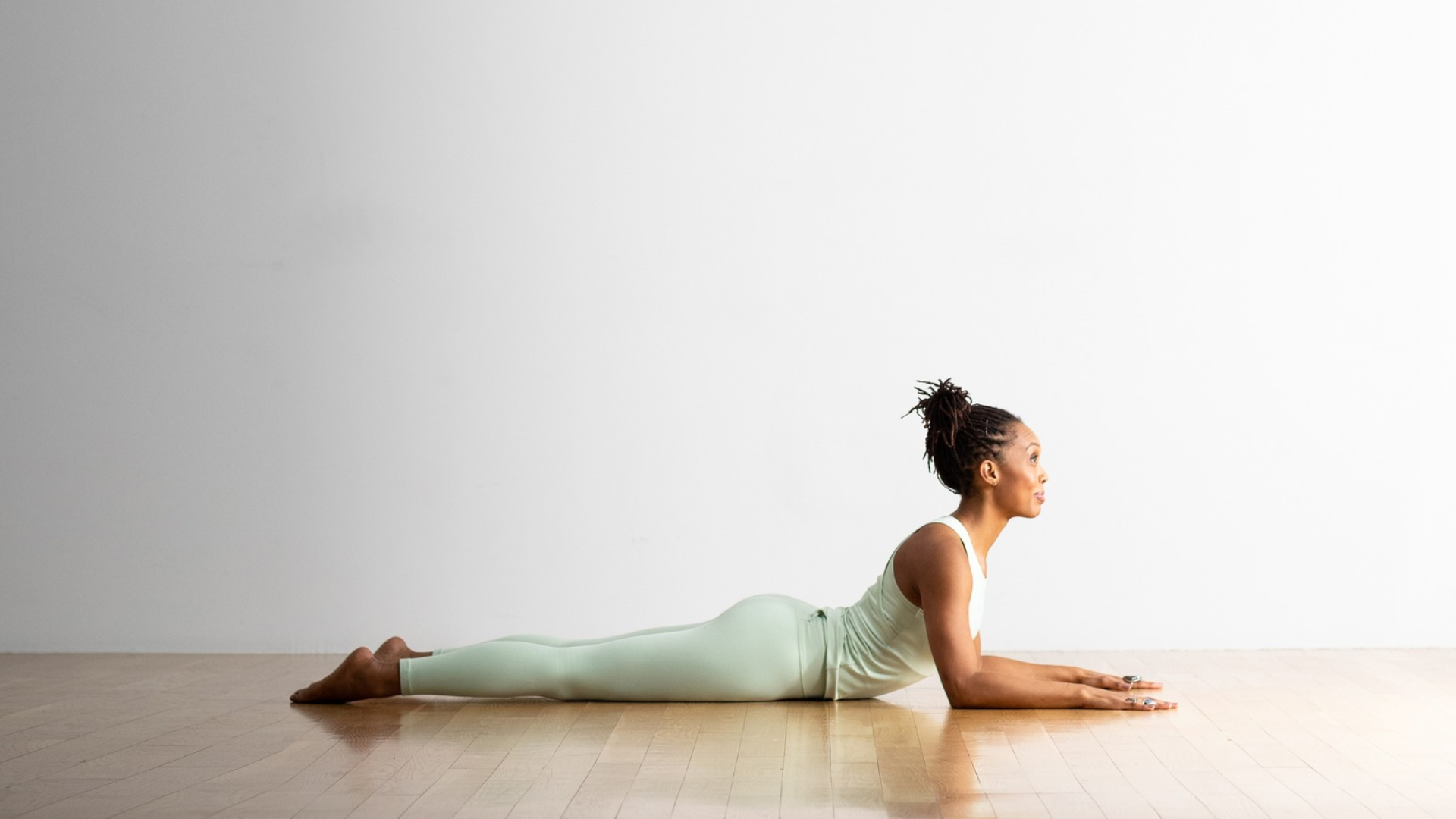
1. Sphinx Pose (Salamba Bhujangasana): The Foundation
Often viewed as a gentle heart-opener, the Sphinx pose is an ideal entry point for activating the mid-back.
- The Technique: Lie prone, propped on your forearms. Instead of letting the weight collapse into your shoulders, actively drag your elbows toward your hips.
- The Implication: This "isometric drag" engages the latissimus dorsi and the lower trapezius, teaching the mid-back to hold the torso upright against gravity without relying on lumbar compression.
2. Cobra Pose (Bhujangasana): Developing Mid-Back Independence
The traditional Cobra is often a test of upper body pushing strength, but it can be transformed into a mid-back powerhouse by removing the assistance of the arms.
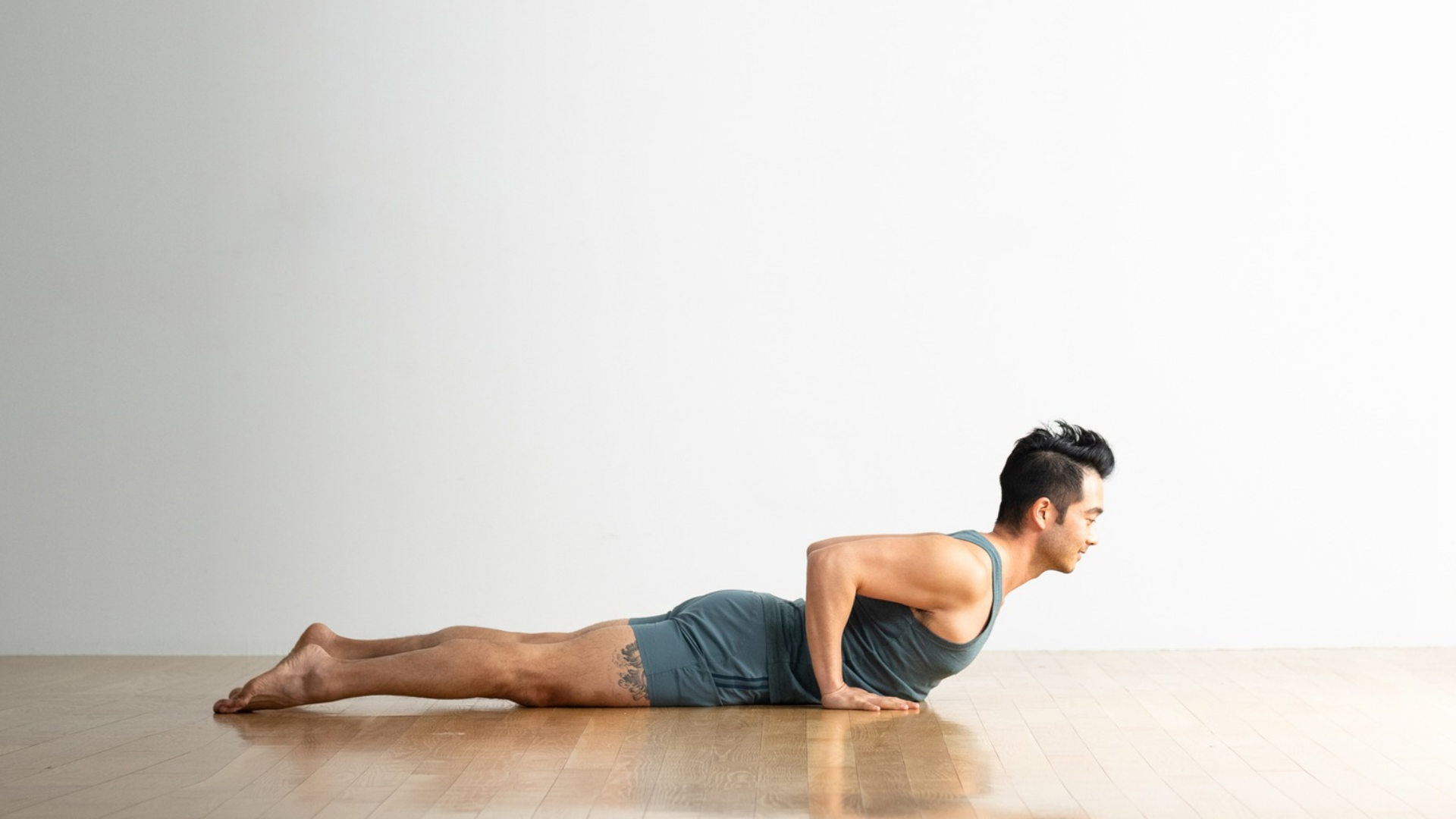
- The Technique: Lift your chest using only your back muscles. Hover your hands an inch off the mat. For an advanced variation, extend the arms into a "T" shape with thumbs pointing toward the ceiling.
- The Implication: By removing the leverage of the hands, you force the erector spinae and rhomboids to carry the full weight of the upper torso, building the endurance required for long-term spinal stability.
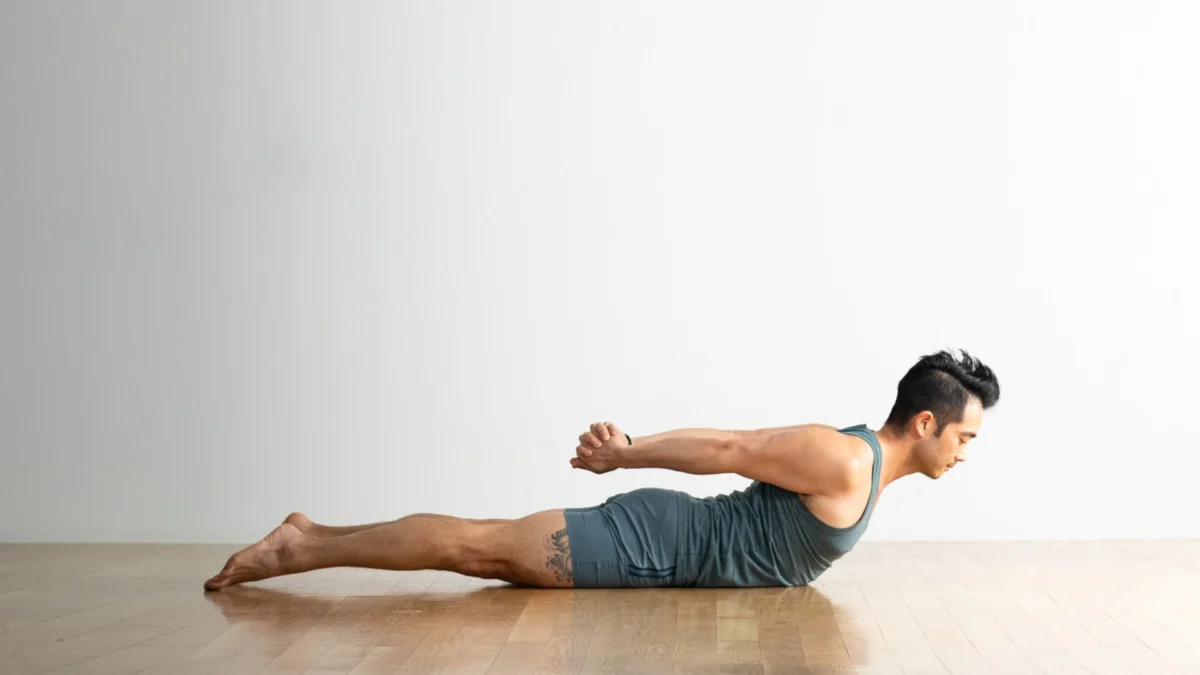
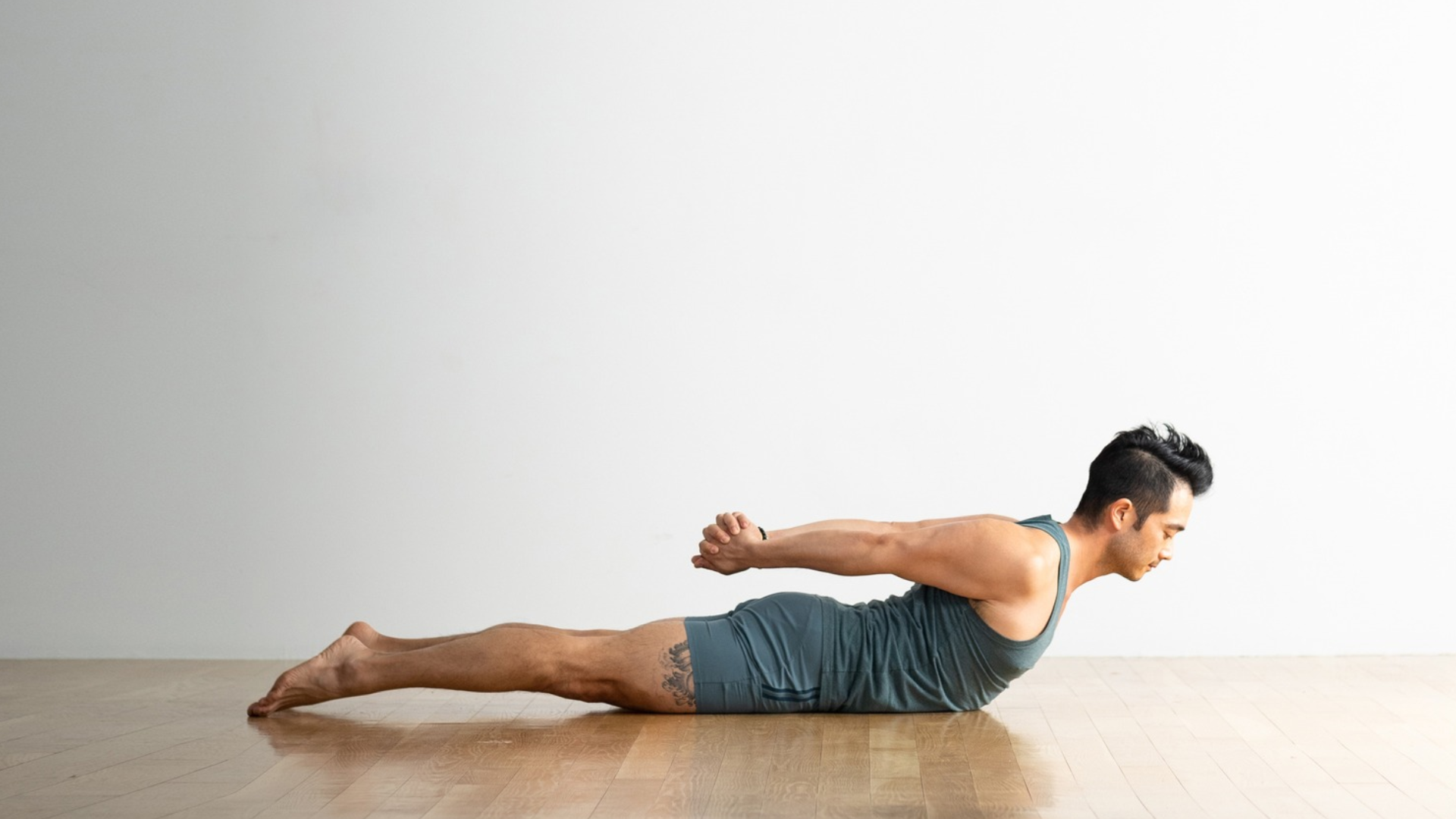
3. Locust Pose (Shalabhasana): The Holistic Strengthener
Locust is arguably the most effective pose for posterior chain development. It requires the simultaneous activation of the upper back, glutes, and hamstrings.
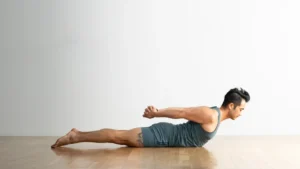
- The Technique: Lie on your belly, arms at your sides. Simultaneously lift the chest and legs. Interlace the fingers behind the back to intensify the squeeze between the shoulder blades.
- The Implication: This pose combats the chronic flexion of sitting by forcing the entire back body into extension, effectively "waking up" the muscles that have been dormant for hours.
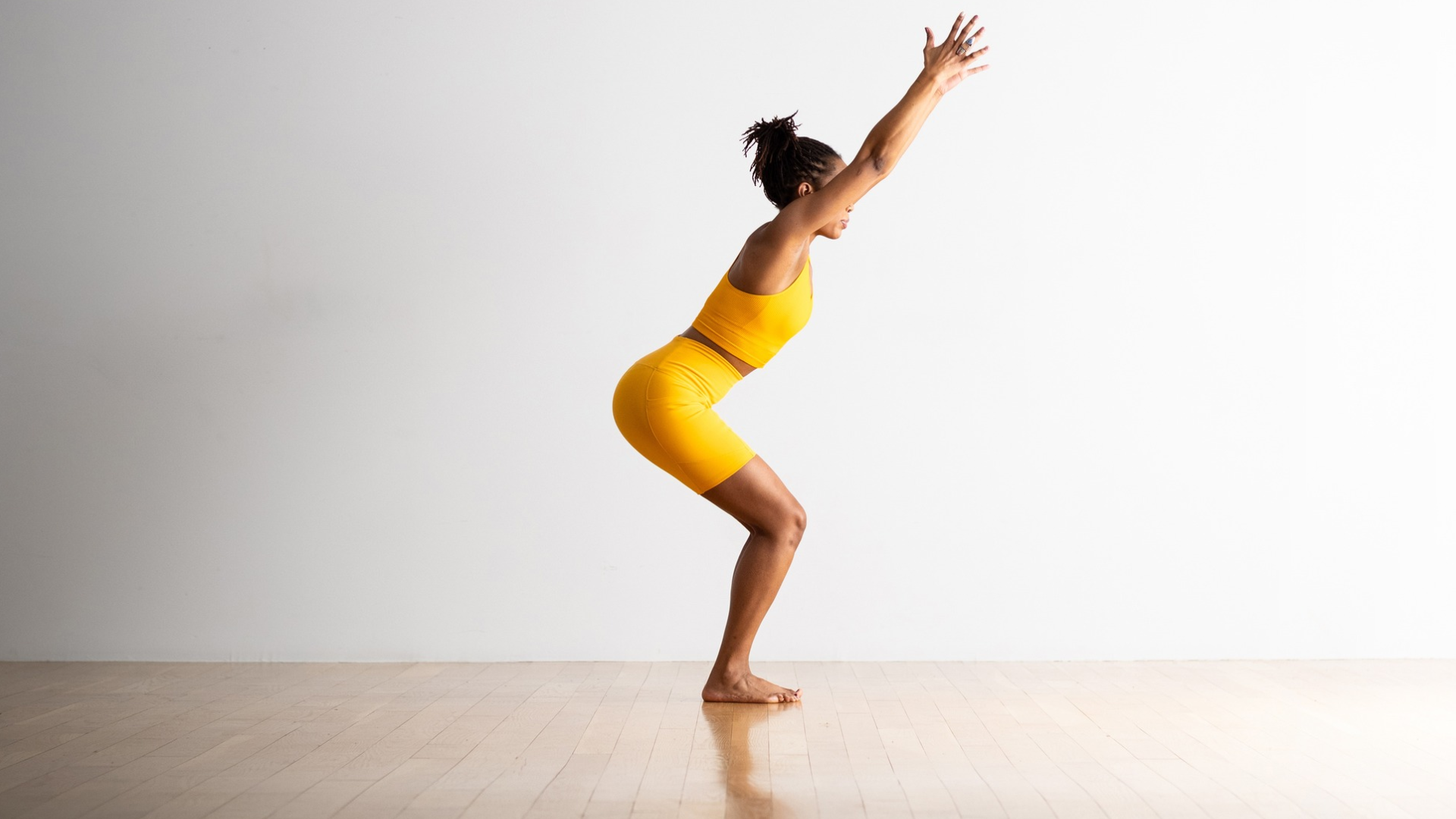
4. Chair Pose (Utkatasana): Gravity-Defying Stability
While typically associated with quadriceps, the forward lean of Chair Pose is a prime opportunity for mid-back engagement.
- The Technique: Reach arms alongside the ears while leaning the chest forward. To increase the load, opt for "Cactus arms"—bent at 90 degrees—ensuring the shoulder blades remain pinched together throughout the hold.
- The Implication: This challenges the mid-back to stabilize the upper body while the lower body manages the weight of the hips, creating a comprehensive, full-body endurance test.
5. Warrior 3 (Virabhadrasana III): The Unsung Hero
Warrior 3 is often treated as a balancing pose, but it is a sophisticated exercise in mid-back control.
- The Technique: As you extend one leg behind you, reach your arms forward. Imagine lifting the arms toward the ceiling, keeping the chest broad.
- The Implication: The necessity of holding the torso parallel to the ground requires constant engagement of the rhomboids to keep the shoulders from collapsing. It is the ultimate test of integrating the upper and lower back muscles through a single point of stability.
Expert Perspective: Integrating for Longevity
Amber Sayer emphasizes that consistency outweighs intensity. "You don’t need a grueling hour-long session to see results," she notes. "You need the habit of activation. Even if you only incorporate one or two of these poses during a lunch break, you are signaling to your nervous system that these muscles are meant to work."
The goal is to move away from the "all-or-nothing" approach to fitness. By diversifying your practice—occasionally swapping a standard Cobra for a hovering variation or adding a few rounds of Chair Pose with cactus arms—you ensure that the mid-back remains responsive and strong.
Implications for Future Health
As we look toward the future of physical health, the shift toward proactive, functional maintenance is clear. By focusing on the mid-back, we are effectively "future-proofing" our spines.
The integration of these techniques into a daily routine does more than just fix posture; it changes how we move through the world. A strong mid-back acts as a physical buffer against the stresses of modern life, ensuring that whether you are an athlete performing on the field or an office worker at a desk, your spine is supported by the strength it deserves. The research is settled: the mid-back is no longer just a forgotten space; it is the vital center of a healthy, functioning body.