









In a landmark study that could redefine the landscape of precision medicine, researchers at the Massachusetts Institute of Technology (MIT) have unveiled a groundbreaking method for engineering immune cells directly inside the human body. By utilizing specialized lipid nanoparticles to deliver genetic instructions, the team has successfully transformed "natural killer" (NK) cells into potent cancer-fighting machines. This development promises to bypass the grueling, expensive, and logistically complex manufacturing processes that have historically served as the primary bottleneck for personalized immunotherapies.
The findings, recently published in the journal Nature Biotechnology, offer a glimpse into a future where advanced cancer treatments and therapies for autoimmune diseases could be administered via a simple injection, rather than the weeks-long laboratory cultivation currently required for CAR-T cell therapies.
The Landscape of Current Immunotherapy: A Complex Pipeline
To understand the magnitude of the MIT team’s achievement, one must first recognize the constraints of modern cancer treatment. Over the past decade, the U.S. Food and Drug Administration (FDA) has authorized seven chimeric antigen receptor (CAR) T cell therapies. These treatments represent a miracle of modern science, functioning by extracting a patient’s T cells, genetically engineering them in a laboratory to express receptors that recognize specific cancer markers, and then reinfusing these "supercharged" cells back into the patient.
While transformative, particularly for blood-based cancers like leukemia, lymphoma, and multiple myeloma, the process is fraught with complications. The "vein-to-vein" cycle involves:
- Leukapheresis: Extracting the patient’s blood to isolate T cells.
- Manufacturing: Shipping the cells to a specialized, clean-room facility for genetic modification and expansion.
- Quality Control: Ensuring the modified cells are viable and potent.
- Logistics: Transporting the cells back to the medical center and administering them to the patient.
This cycle is not only exorbitantly expensive, often costing hundreds of thousands of dollars per patient, but it is also time-consuming. For patients with aggressive, rapidly progressing diseases, this delay can be fatal.
The Natural Killer Advantage
The MIT researchers, led by Professor Daniel Anderson of the Department of Chemical Engineering and a member of the Koch Institute for Integrative Cancer Research, pivoted their focus toward Natural Killer (NK) cells.
NK cells are a distinct lineage of the immune system. Unlike T cells, which are prone to "fratricide"—a phenomenon where engineered T cells recognize and destroy one another during therapy—NK cells do not suffer from this limitation. Because they are biologically distinct from the T cells they are often tasked to hunt, they provide a much cleaner therapeutic profile for treating T-cell malignancies and autoimmune conditions.
"The manufacturing challenges with CAR NK cells are significant," explains Professor Anderson. "The idea here is you can deliver a nanoparticle that will modify your own NK cells with a CAR construct and teach them to attack tumor cells directly."
By bypassing the need to remove, modify, and replace cells, the MIT team aims to convert the patient’s own biology into a therapeutic factory.
Chronology of the Research: From Concept to Cure
The development of this technology followed a rigorous, multi-stage experimental path, spearheaded by lead authors Yuang Chen, Julia Monkovic, and Haseeb Mughal.
Phase 1: Designing the Delivery Vehicle
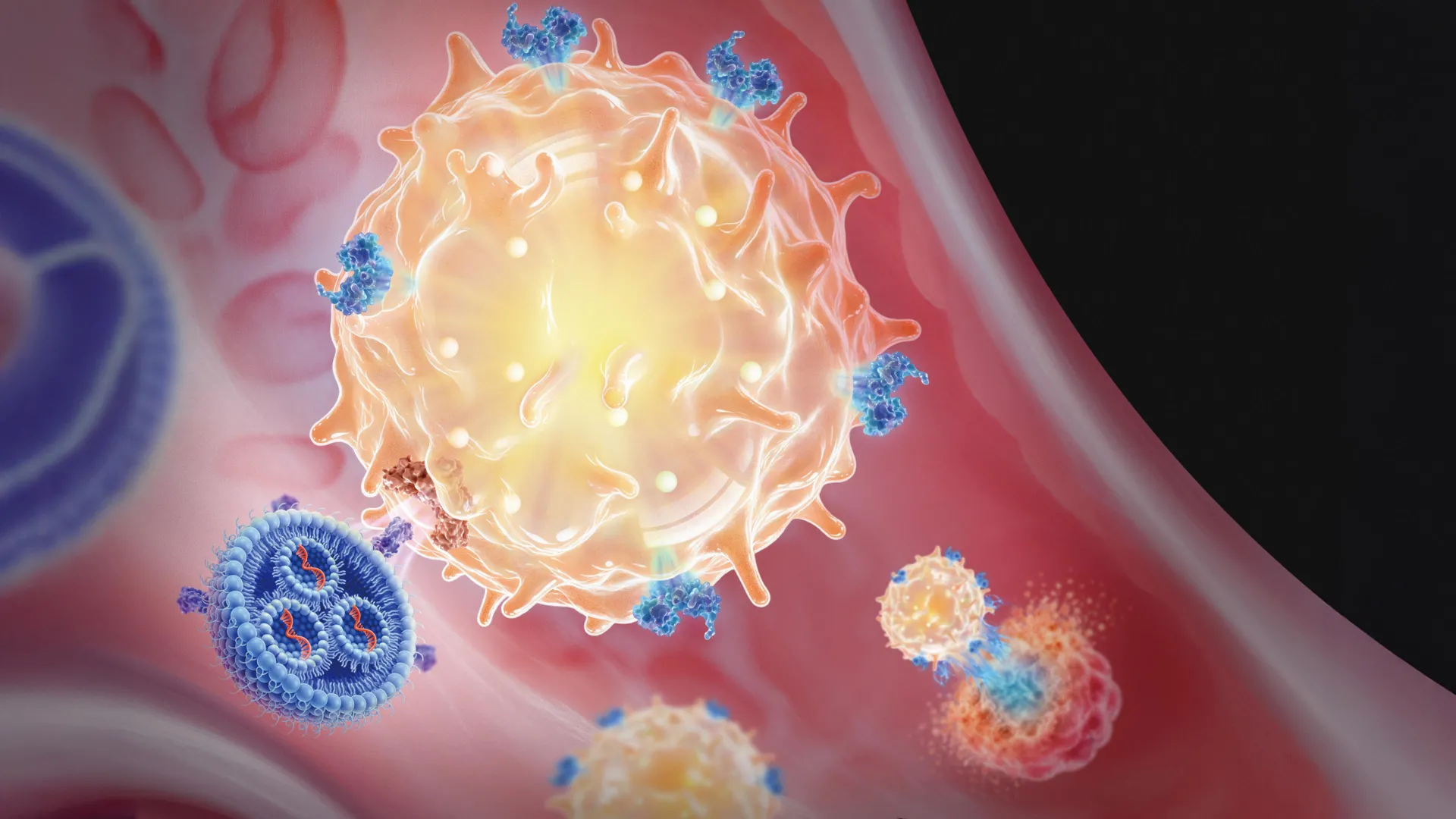
The team began by engineering lipid nanoparticles (LNPs)—tiny, fatty bubbles capable of protecting and delivering messenger RNA (mRNA). The LNP serves as the "envelope" for the genetic instructions. Crucially, the researchers coated the exterior of these particles with specific antibody fragments. These act like a biological GPS, ensuring that when the nanoparticles are injected into the bloodstream, they seek out and bind specifically to the surface receptors of NK cells, avoiding healthy tissue.
Phase 2: In Vitro and Murine Validation
Once the delivery mechanism was perfected, the researchers tested the ability of these particles to "reprogram" NK cells. In laboratory settings, the mRNA successfully entered the NK cells and directed them to produce specialized chimeric antigen receptors (CARs). These receptors were programmed to identify CD19 (found on B cells) or CD3 (found on T cells).
Phase 3: The Tumor Elimination Trial
The team then moved to mouse models to test efficacy. In mice afflicted with aggressive melanoma, the results were striking: three out of five treated animals achieved complete remission. The team further tested the technology against T-cell lymphoma in "humanized" mice—animals modified to possess human-like immune systems. In these subjects, five injections of the nanoparticle therapy led to the total eradication of tumors, mirroring the success rates of traditional, labor-intensive CAR-NK manufacturing.
Phase 4: Reversing Autoimmune Damage
Finally, the researchers applied the technology to autoimmune hepatitis. By instructing NK cells to target the rogue T cells responsible for attacking liver hepatocytes, the team achieved a reversal of liver damage after only a single injection. This proved that the platform’s utility extends far beyond oncology.
Supporting Data and Technical Nuance
The data collected by the MIT team underscores the precision of their nanoparticle delivery system. During the experiments, the team observed that approximately 80 percent of targeted NK cells were successfully modified after a single round of treatment.
This high efficiency is attributed to the antibody-fragment coating on the LNPs. By targeting the surface proteins unique to NK cells, the researchers minimized "off-target" effects—instances where the genetic instructions might be delivered to healthy, unintended cells. The ability to achieve therapeutic outcomes in mice using only five injections suggests that the dosage required to maintain these cells’ cancer-fighting behavior is well within the realm of clinical feasibility.
Official Perspectives: A Vision for the Future
The research team, which includes the renowned David H. Koch Institute Professor Robert Langer, views this as a fundamental shift in how medicine is delivered.
"This study is an excellent example of the power of nano-delivery systems and their ability to potentially treat cancer and other diseases," notes Professor Langer, whose pioneering work in drug delivery has provided the backbone for many modern therapies, including mRNA vaccines.
While the results are highly encouraging, the researchers remain cautious about the path to human trials. As the current data is limited to mouse models, the next phase of the research will focus on long-term safety, potential immune responses to the nanoparticles themselves, and the scalability of the manufacturing process for the nanoparticles.
Implications for Global Healthcare
The implications of this breakthrough are far-reaching:
1. Democratizing Immunotherapy
If this technology transitions to human clinical trials, it could democratize access to CAR-based therapies. By removing the need for specialized clean-room facilities and cold-chain logistics, treatments could be administered in standard hospitals, significantly lowering costs and increasing the number of patients who can be treated simultaneously.
2. A New Arsenal Against Autoimmunity
The success in treating autoimmune hepatitis opens the door for addressing a wide array of chronic conditions, including multiple sclerosis (MS) and rheumatoid arthritis. These diseases are often driven by overactive, "mistaken" T cells; the ability to selectively delete these cells using the patient’s own NK cells could provide a "cure" rather than just symptom management.
3. A Flexible, Modular Platform
Because the LNP system is modular, the "instruction set" (the mRNA) can be swapped out easily. If a new cancer antigen is identified, researchers simply need to update the mRNA sequence to target that protein. This allows for a rapid-response capability that traditional pharmaceutical development currently lacks.
4. Reduced Patient Burden
The current regimen for CAR-T therapy requires a significant time commitment and physical toll on the patient. An "in vivo" approach, which could be as simple as an outpatient infusion, would represent a massive improvement in patient quality of life.
Conclusion
The work of the MIT team, supported by funding from Sanofi and the National Cancer Institute, stands as a testament to the maturation of nanoparticle-based genetic medicine. While the road from murine success to clinical reality is long, the underlying science—reprogramming the body’s internal defenses without the need for external interference—represents a cornerstone shift in medicine.
As the medical community looks toward the next decade, the ability to "teach" our immune cells to combat disease from within may well be remembered as the moment the complexity of cancer therapy finally began to yield to the simplicity of precision engineering.