











By Investigative Desk
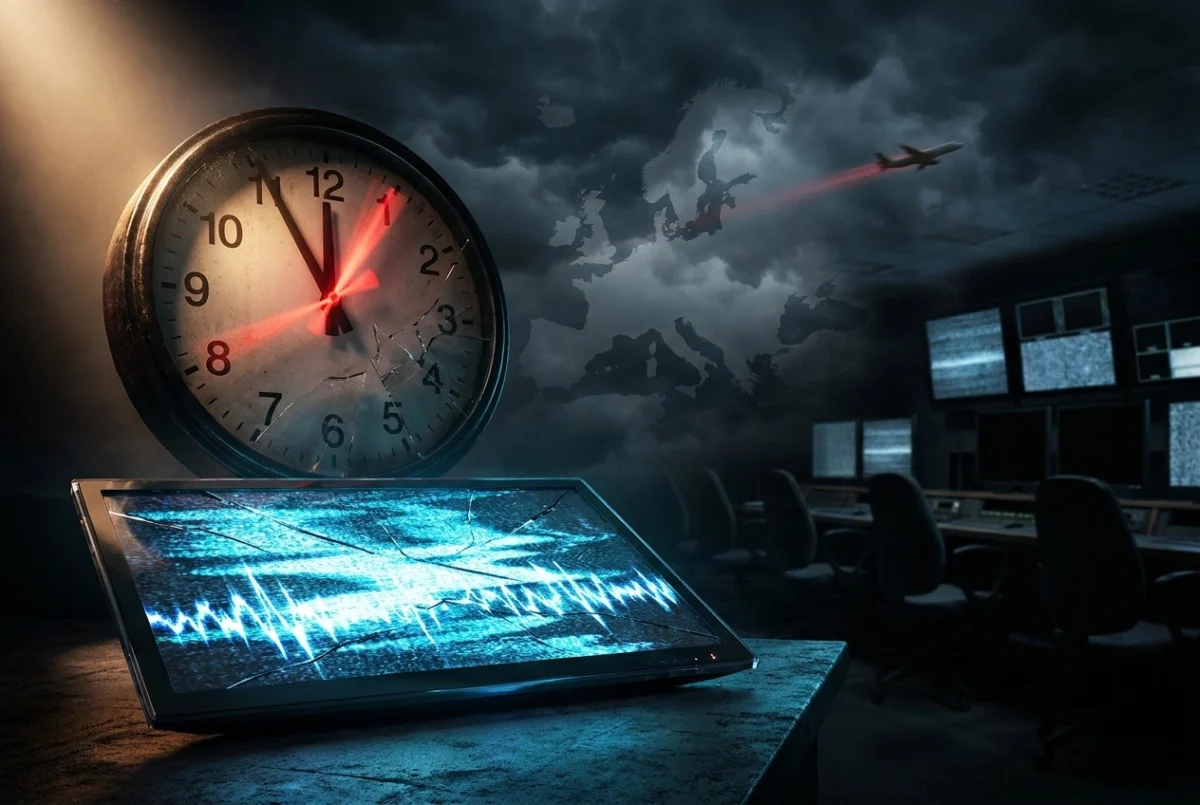
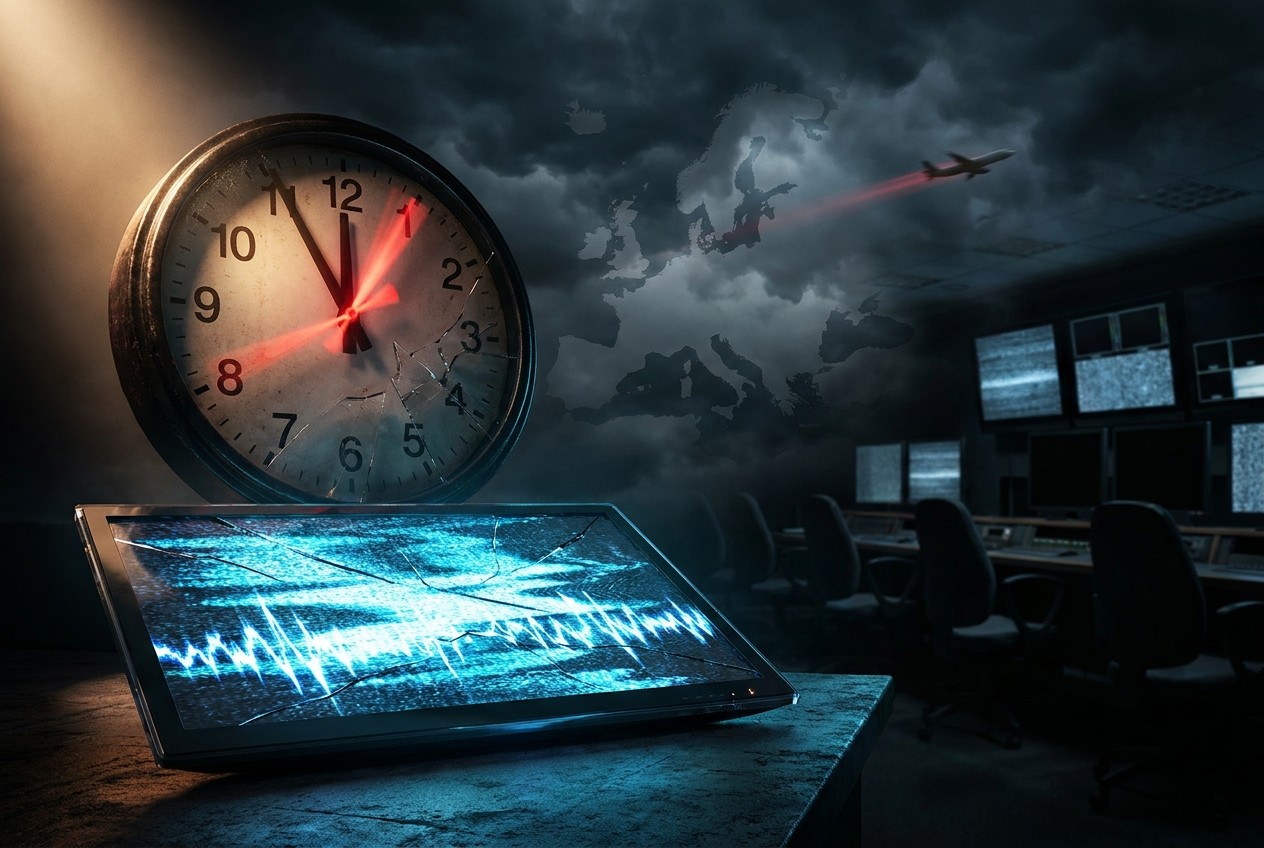
A sprawling and sophisticated campaign of psychological warfare gripped the European continent this week, as a series of coordinated bomb threats targeted both major national broadcasters and international commercial aviation. The wave of alerts, which spanned from Ireland to Bulgaria, forced the emergency evacuation of newsrooms, the suspension of live television programming, and the mid-air scrambling of fighter jets to intercept civilian aircraft.
Despite the high-stakes nature of the threats—many of which explicitly warned that "the clock is ticking"—authorities across multiple jurisdictions have confirmed that no explosives were discovered at any of the targeted sites. While investigators are currently treating the incidents as a campaign of malicious hoaxes, the sheer scale of the disruption has raised urgent questions regarding the vulnerability of critical infrastructure to asymmetric, low-cost "nuisance" attacks designed to sow widespread panic.
The Chronology of Disruption
The chaos began to unfold in the early hours of Friday morning. At approximately 8:33 a.m. local time, Ireland’s public service broadcaster, RTÉ, received a chilling email. The message, which was sent to several Irish media entities simultaneously, claimed that an operative had planted an explosive device within their broadcasting headquarters. The email, written with a sense of urgency, warned: "We want the whole world to know about us… It will detonate in 45 minutes. The clock is ticking."
Faced with a credible-looking threat, RTÉ Director General Kevin Bakhurst consulted with senior leadership and the Garda Síochána (Irish police). The decision was made to immediately evacuate the campus. For the next three hours, RTÉ’s television and radio output was abruptly replaced by music and a pre-recorded emergency loop. It was not until police completed a painstaking sweep of the sprawling media complex and declared it safe that staff were permitted to return.
Simultaneously, the panic rippled eastward. In Sofia, Bulgaria, the private television station Nova TV was forced to evacuate its newsroom after receiving an identical threat. The pattern repeated across the continent, with Britain’s Sky and various other European media outlets confirming they had received similar electronic communications.
The aviation sector, which had already been reeling from a week of sustained pressure, faced the brunt of the kinetic response. Throughout the day on Friday, flights in and out of major hubs—including Lisbon, Rome, Prague, and Sofia—were disrupted. In several instances, the severity of the threats forced Hungarian fighter jets to scramble and escort commercial passenger planes, a stark visual reminder of the disruption caused by these malicious actors.
The Anatomy of the Threat: "Message to the West"
Central to the investigation is the content of the digital communications sent to the broadcasters. The emails were signed by an individual identifying as "Mikhail Andropov," a name that carries significant historical weight, evoking the former General Secretary of the Communist Party of the Soviet Union, Yuri Andropov.
The content of the messages moved beyond simple intimidation, framing the actions as a geopolitical warning. The author claimed to be a leader of a group responsible for the ongoing series of flight hoaxes that have plagued European airspace for days. "This is only the beginning," the message warned. "What happened this week is just a small part of what awaits Europe in the near future."
Security analysts are currently dissecting the metadata and linguistic patterns of these emails to determine if the authorial persona is genuine or a calculated effort to create a specific, potentially pro-Russian, political narrative. However, experts warn that in the age of decentralized cyber-threats, "false flag" tactics are increasingly common, and the use of the Andropov name may be an attempt to misdirect investigators toward a specific state actor.
Official Responses and Security Implications
The response from European leadership has been one of measured concern. Irish Prime Minister Micheal Martin addressed the nation shortly after RTÉ resumed limited broadcasting via an outside mobile unit.
"It just illustrates how relatively simple it can be to cause disruption and to undermine the normal operation of society through unconventional activities of this kind," Martin stated. He emphasized that while the motivation remains undetermined, the intent is clear: "These are designed to cause disruption, designed to cause fear and anxiety."
The difficulty for security services lies in the "low-cost, high-impact" nature of the attacks. Unlike traditional terror plots that require significant logistics, weapons acquisition, and personnel, a digital bomb threat can be sent in seconds from a location halfway across the world. The response, however, requires the mobilization of police, bomb squads, and air traffic control resources, costing taxpayers millions of euros and causing significant economic damage through flight delays and canceled business operations.
The Vulnerability of Modern Society
The timing of these threats is particularly concerning to intelligence agencies, as they occur against a backdrop of increasing cyber-insecurity in Europe. Recent weeks have seen a surge in cyberattacks targeting critical infrastructure, including major supermarket chains and logistics hubs. Security analysts are now debating whether these incidents are isolated criminal events or part of a larger, coordinated "gray-zone" operation intended to test the resilience of European democratic institutions.
Supporting Data: A Continent Under Siege
The events of Friday are not isolated; they represent the culmination of a week-long pattern of instability.
- Aviation Impact: Since the beginning of the week, flights from Serbia to Finland and Spain have been repeatedly disrupted. Emergency landings and security sweeps have become a daily occurrence.
- Broadcaster Response: Major national broadcasters have been forced to implement "hardened" security protocols, effectively paralyzing their ability to provide real-time news during critical windows.
- Resource Allocation: Each hoax necessitates a full-scale security sweep. In the case of RTÉ, this required a three-hour suspension of all operations, effectively silencing the national broadcaster during the morning news cycle.
- Lack of Attribution: As of Friday evening, no group has claimed formal responsibility, and authorities across the European Union have yet to announce a single arrest related to the campaign.
Conclusion: The New Frontier of Psychological Warfare
As the sun sets on a week defined by fear and uncertainty, the investigations into the "Andropov" emails and the related aviation threats continue. While no explosive devices have been found, the attackers have successfully achieved their primary objective: the disruption of normal life.
The ease with which these hoaxes have been carried out presents a significant challenge to law enforcement and intelligence agencies. The threat is not just the bomb—which, in this case, did not exist—but the paralyzing effect of the fear that a bomb might exist.
As Europe looks toward the coming days, the focus will shift from the immediate threat of explosives to the long-term challenge of cyber-attribution and the hardening of public and private institutions against psychological operations. For now, the "clock" that the anonymous emailer referred to has stopped, but for the millions of travelers and citizens across the continent, the sense of unease remains.
Authorities are urging the public to remain vigilant but calm, emphasizing that the primary weapon of these attackers is the disruption of the social fabric. Whether these threats are the work of a single disgruntled individual or a sophisticated state-sponsored operation, the events of this week have served as a wake-up call for a continent that must now adapt to a new, digital frontier of insecurity.