










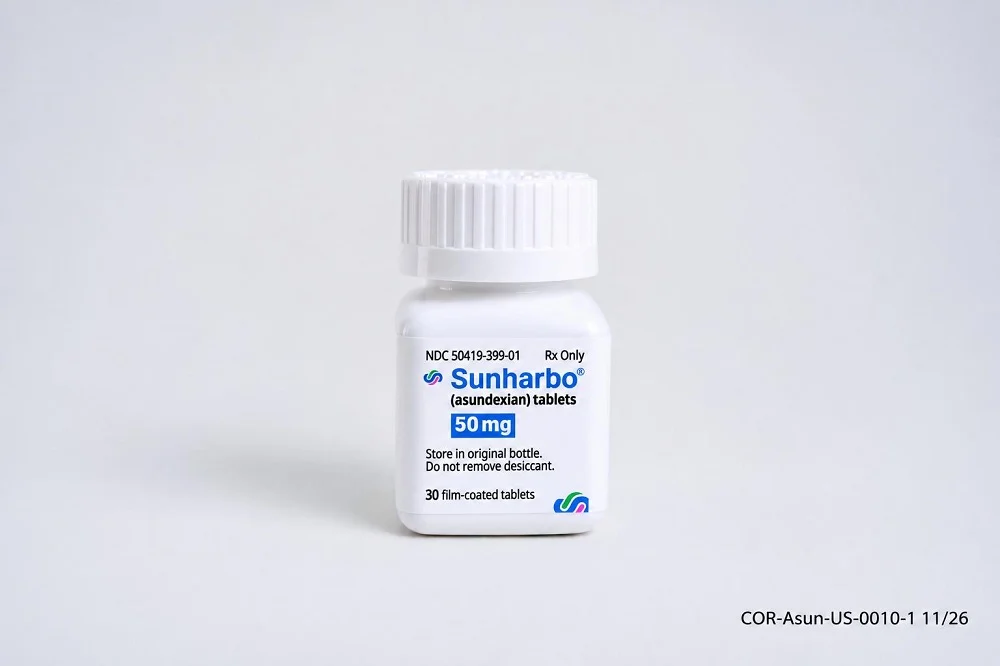
In a landmark development for cardiovascular medicine, the U.S. Food and Drug Administration (FDA) has officially approved Sunharbo (asundexian), marking a paradigm shift in how clinicians approach the secondary prevention of strokes. Developed by the German pharmaceutical giant Bayer, Sunharbo is the first-in-class Factor XIa inhibitor to reach the American market, offering a potentially safer alternative to the traditional blood thinners that have defined stroke care for decades.
The regulatory green light, announced late Monday, provides a critical new therapeutic option for adults who have recently suffered a non-cardioembolic ischemic stroke or a high-risk transient ischemic attack (TIA)—commonly referred to as a "mini-stroke." With the drug set to hit pharmacy shelves in mid-November, the medical community is bracing for a transformation in patient management, balancing the urgent need for stroke prevention with the persistent risk of hemorrhage associated with conventional anticoagulants.
The Science of Innovation: Targeting Factor XIa
For years, the standard of care for preventing recurrent strokes has relied on antiplatelet therapies and anticoagulants. While effective, these treatments often come with a significant "bleeding tax"—a heightened risk of internal hemorrhaging that forces clinicians to constantly weigh the benefits of clot prevention against the dangers of excessive bleeding.
Sunharbo (asundexian) introduces a novel biological approach. Unlike traditional anticoagulants that broadly inhibit the coagulation cascade, Sunharbo is a small molecule designed specifically to block Factor XIa. Factor XIa is an enzyme that plays a pivotal role in the formation of pathological thrombin—the precursor to dangerous blood clots. By targeting this specific enzyme, Bayer researchers hypothesized that they could inhibit clot formation without severely compromising the body’s natural ability to stop bleeding in the event of an injury.
This "precision" approach to anticoagulation has been the "holy grail" of vascular research for years. If successful, it would allow patients to remain on preventative therapy for longer durations with significantly fewer side effects, fundamentally altering the long-term prognosis for stroke survivors.
A Chronology of Development
The journey to Sunharbo’s approval has been characterized by high-stakes clinical rigor and a few notable hurdles:
- Internal Discovery: Bayer identified the potential of Factor XIa inhibition early, developing the molecule internally as part of a push to revitalize its cardiovascular portfolio.
- The "Afib" Setback (2023): Three years ago, the drug faced a significant disappointment when it failed its Phase 3 clinical trial for the treatment of atrial fibrillation (afib). The failure forced Bayer to pivot its strategy, focusing exclusively on secondary stroke prevention rather than competing directly with established giants like Eliquis.
- International Stroke Conference (February 2026): Bayer presented the pivotal Phase 3 data, which demonstrated a 26% reduction in the risk of recurrent strokes.
- Peer-Reviewed Validation (April 2026): The New England Journal of Medicine published the study, providing the necessary scientific gravitas for the FDA’s review process.
- Global Momentum (October 2026): China became the first nation to grant regulatory approval for asundexian, signaling a major win for Bayer’s global commercialization strategy.
- FDA Approval (November 2026): Following the regulatory review, the FDA cleared Sunharbo for the U.S. market, marking the first-ever approval of a Factor XIa inhibitor.
Supporting Data: Efficacy Without the Bleeding Risk
The clinical data underpinning Sunharbo’s approval is perhaps its most compelling feature. In the Phase 3 trial, investigators evaluated the efficacy of the drug when added to standard antiplatelet therapies.
The results were statistically significant: patients treated with Sunharbo experienced a 26% reduction in the risk of stroke of any kind compared to a control group receiving only a placebo and antiplatelet therapy. Crucially, this reduction in stroke risk was achieved without a corresponding increase in bleeding events. For clinicians who have long struggled to manage patients with a high risk of both stroke and hemorrhage, this "neutral" bleeding profile is a breakthrough.
While diarrhea was noted as the most frequent adverse reaction, the safety profile appears robust enough to satisfy regulators. The lack of increased bleeding rates suggests that the drug’s mechanism of action successfully decouples the thrombosis pathway from the physiological necessity of hemostasis (blood clotting).
The Competitive Landscape: A Looming Battle
Despite its status as the first-to-market, Sunharbo is entering a crowded and aggressive competitive field. Bayer’s most formidable rival is the partnership between Bristol Myers Squibb and Johnson & Johnson, which is currently developing a rival small-molecule inhibitor, milvexian.
Market analysts are closely watching the progress of milvexian, which is expected to release its own Phase 3 data by the end of 2026. Because milvexian requires a twice-daily dosing regimen—compared to Sunharbo’s more patient-friendly once-daily pill—analysts at Leerink Partners suggest that milvexian will need to demonstrate superior clinical efficacy, likely a 30% or greater reduction in stroke risk, to gain a foothold against Bayer’s established lead.
Furthermore, the field is diversifying beyond small molecules:
- Novartis: Is pursuing a different modality altogether with an antibody-based Factor XI inhibitor, acquired through their deal with Anthos Therapeutics.
- ADARx Pharmaceuticals: Is experimenting with small interfering RNA (siRNA) technology, which aims to "silence" the gene responsible for producing Factor XI, potentially offering a long-acting treatment that could be administered significantly less frequently than a daily pill.
Official Responses and Strategic Implications
Bayer’s leadership is projecting confidence in the face of this competition. During a recent earnings call for the third quarter of 2026, Stefan Oelrich, head of Bayer’s pharmaceuticals division, emphasized that the company’s "solid data set" would serve as a high barrier to entry for any competitor.
"Obviously, we believe that we have an extremely solid data set when it comes to secondary stroke prevention," Oelrich stated. "Where I think whoever comes there will come up with something really, really good if they want to beat us."
Bayer is positioning Sunharbo not just as a new drug, but as the new foundation of stroke care. By having a one-year head start on potential rivals, Bayer plans to aggressively capture market share and integrate the drug into the clinical guidelines that dictate how neurologists and cardiologists treat patients post-stroke.
Implications for Patients and the Healthcare System
For the millions of patients who live in the shadow of a potential secondary stroke, the arrival of Sunharbo offers more than just a new prescription. It represents a shift toward a future where "blood thinners" are no longer synonymous with "bleeding risks."
- Patient Compliance: The once-daily dosing schedule is expected to drive higher adherence rates compared to more complex treatment regimens, a vital factor in secondary prevention.
- Economic Impact: While the pricing strategy for Sunharbo remains to be finalized, the reduction in stroke-related hospitalizations—which are among the most expensive events in the healthcare system—could make the drug highly attractive to insurance payers and health systems looking to reduce long-term cardiovascular costs.
- Future Indications: While Sunharbo failed in the afib space three years ago, Bayer has hinted that the drug’s potential is not limited to post-stroke care. The company continues to evaluate other indications, and industry observers are keen to see if further research will uncover additional conditions where Factor XIa inhibition can improve patient outcomes.
As Sunharbo prepares for its mid-November launch, the medical community will be watching closely. It is a defining moment for Bayer and a significant milestone for stroke survivors, potentially signaling the end of the era where preventing one life-threatening condition meant accepting the high risk of another. With clinical validation on its side, Sunharbo is poised to rewrite the standard of care for millions.