








Reviewed by Brian St. Pierre, MS, RD
In 2017, when semaglutide—branded most notably as Ozempic—first entered the mainstream pharmaceutical conversation, many health and fitness professionals felt a cold shiver of professional existentialism. "Is this drug going to steal my job?" was the prevailing sentiment in locker rooms and private training studios across the country.
For years, the threat remained largely theoretical. Prescription rates were modest, and the medication felt like a niche medical intervention. Fast forward to 2026, and the landscape has undergone a seismic shift. Today, more than 1 in 10 US adults are actively utilizing GLP-1 receptor agonists. The medication has moved from the doctor’s office to the dinner table, becoming a household name.
As the ubiquity of these drugs has grown, so too has the perspective of the fitness industry. The initial fear of displacement has largely evaporated, replaced by a nuanced understanding of the modern client. Coaches now recognize that they are not competing with GLP-1s; they are working alongside them. In the current climate, the most successful professionals are those who have stopped trying to "coach everyone" and instead focused their expertise on the "GLP-1 support world."
Chronology of a Medical Revolution
The rise of GLP-1 agonists did not happen overnight, but its trajectory has been exponential.
- 2017–2019: The Theoretical Phase. The introduction of semaglutide and similar agents was met with cautious optimism by the medical community but was largely ignored by the broader fitness industry.
- 2020–2022: The Visibility Phase. As social media trends and celebrity endorsements pushed these drugs into the public consciousness, prescription rates climbed. Coaches began noticing an influx of clients who were losing weight without the traditional "sweat equity" previously required.
- 2023–2025: The Integration Phase. The industry saw a transition from skepticism to adaptation. Professional bodies began issuing guidelines on muscle preservation and nutritional adequacy for those on these medications.
- 2026: The Support Ecosystem. We have now arrived at a stage where specialized coaching—focusing on the "support world" of GLP-1 users—has become a burgeoning pillar of the health and wellness industry.
Supporting Data: Why Coaching is Essential
The skepticism toward GLP-1s was rooted in valid concerns: the loss of lean muscle mass, the reliance on a "band-aid" solution, and the potential for bypassing foundational health habits. Data suggests these concerns are not unfounded. Studies indicate that up to 40 percent of weight lost through GLP-1 medication can come from lean mass, the majority of which is muscle.
Without targeted resistance training and protein-forward nutrition, patients risk entering a state of "skinny fat" or sarcopenic obesity, where body weight drops but metabolic health and physical strength deteriorate. Conversely, those who integrate consistent coaching and resistance training while on the medication demonstrate significantly better long-term outcomes, with a higher propensity to maintain weight loss after discontinuing the drug.
The 7 Archetypes of the GLP-1 Client
Effective coaching requires meeting the client where they are. According to Kate Solovieva, Director of Community at Precision Nutrition, a client’s readiness for support is dynamic. Based on an analysis of over 175,000 client interactions, we have identified seven distinct archetypes:
1. The Honeymooner
This client has started the medication and is seeing immediate, effortless results. They feel no need for behavioral change.
- Coaching Move: Avoid the "righting reflex." Do not lecture on the dangers of sedentary behavior. Instead, celebrate their success and keep the door open for future support.
2. The Ambivalent Candidate
They are considering the medication but are paralyzed by fear—of side effects, of societal stigma, or of "giving up" on themselves.
- Coaching Move: Facilitate the "4 Crazy Questions" exercise. Help them articulate their fears and weigh the risks of starting versus the risks of remaining in their current state.
3. The Ready-to-Quitter
They are losing weight but suffering from nausea, fatigue, and physical exhaustion. They feel "broken."

- Coaching Move: Normalize the experience. Educate them on the trial-and-error nature of dosing and encourage them to experiment with smaller, more frequent meals to mitigate symptoms.
4. The Muscle-Loss Risk
The scale is moving, but the client is sedentary and under-protein-fed.
- Coaching Move: Make the invisible visible. Use DEXA scans or baseline strength testing to show them the loss of lean mass. Prioritize high-protein intake and low-barrier strength training.
5. The Under-Fueler
The appetite suppression is so profound that the client has stopped eating enough to function.
- Coaching Move: Pivot to an "eating by the clock" strategy. Ensure they are getting nutrient-dense calories every 3–4 hours, regardless of appetite.
6. The Graduate
They are weaning off the medication and are terrified of weight regain.
- Coaching Move: Focus on habit-building as an insurance policy. Emphasize that the behaviors established now will be their lifeline once the drug’s appetite-suppressing effects fade.
7. The Priced-Out
They were successful, but insurance changes or financial constraints forced them to stop the medication.
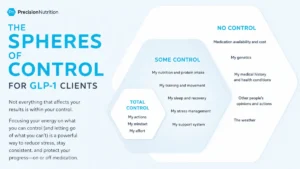
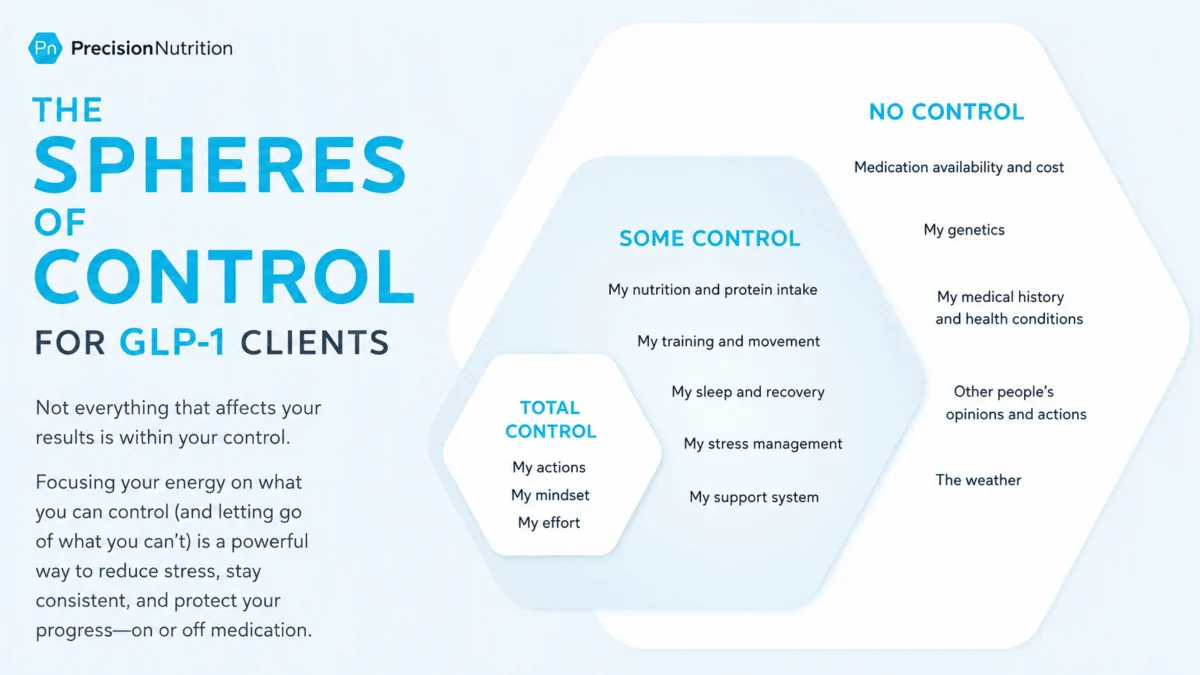
- Coaching Move: Address the system failure with empathy. Use the "Spheres of Control" model to shift their focus from the medication they can’t access to the nutrition and movement they can control.
Official Perspectives: The Role of the Coach
The consensus among leading practitioners is that a coach’s role is not to prescribe or discontinue medication—that is strictly the domain of medical doctors. However, the coach is the architect of the environment in which that medication works.
Toni Bauer, Director of Coaching and Education Operations at Precision Nutrition, emphasizes the concept of "deep ruts."
"Think about the Oregon Trail," she explains. "Wagon wheels made ruts by hitting the same ground over and over. Habits are the same. If we reinforce neural pathways while the medication is doing the heavy lifting, those pathways will still be there when the client goes off the drug."
Implications for the Future of Fitness
The rise of GLP-1s has forced the fitness industry to evolve from a "calories-in, calories-out" model to a more holistic, identity-based approach. The most successful coaches in 2026 are those who view the medication as a tool, not a shortcut.
For the client, the goal is no longer just "weight loss." It is the creation of a "new person"—someone who identifies as a lifter, as a protein-conscious eater, and as someone who prioritizes sleep and stress management.
As the industry looks ahead, the path forward is clear: professional certification and specialized training are the new standards. The GLP Coaching Institute, for instance, is already shifting the focus toward the "Five GLP-1 Types"—Strength, Fuel, Fitness, Recovery, and Results—providing a roadmap for coaches to navigate the complex needs of this growing demographic.
In conclusion, the era of fearing the GLP-1 is over. We have entered the era of the "Support Specialist." For the fitness professional, this is not an end, but an evolution—a chance to provide deeper, more meaningful support to those who need it most. Whether a client stays on the medication for life or chooses to taper off, the coach remains the essential guide in building the habits that sustain a lifetime of health.
References
All clinical guidelines and data points referenced in this article are derived from longitudinal studies on GLP-1 metabolic outcomes and behavioral nutrition frameworks developed by Precision Nutrition’s coaching staff. Further reading on metabolic health, sarcopenia, and the psychology of weight management can be found in our comprehensive reference library.