







In the quiet hum of a routine clinical checkup, a patient might undergo an electrocardiogram (EKG)—a standard, five-minute procedure that maps the electrical heartbeat. For decades, this test has been a foundational tool for cardiologists, yet it has remained limited by the human eye’s inability to perceive the subtle, microscopic fluctuations that precede a catastrophic event. Now, a groundbreaking study published in the journal Nature suggests that what we once dismissed as "normal" heart rhythms may actually contain life-saving warnings.
Researchers at UC Berkeley have harnessed the power of artificial intelligence to identify previously invisible precursors to sudden cardiac arrest (SCA). By training neural networks on nearly half a million EKG records, the team has developed a diagnostic tool capable of identifying high-risk patients who currently slip through the cracks of the healthcare system. This innovation could mark a paradigm shift in cardiology, moving the field from reactive emergency care to proactive, precision-based prevention.
The Magnitude of the Crisis
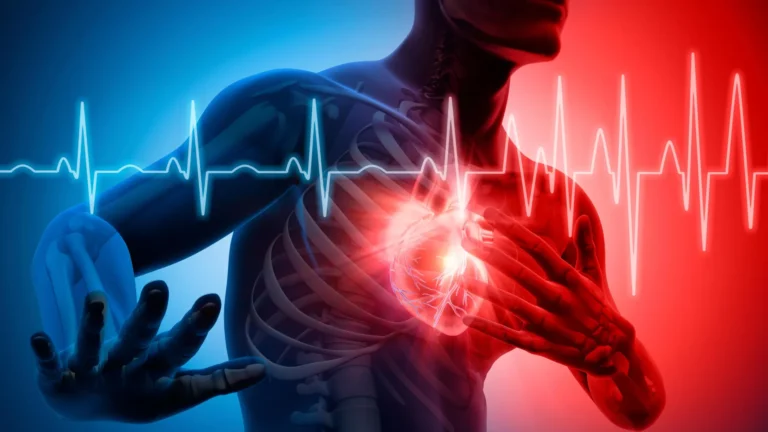
Sudden cardiac arrest is one of the most lethal medical emergencies in the modern world, claiming the lives of more than 300,000 people in the United States every single year. Unlike a heart attack—which is typically caused by a blockage in blood flow—cardiac arrest is an electrical failure. The heart’s internal circuitry, responsible for maintaining a steady, rhythmic contraction, abruptly misfires or ceases entirely.
When this happens, blood flow to the brain and vital organs stops instantly. Because the event occurs without warning, it is often referred to as "sudden death." The statistics are sobering: approximately 90% of those who experience SCA outside of a hospital setting perish within minutes. While automated external defibrillators (AEDs) and cardiopulmonary resuscitation (CPR) can save lives, the window for intervention is razor-thin. For many, the first symptom of heart disease is the final one.
A Decade in the Making: The Research Chronology
The path to this discovery was not paved in a day. The research, led by Ziad Obermeyer, an associate professor at UC Berkeley’s School of Public Health, represents the culmination of a ten-year effort to unlock the predictive potential of medical data.
The project began by addressing a fundamental problem in clinical research: the scarcity of high-quality, longitudinal data. To bridge this gap, Obermeyer and his collaborators utilized two major data-advocacy organizations he helped found, Dandelion Health and Nightingale Open Science. These entities specialize in organizing and de-identifying massive medical datasets that are otherwise locked away in inaccessible hospital silos.
The Training Phase:
The research team started with six years of comprehensive EKG data sourced from Sweden’s unified national healthcare system. By cross-referencing these electrical traces with official death certificates, the AI was "taught" to distinguish between three distinct categories: healthy individuals, those with known heart risks, and those who eventually succumbed to sudden cardiac causes.
The Validation Phase:
Training an algorithm on one population is not enough to ensure its global utility. To test the robustness of their model, the team applied the AI to two disparate, anonymized datasets: one from a major hospital system in San Diego and another from clinical centers in Taipei. This international validation was critical, proving that the algorithm’s predictive power transcended ethnic and environmental differences, identifying high-risk patterns consistently across diverse patient populations.
Data-Driven Insights vs. Traditional Metrics
For years, clinical guidelines have relied on a relatively crude metric: the "ejection fraction." This measurement assesses how effectively the heart pumps blood out with each contraction. While it has been the gold standard for determining who might benefit from an implantable cardioverter-defibrillator (ICD), it is far from perfect.
The current system is riddled with inefficiencies. Many patients who meet the threshold for an ICD never actually require the device to deliver a shock, meaning they are subjected to expensive and invasive surgery for a life-saving benefit they may not need. Conversely, thousands of patients who appear "low risk" based on their ejection fraction fall victim to sudden death every year.
The AI model flips this dynamic on its head. In the study, traditional clinical metrics identified a group with a 4.6% annual rate of sudden cardiac death. The AI, by analyzing the nuanced waves and spikes of the EKG, identified a distinct group with a 7% annual risk—nearly double the predictive accuracy. Most significantly, the AI flagged thousands of individuals whom conventional guidelines would have labeled as "low risk," offering a window of opportunity to intervene before a fatal arrhythmia occurs.
Official Perspectives and Clinical Implications
Dr. Ziad Obermeyer, who balances his role as a researcher with his practical experience as an emergency physician, emphasizes that this technology is not designed to replace doctors, but to empower them.
"Medical decisions are really hard," Obermeyer stated. "We can not only make better decisions, but also start to understand what’s actually going on with these patients before their heart stops."
The implications for clinical practice are profound. Under the proposed framework, hospitals could integrate this algorithm directly into their EKG databases. When a patient’s scan returns a "high-risk" flag, clinicians would be alerted to perform follow-up monitoring. This might involve having the patient wear a continuous monitoring patch for a period, allowing for a deeper dive into their heart’s electrical stability.
The "Black Box" of AI
One of the most intriguing aspects of this discovery is that the AI identified patterns that human doctors do not yet fully understand. While we know the algorithm works, the specific biological mechanisms—the "why" behind the patterns—remain a subject of intense scientific curiosity. This "black box" nature of AI is not a barrier, but a roadmap; by studying the specific electrical signatures the AI flags, researchers hope to uncover new biological markers of cardiac vulnerability that have been invisible to medicine for over a century.
Looking Ahead: A New Era of Prevention
The potential to save lives is the primary driver of this research, but the secondary benefit is a transformation in how we conduct medical science. By proving that artificial intelligence can extract meaningful, predictive information from existing, routinely collected data, the study demonstrates that we may already have the answers to some of medicine’s most stubborn mysteries—we just need the right tools to read them.
The researchers have already launched an initiative to help patients learn more. Through a dedicated portal, individuals can explore the potential for future EKG analysis, reflecting a growing movement toward patient-centered, data-empowered health management.
As the medical community begins to integrate these tools into standard practice, the focus will shift from simply measuring how much blood the heart pumps to understanding the delicate, complex electrical symphony that sustains life. By listening more closely to the heart’s signals, we are entering an era where sudden death may no longer be a tragic, unpredictable occurrence, but a preventable medical event.
The work of the UC Berkeley team stands as a testament to the "slow burn" of academic research. It is a reminder that when we apply advanced computational power to the vast, untapped reservoirs of human health data, the results can be nothing short of life-saving. For the hundreds of thousands of families affected by sudden cardiac arrest each year, this digital sentinel could provide the one thing medicine has struggled to offer: time.