







When the average person thinks of a food allergy, the mental image is often cinematic: a sudden onset of hives, rapid facial swelling, or the life-threatening constriction of an airway—anaphylaxis. These dramatic responses are orchestrated by Immunoglobulin E (IgE), an antibody that alerts the immune system to launch an immediate, systemic defense. However, for many patients living with Ehlers-Danlos syndrome (EDS) and related hypermobility spectrum disorders (HSD), the most debilitating food-related symptoms do not fit this textbook description.
Instead, a vast, often invisible landscape of "non-IgE mediated" food allergies exists. These conditions, which operate through different immunological pathways, are frequently overlooked because they do not trigger the markers captured by standard skin prick or blood-specific IgE tests. For the EDS community—a population already prone to complex, multisystemic health challenges—the failure to recognize these non-IgE reactions can lead to years of diagnostic uncertainty, unnecessary suffering, and a diminished quality of life.
Main Facts: The "Delayed" Dilemma
Non-IgE mediated food allergies represent a distinct category of immune-mediated conditions. Unlike their IgE counterparts, they do not involve a rapid, systemic release of histamine that results in immediate hives or anaphylaxis. Instead, they are characterized by delayed gastrointestinal symptoms that can manifest hours or even days after consuming a trigger food.
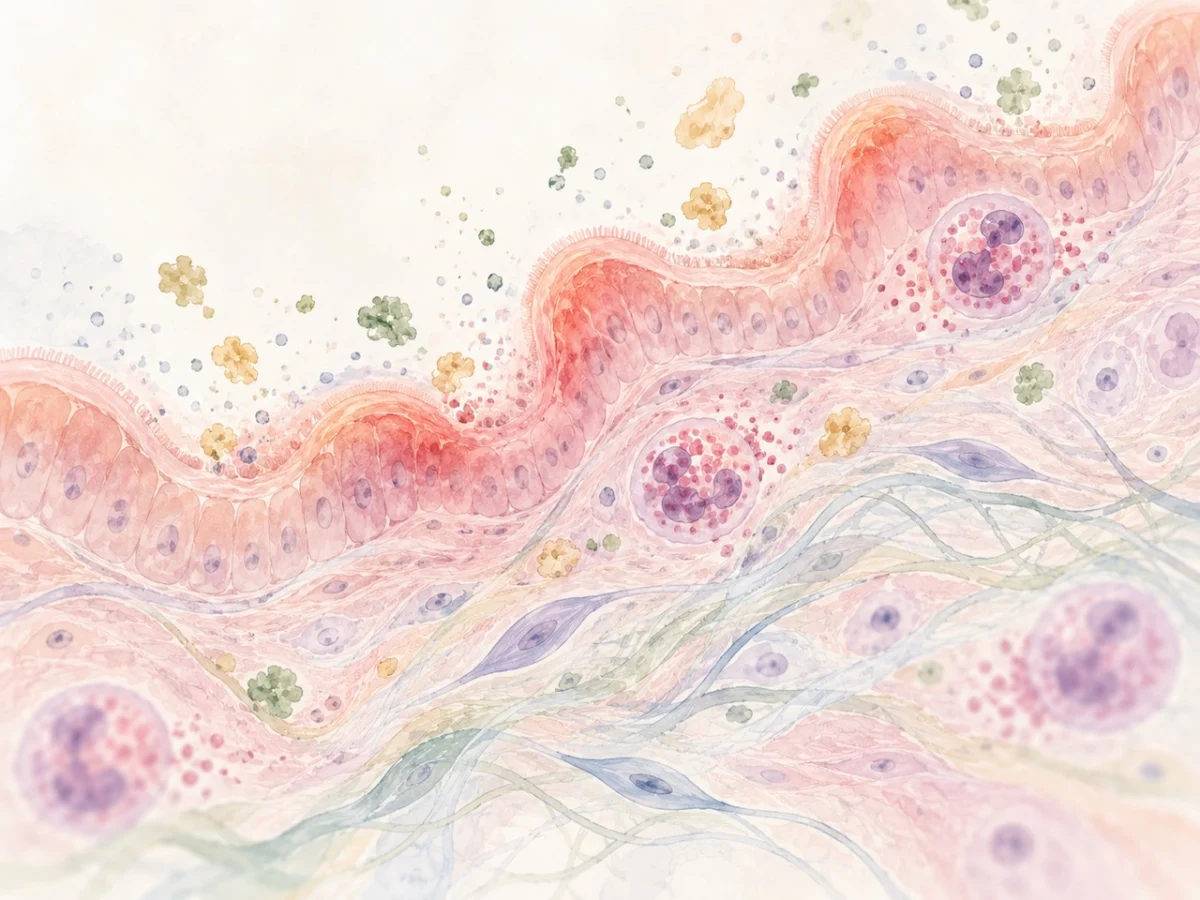
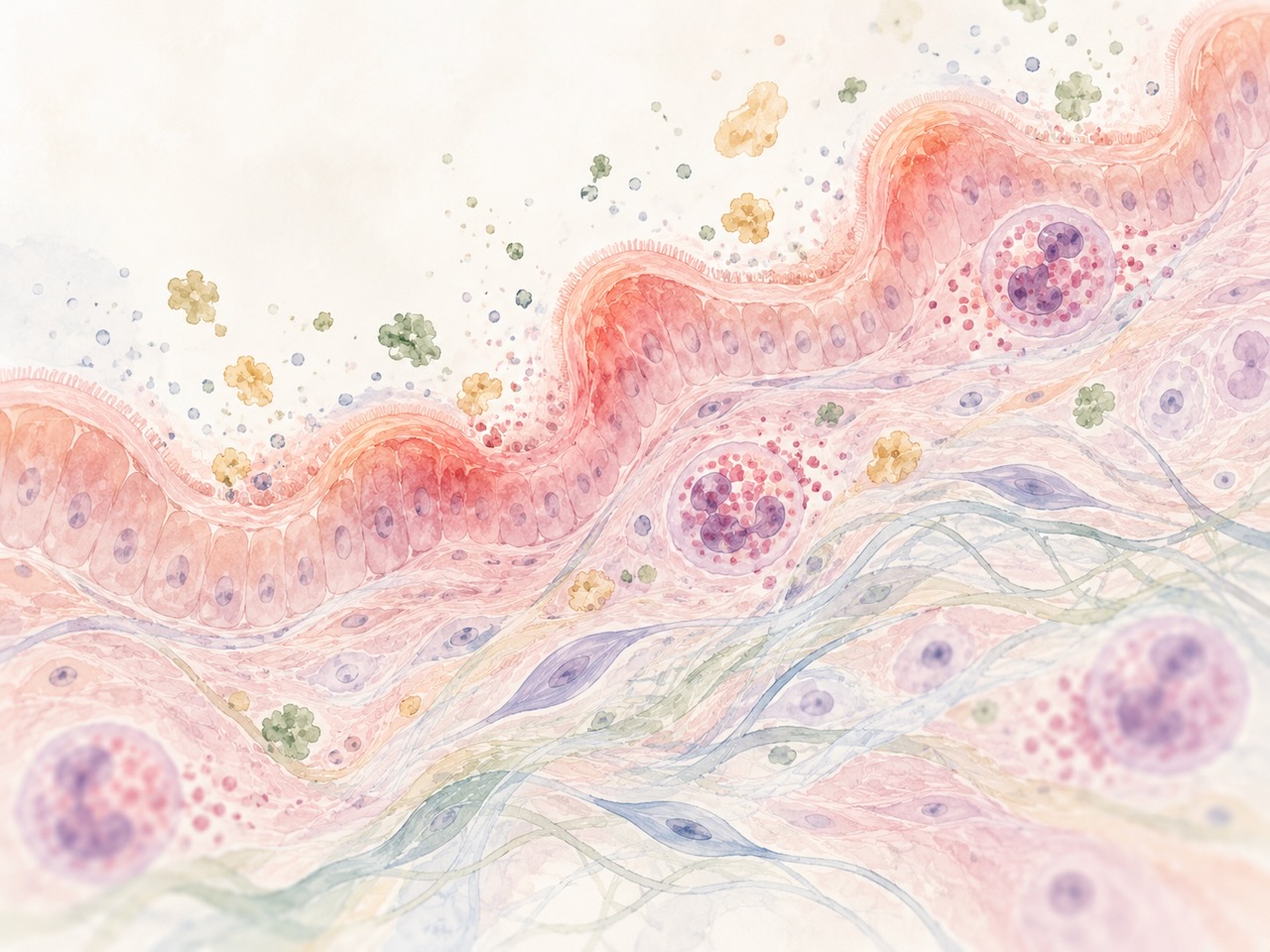
These reactions are driven by various arms of the immune system, including T-cells and eosinophils, which target the lining of the gastrointestinal tract. Because these reactions are localized and delayed, they are notoriously difficult to track. Symptoms often include chronic vomiting, persistent diarrhea, severe abdominal pain, acid reflux, and—perhaps most insidiously—malabsorption, which can lead to significant nutritional deficiencies in patients who are already struggling with the systemic impacts of EDS.
The clinical spectrum of these conditions is broad, including:
- Food Protein-Induced Allergic Proctocolitis (FPIAP): Primarily affecting infants, characterized by inflammation of the rectum and colon.
- Food Protein-Induced Enteropathy (FPE): A broader inflammation of the small intestine.
- Food Protein-Induced Enterocolitis Syndrome (FPIES): A severe, systemic-feeling but non-IgE reaction that can cause profound vomiting and dehydration. While often pediatric, it can persist into adulthood.
Chronology: The Evolution of Diagnostic Awareness
The medical understanding of these conditions has undergone a significant shift over the last decade. Historically, if a patient complained of "food allergies" but tested negative on standard panels, they were often dismissed as having "functional" GI issues or psychosomatic symptoms.
- Early 2010s: Research begins to delineate the difference between "true" (IgE) allergies and "sensitivities." However, the mechanisms of non-IgE reactions remain relegated to pediatric specialty journals.
- Mid-2010s: The rise of clinical awareness surrounding Mast Cell Activation Syndrome (MCAS) begins to shed light on how immune cells in the gut can be triggered by non-allergic pathways, creating a bridge for researchers to look at EDS patients with "mystery" GI symptoms.
- 2020–2025: Large-scale epidemiological studies begin to map the intersection between connective tissue disorders and inflammatory esophageal conditions.
- 2026: Emerging research confirms an eight-fold increase in Eosinophilic Esophagitis (EoE) prevalence among those with hereditary connective tissue disorders, finally providing a biological link between structural tissue weakness and immune-mediated gut inflammation.
Supporting Data: The EDS-EoE Connection
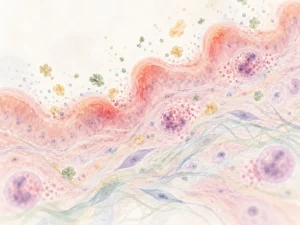
The link between Eosinophilic Esophagitis (EoE) and connective tissue disorders is one of the most compelling developments in recent gastrointestinal research. EoE is a chronic inflammatory condition where eosinophils—white blood cells typically reserved for fighting parasites—infiltrate the esophagus in response to food proteins.
The Statistical Magnitude
A landmark study analyzing over one million patient records revealed an eight-fold increased risk of EoE in patients with EDS, Marfan syndrome, and other hypermobility disorders compared to the general population. This is not a statistical anomaly; it is a clinical signal that the structural integrity of the esophagus and the immune response of the mucosal lining are inextricably linked.
The Biological Mechanism
Researchers point to the TGF-β (Transforming Growth Factor-beta) signaling pathway as a primary suspect. TGF-β is critical for tissue remodeling and collagen production. In patients with EDS, this pathway is often dysregulated. Because the esophagus relies on specific collagen structures to maintain its elasticity, the combination of dysregulated TGF-β and immune hypersensitivity creates a "perfect storm." The esophagus becomes scarred and narrowed, leading to the sensation of food being "stuck"—a common complaint that many EDS patients previously attributed solely to dysmotility.
Official Responses and Clinical Perspectives
Medical organizations are slowly updating their guidance to reflect these findings. Leading gastroenterology journals now suggest that for any patient with EDS who reports chronic dysphagia (difficulty swallowing) or persistent, treatment-resistant reflux, endoscopy with biopsy is the gold standard.
"The old approach was to put the patient on a proton pump inhibitor (PPI) and call it GERD," notes Dr. Jacqueline Moltzau Anderson, a researcher at the University of California. "But if that patient has an underlying connective tissue disorder, we are missing the ‘eosinophilic’ component. We are seeing that these patients don’t just have motility issues; they have a distinct inflammatory signature in their esophageal tissue that requires dietary management and, at times, targeted anti-inflammatory therapy."
Clinical experts emphasize that standard allergy blood tests are essentially useless for diagnosing these conditions. Instead, they advocate for a "clinical history-first" approach. If a patient experiences a pattern of symptoms—such as chest pain after specific meals or chronic GI distress that defies standard GERD treatment—the clinical index of suspicion for EoE must be high.
Implications for the Patient Community
For those living with EDS, these findings carry profound implications for daily management and long-term health.
1. Moving Beyond the Allergy Panel
Patients must understand that a "negative" allergy test does not mean their symptoms are imaginary. It simply means the test was looking for the wrong mechanism. Advocating for a referral to a specialized gastroenterologist who is familiar with both EDS and eosinophilic disorders is crucial.
2. The Role of MCAS
The overlap between Mast Cell Activation Syndrome (MCAS) and non-IgE food reactions is significant. Because mast cells reside in the mucosal lining, they can release mediators that mimic allergic reactions, further complicating the diagnostic picture. Many patients find that stabilizing mast cells—either through diet or pharmacological intervention—reduces the severity of these reactions.
3. Structural vs. Inflammatory
It is vital to distinguish between structural issues (like hiatal hernias or esophageal dysmotility common in EDS) and inflammatory issues (like EoE). Often, an EDS patient suffers from both. Treating the motility issue with physical therapy or positioning is helpful, but it will not resolve the underlying inflammation of an EoE-affected esophagus.
4. Empowerment Through Data
The fact that there is an eight-fold risk of EoE in the EDS community serves as a powerful tool for patient advocacy. When speaking with primary care physicians or specialists, citing this documented research can move the conversation from "let’s watch and wait" to "let’s investigate the esophageal lining."
Conclusion: A New Path Forward
The gastrointestinal burden of Ehlers-Danlos syndrome is no longer a "mystery" to be endured. As we move toward 2027, the medical community is gaining the vocabulary to describe what many EDS patients have known for years: their bodies are reacting to the environment in ways that the standard immunological lens cannot capture.
By shifting the focus from immediate, IgE-mediated allergies to the slower, more complex pathways of non-IgE mediated conditions like EoE and MCAS, we can unlock better diagnostic pathways. For the patient, this means moving away from the frustration of "nothing is wrong" and toward a targeted strategy of management that addresses the root cause of their inflammation.
The journey to finding the right care team is arduous, but for those with EDS, understanding these immune-mediated triggers is a vital step toward reclaiming the quality of life that these often-silent, but deeply disruptive, conditions have compromised.
By Jacqueline Moltzau Anderson, PhD
Researcher at University of California
October 2026
Disclaimer: This article is for informational purposes and does not constitute medical advice. Always consult with your primary care provider or a specialized gastroenterologist regarding persistent gastrointestinal symptoms.