









For many, the promise of travel—whether for a high-stakes business conference or a long-awaited tropical getaway—is synonymous with excitement. Yet, beneath the veneer of airport lounges and hotel check-ins lies a pervasive, often overlooked challenge: the struggle to secure a restorative night’s sleep away from home. As modern life demands more mobility, the "traveler’s insomnia" phenomenon has become a significant public health concern, impacting productivity, mood, and overall trip satisfaction.
New data from the American Academy of Sleep Medicine (AASM) sheds light on the complex relationship between travel and circadian health, revealing that for a large portion of the population, home is not just where the heart is—it is where the best sleep happens.
The State of Travel-Related Sleep: Main Facts and Findings
The AASM recently conducted an extensive survey to quantify how travel disrupts the human sleep cycle. The findings are striking: roughly one in four adults report that their sleep quality deteriorates significantly when they are on the road. Specifically, 23% of adults report worse sleep during business travel, while 25% report similar difficulties during leisure trips.
However, the data is not entirely pessimistic. The survey highlights a "bedtime paradox," where approximately one-third of adults claim they actually sleep better when traveling for leisure. This group likely benefits from the detachment from daily stressors, workplace pressures, and the rigid obligations of home life.
The disparity in sleep quality is not merely a matter of willpower; it is a physiological response to the upheaval of one’s environment. When we leave our homes, we abandon the "sleep sanctuary" we have carefully curated, trading our familiar mattresses, noise levels, and lighting conditions for the unpredictability of hotels, guest rooms, or temporary rentals.
Age and the Travel Experience: A Demographic Chronology
The impact of travel on sleep appears to be heavily mediated by age. In the AASM study, researchers observed a clear divide between younger travelers and their older counterparts.
Adults aged 25 to 34 represent the most volatile demographic regarding travel sleep. This age group was the most likely to report worse sleep during business trips, likely due to the high-pressure nature of early-career professional travel, the tendency toward "bleisure" (combining business and leisure), and a heightened sensitivity to environmental changes. Conversely, this same age bracket was the most likely to report improved sleep during leisure travel. This suggests that for younger adults, the benefits of "getting away"—such as reduced household responsibility or the novelty of a new location—can outweigh the physiological stress of travel.
By contrast, the experience for adults aged 65 and older is markedly different. This demographic is less likely to report improved sleep during leisure trips, and more likely to state that travel has no discernible impact on their sleep patterns at all. This "neutrality" in sleep quality among older travelers may be attributed to established sleep routines that are less easily swayed by external variables, or perhaps a lower expectation of "perfect" sleep while on the road.
The Science of Disruption: Why Your Body Resists the Road
To understand why travel is so disruptive, one must look at the body’s internal architecture. Humans are creatures of habit, guided by the circadian rhythm—a 24-hour internal clock that regulates sleep-wake cycles. This rhythm is heavily dependent on external cues, known as zeitgebers, primarily light and temperature.
The Environmental Variable
When you enter an unfamiliar room, your brain engages in a primitive survival mechanism often called the "First-Night Effect." Research suggests that in a new environment, one hemisphere of the brain remains slightly more vigilant than the other, acting as a "night watchman" to monitor for potential threats. While a modern hotel room is objectively safe, the brain’s primal response to a novel environment often leads to lighter sleep and more frequent awakenings.
The Schedule and Stress Factor
Business travel, in particular, introduces "cognitive load." When you are juggling back-to-back meetings, navigating transit, and managing professional expectations, your cortisol levels—the body’s primary stress hormone—remain elevated. High cortisol is the enemy of deep, restorative sleep. Even in leisure travel, the "vacation schedule"—which may involve late dinners, alcohol consumption, or increased physical activity—can sabotage the delicate balance required for high-quality rest.
The Jet Lag Challenge: Navigating Time Zones
Perhaps the most formidable opponent of the traveler is jet lag. When crossing multiple time zones, the body’s internal clock becomes decoupled from the local environment. This "circadian misalignment" is not just about feeling tired; it is a systemic disruption.
When you fly east or west, the sunlight you perceive does not match the time your body thinks it is. Your internal clock, which governs hormone production (like melatonin) and temperature regulation, remains tethered to your home time zone. This results in the classic symptoms of jet lag: daytime sleepiness, cognitive "fog," irritability, and the frustration of being wide awake at 3:00 AM local time.
The AASM notes that jet lag can significantly impair executive function, making it difficult to perform at your best during critical business presentations or to enjoy the nuances of a cultural experience during a vacation. The physiological struggle to "reset" the clock can take anywhere from a few days to over a week, depending on the number of time zones crossed and the direction of travel.
Official Guidance: Strategies for Success
The American Academy of Sleep Medicine does not simply identify the problem; they provide a roadmap for mitigation. Protecting your sleep while away from home requires a proactive, rather than reactive, approach.
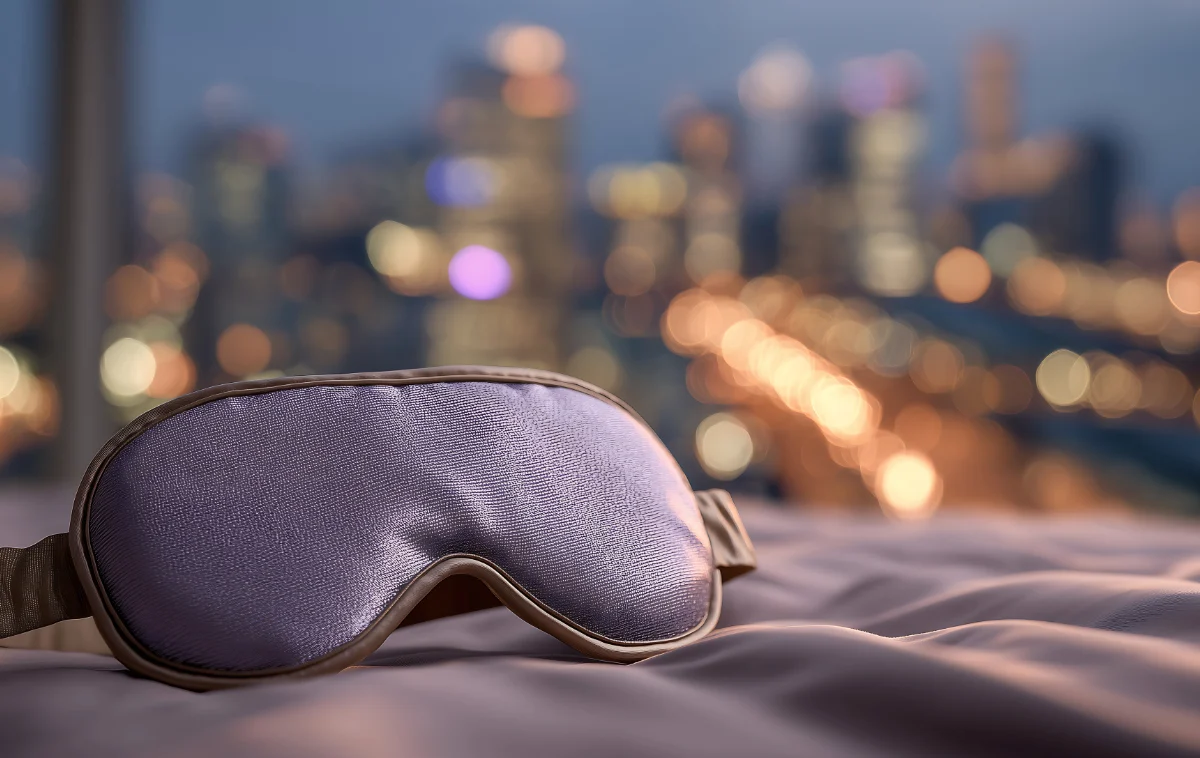
- Prioritize the Sleep Environment: When booking accommodations, consider the noise levels and light-blocking capabilities of the room. Portable blackout curtains or a reliable sleep mask can be game-changers in unfamiliar environments.
- Maintain Routine as Much as Possible: While the temptation to deviate from your schedule is high, keeping your bedtime and wake-up time consistent with your home time zone—or adjusting them gradually—can help minimize the impact of travel.
- Strategic Light Exposure: Use light to your advantage. If traveling east, seek morning light to shift your clock earlier; if traveling west, seek afternoon light to shift it later.
- Mindful Consumption: Be wary of caffeine and alcohol. Both can significantly degrade sleep quality, with alcohol acting as a sedative that disrupts the architecture of sleep, leading to fragmented rest.
- Wind-Down Rituals: Bring a piece of "home" with you. Whether it is your own pillowcase, a familiar scent, or a specific book you read before bed, creating a consistent pre-sleep ritual signals to your brain that it is time to transition into rest.
Implications: The High Cost of Sleep Deprivation
The implications of poor travel sleep extend far beyond simple grogginess. In the professional sphere, sleep deprivation is a known performance killer. It decreases emotional intelligence, slows reaction times, and diminishes complex problem-solving abilities. For the business traveler, the cost of an "off" day can be measured in lost opportunities or professional missteps.
In the leisure sphere, the implications are personal. We travel to rejuvenate, to explore, and to connect. When we return home "exhausted from our vacation," we have failed to achieve the primary goal of the trip. By ignoring sleep, we essentially negate the benefits of the time and money invested in our travel experiences.
Conclusion: Making Sleep Part of the Itinerary
As we look toward the future of travel, the cultural narrative must shift. Sleep should no longer be viewed as a luxury to be sacrificed for the sake of an early flight or a late-night dinner. It must be integrated into the travel itinerary with the same intentionality as hotel bookings, transportation, and sightseeing.
By understanding the physiological hurdles—from the "First-Night Effect" to the realities of jet lag—travelers can better prepare themselves. A well-rested traveler is more resilient, more present, and more capable of absorbing the transformative power of travel. As you plan your next journey, remember that the most important part of any trip is the ability to wake up feeling refreshed and ready to experience the world. Do not just pack your bags; pack your sleep hygiene habits, and ensure that your next destination is a place where you can truly rest.