









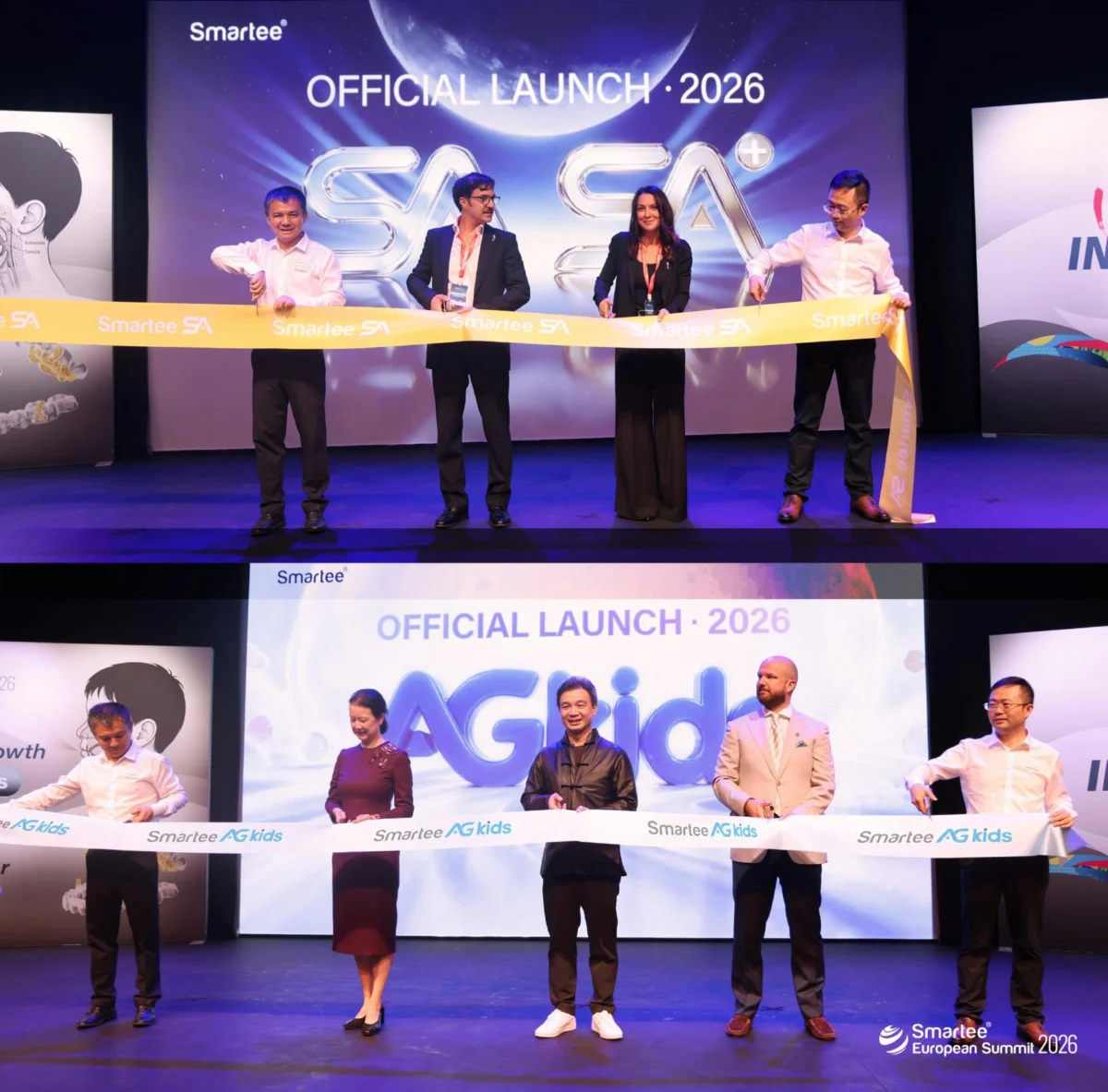
The landscape of modern orthodontics is undergoing a paradigm shift, moving beyond the traditional pursuit of aesthetic alignment toward a more holistic, airway-centered philosophy. This transformation was on full display in Palma de Mallorca, Spain, during the 2026 Smartee European Summit. The event, which drew nearly 300 orthodontic experts and clinicians from 27 countries, served as the global unveiling for Smartee Denti-Technology’s latest advancements: the Smartee SA/SA Plus and the Smartee AG KIDS systems.
As clinical practice increasingly recognizes the symbiotic relationship between oral health, respiratory function, and craniofacial development, these new technologies represent a significant step forward in integrating sleep medicine with orthodontic intervention.
The Evolution of Clinical Practice: Key Innovations
The summit’s primary focus was the introduction of two distinct systems designed to bridge the gap between structural dental correction and physiological health.
Smartee SA/SA Plus: Addressing the Adult Airway
The Smartee SA/SA Plus system addresses the growing clinical demand for treating primary snoring and mild-to-moderate obstructive sleep apnea (OSA). Traditional orthodontic aligners have long been the gold standard for straightening teeth, but they have historically been separate from the world of mandibular advancement devices (MADs).
The Smartee SA/SA Plus integrates a specialized locking mechanism directly into clear aligner technology. This allows clinicians to provide a dual-action therapy: patients receive the orthodontic benefits of tooth alignment while simultaneously utilizing the device to manage airway patency during sleep. This consolidation of treatment modalities is expected to increase patient compliance, as it reduces the need for cumbersome, multi-device therapy.
Smartee AG KIDS: Guiding Craniofacial Growth
Perhaps the most ambitious component of the launch is the Smartee AG KIDS, a craniofacial growth guidance system specifically engineered for patients aged 3 to 16. The system is designed to support growth management across three critical dimensions: the sagittal (front-to-back), vertical (height), and transverse (width) axes.
By working in tandem with orofacial myofunctional training appliances, the AG KIDS system provides an integrated framework for practitioners. Rather than waiting for permanent dentition to emerge, this system allows clinicians to intervene during the formative years of jaw development. The goal is to optimize the skeletal environment, which may naturally support better airway development and reduce the risk of future breathing-related disorders.
A Chronological Perspective: From Malocclusion to Airway Management
The two-day summit was structured to guide attendees through the progression of modern orthodontic care, moving from basic mechanical correction to comprehensive patient health.
Day One: Mandibular Repositioning and Complex Malocclusions
The first day of the conference focused heavily on the mechanics of mandibular repositioning. Experts examined the intricacies of treating complex malocclusions where the jaw’s position is not merely a dental concern but a skeletal one. The discussions centered on the precision required to evaluate the mandible in 3D space.
Gang Shen, Chief Scientist for Smartee’s GS R&D, emphasized the necessity of a systematic diagnostic approach. "Mandibular position needs to be evaluated in the sagittal, vertical, and transverse dimensions," Shen stated. "The first step is to determine whether an abnormal mandibular position is present and then assess the direction of the discrepancy from a three-dimensional perspective." This methodical approach serves as the foundational requirement for the successful application of the SA/SA Plus system.
Day Two: Expanding into Pediatric and Functional Orthodontics
The second day shifted the focus toward the "growing patient." By incorporating insights into orofacial function and respiratory patterns, the curriculum encouraged a departure from the traditional "teeth-only" model. The presentations underscored that an orthodontist’s role is expanding into that of a gatekeeper for respiratory health.
Supporting Data and Professional Perspectives
The summit featured a robust lineup of speakers who provided the clinical justification for these technological shifts.
Orofacial Myology: The Missing Link
Jane Shi, an examiner for the International Association of Orofacial Myology, presented compelling evidence regarding the role of myofunctional assessment. She highlighted that clinical signs such as mouth breathing, abnormal tongue posture, and narrow dental arches are often "early warning signals" of deeper developmental issues.
"Evaluating the airway, breathing patterns, and orofacial myofunction is not just an elective exercise; it is an essential part of developing an effective orthodontic treatment plan," Shi explained. Her presentation argued that by ignoring these factors, clinicians risk missing the root cause of malocclusions, leading to less stable long-term results.
The Medical-Dental Intersection
Yue Weng Cheu, Clinical Director at DP Dental and a primary collaborator on the AG KIDS project, offered a balanced perspective on the limitations and responsibilities of the orthodontic profession. He stressed that while orthodontists are uniquely positioned to spot risks—such as potential sleep-disordered breathing—they must maintain clear boundaries.
"Orthodontists may identify potential risk indicators during routine clinical assessment," Cheu noted. "However, the diagnosis of sleep-related breathing disorders must remain within the appropriate medical specialties. For children presenting with high-risk signs, a multidisciplinary referral is the gold standard of care."
Insights on Oral Appliances
Antonio Gracco, Director of the Postgraduate School of Orthodontics at the University of Padua and former president of the Italian Academy of Dental Sleep Medicine, provided a seasoned view on the use of oral appliances. He noted that while mandibular advancement is an effective tool, it is not a "one-size-fits-all" solution. Patient selection, based on rigorous clinical assessment, remains the most critical factor in achieving therapeutic success in sleep medicine.
Clinical and Societal Implications
The introduction of these technologies carries significant implications for the future of dentistry.
- Integrated Care Models: The shift toward systems like SA/SA Plus and AG KIDS suggests that the future of orthodontics lies in integration. By merging orthodontic, orthopedic, and sleep-medicine protocols into single devices, the burden of care for the patient is significantly lowered.
- Early Intervention: The AG KIDS system highlights the industry’s move toward preventative rather than corrective orthodontics. By addressing craniofacial growth during early childhood, practitioners may be able to prevent the development of severe OSA and complex malocclusions later in life.
- The Multidisciplinary Mandate: As the lines between orthodontics and general medicine blur, the summit reinforced that the "lone wolf" approach to dentistry is becoming obsolete. The future of the field requires a tight network of pediatricians, ENTs, sleep physicians, and orthodontists working in concert.
- Enhanced Diagnostic Rigor: The emphasis on 3D assessment of the mandible as described by Gang Shen suggests that clinical training must evolve to include more sophisticated imaging and physiological assessment tools.
Looking Toward the Future
The 2026 Smartee European Summit concluded on a note of optimistic momentum. With the successful launch of the SA/SA Plus and AG KIDS, Smartee has positioned itself as a major architect in the airway-focused orthodontic movement.
The industry’s reception to these tools—and the surrounding academic discourse—indicates a growing appetite for technology that treats the patient as a whole system rather than a set of dental arches. As the company prepares for its 2027 summit in Rome, the conversation is expected to further evolve, likely focusing on long-term clinical data, patient outcomes, and the continued integration of artificial intelligence in monitoring craniofacial growth.
For the orthodontic community, the message from Palma de Mallorca is clear: the future is not just about a perfect smile—it is about the airway, the bite, and the breathing patterns that sustain a healthy life. As clinicians continue to adopt these integrated systems, the standard of care for both children and adults is poised to reach unprecedented levels of precision and effectiveness.