












MIDDLETOWN, Iowa — A high-stakes standoff between federal authorities, local residents, and environmental advocates reached a boiling point this week as the U.S. Army prepared to carry out the controlled detonation of 68 barrels of volatile lead azide at the Iowa Army Ammunition Plant. The operation, which critics fear could blanket a 100-mile radius with toxic lead-laden dust, has become a lightning rod for concerns regarding government transparency, environmental safety, and the limits of emergency executive power.
Despite a temporary stay by a federal appeals court and intense local opposition, the Army has moved forward with plans for the explosion, citing an urgent need to neutralize the degraded, crystalline explosive material before winter temperatures further destabilize the stockpile.
The Core Conflict: Safety vs. Transparency
At the center of the dispute is the chemical compound lead azide, a highly sensitive explosive used to initiate munitions. The material, discovered in a degraded state during a March safety review, has become so unstable that experts warn it cannot be transported or handled without a high risk of accidental detonation.
The Army’s decision to opt for a controlled open-air detonation rather than chemical neutralization has drawn sharp criticism. While chemical neutralization might avoid the atmospheric release of lead dust, the Army argues that the physical handling required for such a process would place workers and the immediate community at an unacceptable risk of a fatal, unplanned explosion.
However, environmental groups—including Earthjustice, the Sierra Club, and the Iowa Environmental Council—contend that the Army’s rush to detonate is a failure of long-term planning. They argue that the government has not adequately explored safer alternatives and, more importantly, has failed to communicate the potential health risks to the populations living in the predicted path of the toxic plume.
Chronology of a Crisis
The path to this week’s detonation has been marked by shifting deadlines, eleventh-hour legal maneuvers, and political finger-pointing:
- March 2026: The Army identifies the degraded lead azide stockpile at the Iowa Army Ammunition Plant during a routine safety assessment.
- September 2026: The Army submits an environmental assessment to the EPA, requesting an emergency permit for the disposal of 9,500 pounds of the material.
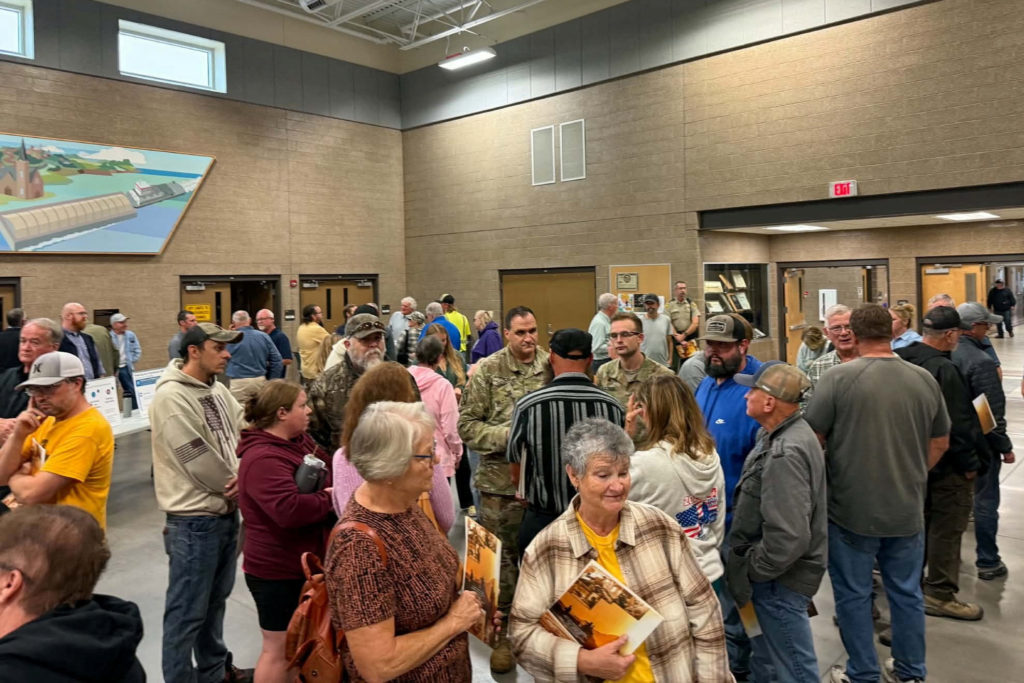
- October 15, 2026: An open house in Middletown fails to quell public anxiety, as residents demand more granular data on plume dispersion and health safeguards.
- November 13, 2026: The EPA grants an emergency permit, scheduled to remain valid until February 2027.
- November 15, 2026: The Army announces the first scheduled detonation for November 20.
- November 20, 2026: As legal challenges mount, Governor Kim Reynolds activates the State Emergency Operations Center. The detonation is delayed.
- November 21, 2026: A federal appeals court issues a temporary suspension of the permit, pending a lawsuit by environmental groups.
- November 22–23, 2026: The Department of Justice signals the Army’s intent to invoke emergency powers to bypass the EPA permit requirement. President Donald Trump intervenes, calling for court approval, yet the Army proceeds with the rescheduled Wednesday detonation.
The Science of the Blast: Health and Environmental Risks
The primary threat identified by environmental engineers and health officials is the resulting plume of lead dust. Lead is a potent neurotoxin, and the Centers for Disease Control and Prevention (CDC) maintains that no level of exposure is safe, particularly for children and pregnant individuals.

According to Dr. Andrew Whelton, an environmental engineering professor at Purdue University, the detonation will release particles of varying sizes. While heavier particles will settle near the site of the Iowa Army Ammunition Plant, finer, invisible particles could be carried by the wind for dozens of miles.
"It makes it really unfair to anybody in those communities that are completely at the whim of Mother Nature," noted David Cwiertny, director of the Center for Health Effects of Environmental Contamination at the University of Iowa. Dr. Cwiertny and his team have taken the unusual step of deploying their own monitoring equipment, citing a lack of clarity in the Army’s own sampling plans.
The Iowa Department of Health and Human Services has issued strict guidelines for residents in the surrounding areas. The state recommends that residents remain indoors with windows and doors sealed for 24 to 48 hours following the blast. Surfaces such as cars, windowsills, and outdoor play equipment should be cleaned with soap and water to prevent the tracking of toxic dust into homes.
Official Responses and Political Infighting
The situation has been exacerbated by a lack of coordination across state lines. While the Army’s models suggest the potential for the plume to extend into Illinois, officials in that state have publicly stated they were never formally notified by federal authorities.
The political rhetoric has been equally heated. In a statement posted to Truth Social, President Donald Trump attempted to deflect blame toward the Obama administration, claiming the materials were "improperly stored" in 2009. However, archival reports indicate that the Army was aware of the decaying stockpile as early as 2004, under the George W. Bush administration, and had initiated a project to address the issue that stalled over the following two decades.
Incoming Democratic Governor Rob Sand has been named by the President as a party that could be held responsible for the "death or destruction" resulting from the situation, a move that critics describe as a political maneuver to shift liability away from federal agencies.
Acting Army Secretary Adam Telle defended the operation in an X post, stating, "We are proceeding with the controlled removal in full coordination with all state, local and federal authorities, because the safety of Iowa’s citizens comes first."
The Implications for Future Military Disposal
The Middletown incident raises broader questions about how the U.S. military manages its aging, hazardous chemical stockpiles. The decision to terminate a contract with MuniRem Environmental—a company specializing in chemical neutralization—earlier this year has raised eyebrows among environmental investigators. Why the Army opted to cancel a non-destructive disposal method in favor of an explosive one remains a central mystery of the ongoing investigation.
For the residents of Middletown and the surrounding counties, the psychological toll is as significant as the physical risk. The uncertainty surrounding the detonation has disrupted agricultural businesses, school schedules, and daily life.
"You can’t manage what you don’t measure," Dr. Cwiertny remarked, highlighting the core of the community’s frustration. For many, the lack of transparent, real-time data regarding the plume’s trajectory and the potential for long-term soil contamination has eroded trust in the government’s ability to act as a steward of public safety.
As the detonation proceeds, the focus for independent researchers and state health agencies shifts to immediate mitigation. By conducting independent air and soil sampling, experts hope to provide the transparency that they argue has been missing from the Army’s communications.
Ultimately, the events in Iowa serve as a stark reminder of the challenges posed by legacy military hazards. As the nation grapples with the aftermath of this detonation, the case is likely to become a benchmark for future litigation regarding the balance between national security imperatives and the environmental rights of local communities. The long-term health monitoring of the region will be critical, as the full extent of the environmental impact—and the success of the Army’s containment efforts—remains to be seen.