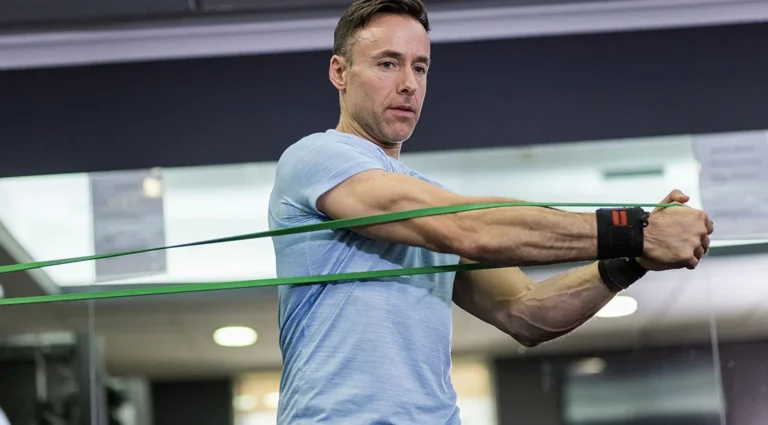










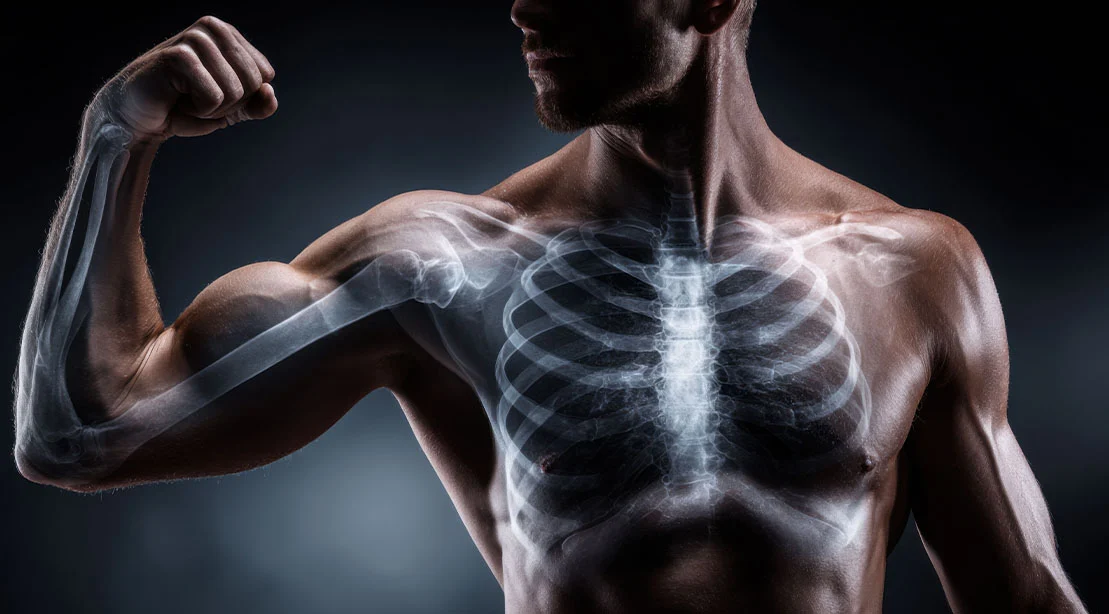
For decades, the fitness industry has operated under a singular, undisputed axiom: if you want to fortify your skeleton, you pick up heavy things and put them down. The gospel of resistance training—squats, deadlifts, and presses—has been etched into the bedrock of exercise physiology. It is a truth so thoroughly internalized that it has largely escaped scrutiny. We lift weights to build muscle, we build muscle to strengthen the skeleton, and we repeat the cycle until the inevitability of age makes us fragile.
However, science has an endearing, if occasionally disruptive, habit of reopening cases we thought were long closed. A groundbreaking meta-analysis published in Sports Medicine–Open has sent ripples through the exercise science community, challenging the hegemony of traditional resistance training in the context of bone health. By examining 24 clinical studies involving 1,238 healthy adults, researchers have discovered that while lifting is good, it may not be the pinnacle of skeletal development.
The Core Revelation: Impact Beats Isolation
The study sought to identify which physical stimuli elicit the most significant biological markers for bone formation. Researchers tracked markers such as osteocalcin and procollagen type 1 N-terminal propeptide (P1NP), which serve as proxies for how actively bone tissue is being remodeled.
The results were, by all accounts, counter-intuitive. The greatest surges in bone-formation markers were not observed in the squat rack, nor were they found in the monotonous rhythm of jogging or the low-impact repetition of step aerobics. Instead, the most profound skeletal responses were triggered by high-intensity, multi-directional activities—specifically recreational soccer and competitive handball.
In these cohorts, markers for bone formation spiked by as much as 45 to 46 percent. This suggests that the human skeleton is not merely a passive frame waiting for a load to be placed upon it; it is an intelligent, adaptive organ that responds with heightened sensitivity to the unpredictable forces of athletic movement.
A Chronology of Skeletal Science
To understand why this finding is so disruptive, one must look at the evolution of exercise science.
The Era of Mechanical Loading (1970s–1990s)
During this period, the focus was almost entirely on "mechanical loading." Following the work of Julius Wolff—the German anatomist who famously hypothesized that bone adapts to the loads under which it is placed—the fitness industry pivoted toward resistance training. We developed machines that isolated specific muscle groups, creating a "clean" environment where force could be applied linearly.
The Rise of Hypertrophy (2000s–2015)
As bodybuilding culture permeated the mainstream, efficiency became the primary metric. Exercises were refined to eliminate "wasted movement." We prioritized stability, controlled eccentric movements, and isolation. The goal was to remove the variables—the instability, the balance requirements, the sudden shifts—to maximize muscle fiber recruitment.
The Shift Toward Multidimensional Loading (2016–Present)
The current era, underscored by the Sports Medicine–Open meta-analysis, marks a shift back to functional complexity. We are realizing that while machine-based lifting is excellent for hypertrophy, it may provide a "predictable" environment that the skeleton eventually stops responding to with high-level adaptation.
Supporting Data: Why "Chaos" Matters
The physiological mechanism behind these findings lies in the way bone tissue interprets stress. Bones are piezoelectric—they generate tiny electrical charges when bent or compressed, which signals osteoblasts (bone-building cells) to reinforce the area.
Conventional resistance training, such as a leg press, provides significant compressive force. However, it is linear and stable. The force arrives at the same angle, at the same speed, every single repetition. The skeleton learns to expect it.
Conversely, activities like soccer or handball introduce:
- Multi-axial loading: Forces arrive from the side, the front, and the diagonal, forcing the bone to adapt to structural stress from all directions.
- Acceleration and Deceleration: Sudden changes in velocity create "ground reaction forces" that far exceed the static weight of a barbell.
- Unpredictability: When the body does not know exactly when or how the next force will arrive, the nervous system and the musculoskeletal system maintain a higher state of "readiness" or mechanical alertness.
Official Responses and Expert Perspective
Dr. Elena Rossi, a sports physiologist not involved in the study, notes that the data serves as a "necessary corrective" to our modern sedentary training habits.
"We have spent thirty years sanitizing the gym environment," Dr. Rossi explains. "We made it safe, effective, and boring. But biology doesn’t necessarily prioritize safety; it prioritizes utility. If you want a bone to be dense, you have to give it a reason to be dense. A machine doesn’t require the bone to stabilize itself against lateral shearing forces. A soccer match does."
However, official health bodies remain cautious. The American College of Sports Medicine (ACSM) continues to emphasize that for the general population—particularly the aging demographic—resistance training remains the gold standard for safety. The "chaotic" movements that build bone in a 25-year-old athlete carry significant injury risk for a 70-year-old with low bone mineral density (BMD). The response from the clinical community is nuanced: acknowledge the science, but respect the biomechanical reality of the individual.
Implications: A New Framework for Training
The implications of this research are twofold: it validates the training protocols of athletes and challenges the limitations of recreational gym-goers.
For the Young and Athletic
If you are currently only utilizing machines, you are missing out on a critical window of skeletal hardening. The message here is simple: if you want to look like an athlete, you must train like one. Incorporating plyometrics, agility drills, and field sports into a lifting regimen creates a "hybrid" stimulus that maximizes both muscle mass and skeletal integrity.
For the Aging Population
The practical challenge here is significant. We cannot realistically advise those with osteoporosis to take up competitive handball. However, we can introduce "controlled chaos." This means shifting away from strictly machine-based work toward free-weight exercises that require stabilization (e.g., dumbbells instead of chest press machines, or lunges instead of leg extensions). These movements require the body to manage forces that are not perfectly controlled, providing a bridge between the safety of the gym and the efficacy of athletic movement.
Conclusion: The "One-Trick Pony" Problem
Ultimately, the Sports Medicine–Open study serves as a warning against the "one-trick pony" approach to fitness. Bodybuilding has taught us to isolate and conquer, but the human body is a multi-dimensional system designed for dynamic, unpredictable interaction with the environment.
We should continue to lift weights. Resistance training remains essential for longevity, metabolic health, and muscle mass. But we must also acknowledge that the skeleton is a living, breathing, adaptive structure that thrives on novelty.
If your workout has become a series of identical movements on a perfectly greased track, you may be building a physique that looks strong while neglecting the foundational strength of your skeleton. Occasionally, we must sprint, jump, pivot, and carry. We must remind our bones that the world is not a machine—it is an arena. To age well is to maintain the ability to handle the unexpected, and that begins with a skeleton that has been trained to withstand the chaotic, beautiful, and demanding nature of human movement.