










In the modern landscape of high-performance wellness, the concept of "biological age" has transcended niche scientific circles to become the ultimate metric of human vitality. Spearheaded by tech moguls like Bryan Johnson—the central figure of the Netflix documentary Don’t Die—the quest to "age in reverse" has captivated the public imagination. Johnson, who reportedly allocates millions annually to a regimen of dozens of daily supplements, hyperbaric oxygen therapy, and controversial plasma infusions, claims his biological age has dropped by over five years.
But beneath the headlines and the high-tech marketing lies a complex reality. Is biological age a precise diagnostic tool, or is it merely the latest trend in a multi-billion-dollar longevity industry?
Defining the "Clock": Chronological vs. Biological Age
To understand the industry, one must first distinguish between the two types of time. Chronological age is immutable; it is the literal count of years since your birth. Biological age (bio-age), however, refers to the functional status of your cells and organs. It is a reflection of how well—or poorly—your body is weathering the cumulative effects of genetics, environment, and lifestyle choices.
Consider two 50-year-old men: "Chang" and "Jabari." Chang leads a sedentary life in a polluted urban center, fueled by processed convenience foods and heavy smoking. Jabari, conversely, prioritizes regular strength training, a nutrient-dense diet, meditation, and consistent physical activity in nature. While their birth certificates read the same, their physiological markers suggest two different realities. Jabari’s body is effectively younger, operating with greater efficiency and lower systemic inflammation than Chang’s.
The Science of Measurement: From Telomeres to Methylation
The longevity industry relies on "biomarkers"—objective physiological indicators—to estimate this internal age.
- Telomere Analysis: Telomeres are the protective "caps" at the ends of chromosomes. As cells divide, these caps shorten, eventually leading to cellular senescence. While researchers use "flow-FISH" testing to identify genetic conditions, consumer-grade qPCR telomere tests have flooded the market. Critics, however, note that these commercial tests lack the rigorous validation required for medical decision-making.
- DNA Methylation: This is currently the "gold standard" in research. By observing chemical modifications to DNA, scientists can calculate "epigenetic clocks" like the Horvath Clock or the DunedinPACE. While highly accurate in laboratory settings, these tests are being sold directly to consumers, often with the misleading promise that they offer a complete diagnostic map of one’s health.
Free and Accessible Biomarkers: The "Low-Tech" Advantage
You do not need a billionaire’s budget to track your physiological decline or improvement. Several scientifically validated, free, or low-cost tests provide a clearer picture of health than expensive, proprietary kits.
1. The Sitting-Rising Test (SRT)
This test evaluates core strength, flexibility, and balance—all critical markers of longevity. By lowering yourself to the floor and standing back up without using your hands or knees for leverage, you can assess your physical coordination. A 12-year study of over 4,000 adults found that lower scores on the SRT were significantly correlated with higher cardiovascular mortality.
2. Grip Strength
Often referred to as a "vital sign" for older adults, grip strength is a reliable predictor of systemic muscle mass and physical robustness. Research suggests that weak grip strength is a better indicator of future mortality than blood pressure, as it serves as a proxy for the health of the entire musculoskeletal system.
3. The Balance Test
Standing on one foot for 60 seconds is more than a party trick; it requires the integration of the visual system, the inner ear, and the skeletal muscles. Inability to maintain balance for at least 10 seconds in middle-aged or older populations has been linked to double the risk of mortality within a seven-year window.
4. VO2 Max
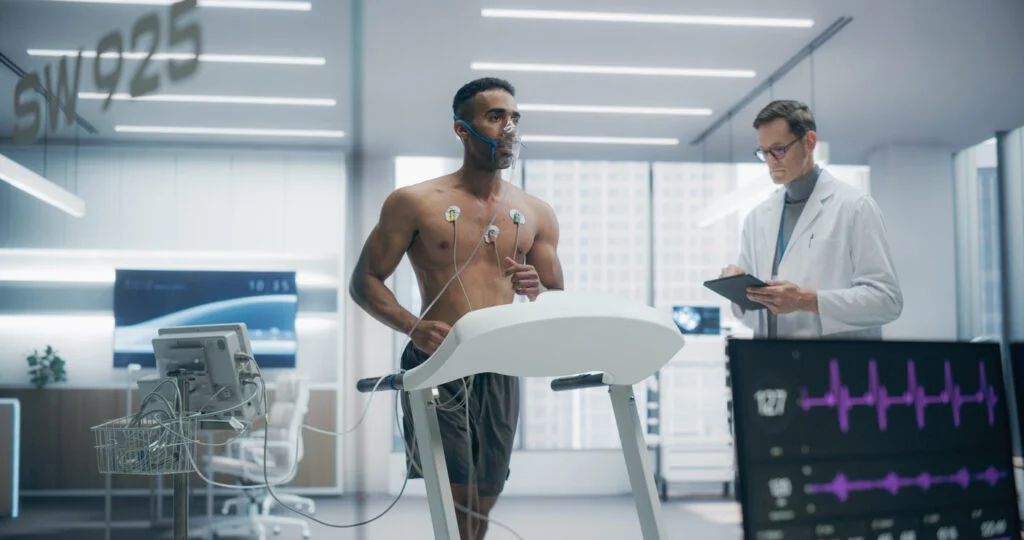
Once the exclusive domain of elite athletes, VO2 max—the maximum volume of oxygen the body can utilize during intense exercise—is now considered one of the strongest predictors of longevity. A landmark study of 5,000 men found that those with above-average VO2 max lived five years longer than those below the average. Whether through a lab-based metabolic test or a simple 12-minute "Cooper Run," tracking this metric is vital.
The Professional View: Data vs. Interpretation
Despite the excitement, the medical community urges caution. A New York Times investigation famously challenged Bryan Johnson’s claims, suggesting that some of his markers indicated an increase in biological age rather than a reversal. This highlights the primary pitfall of commercial testing: Data without context is noise.
Medical professionals emphasize that organ systems age at different rates. A person may have a "young" heart but a "chronologically aged" liver. Furthermore, many commercial testing companies pair their results with a "hard sell" for proprietary supplements—a major red flag for any consumer.
The "Evergreen" Strategy for Reversal
If there is a consensus among longevity researchers, it is that the "boring" habits remain the most effective. No supplement, no matter how expensive or exotic, can override the cumulative damage of a poor lifestyle.
The "Big Rocks" of Longevity:
- Consistent Resistance Training: To combat sarcopenia (muscle loss) and improve metabolic health.
- Nutrient-Dense Nutrition: Focusing on whole foods to reduce systemic inflammation.
- Sleep Hygiene: The foundation of cellular repair and cognitive function.
- Stress Management: Chronic cortisol elevation is a known accelerator of biological aging.
Implications for the Future
The rise of bio-age testing reflects a profound shift in how we view healthcare: a move from "reactive" (treating sickness) to "proactive" (optimizing function). While the high-tech testing industry is still in its "Wild West" phase, the underlying premise is valid. We are learning that aging is not a fixed, linear process, but a plastic one—a series of biological signals that can, to some extent, be tuned.
If you are considering bio-age testing, use it as a compass, not a verdict. Use the data to validate your lifestyle choices. If your grip strength is low, prioritize strength training. If your fatigue levels are high, investigate your sleep.
The goal of longevity is not just to extend the number of years lived, but to maximize the "healthspan"—the number of years lived in full vigor. Whether you are using a $300 DNA methylation kit or a free stopwatch to time your one-mile walk, the most important step is turning that data into consistent, actionable behavior change. As the adage goes: you cannot manage what you do not measure, but measuring is useless if you refuse to change the outcome.