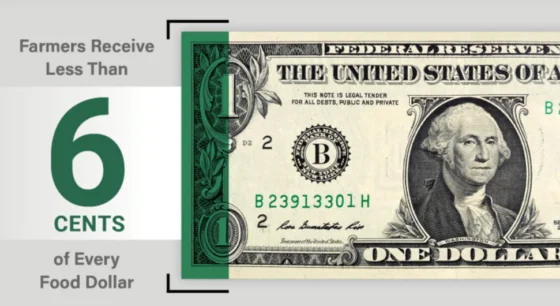
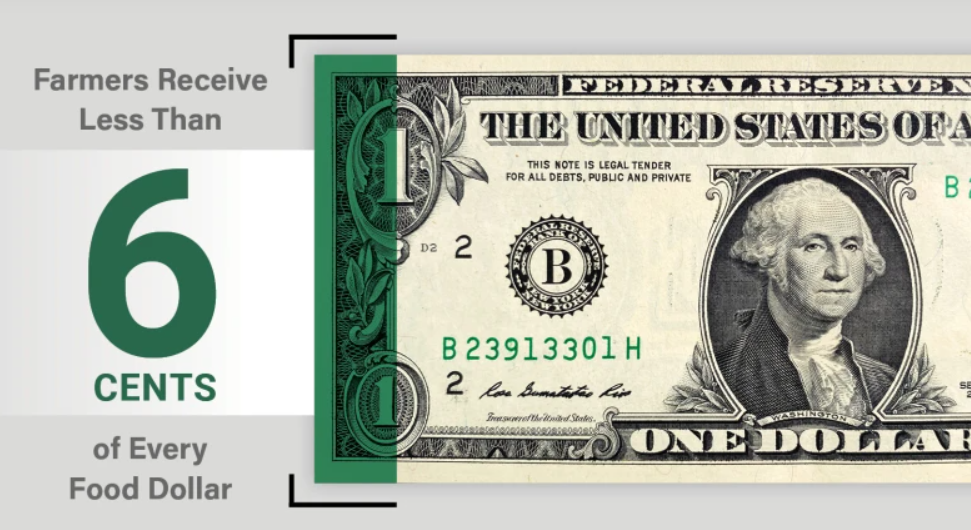
For decades, the American agricultural narrative has been one of industrial triumph, technological innovation, and record-breaking yields. Yet, beneath the veneer of high-tech combines and global export dominance lies a stark, unsettling reality: the people who actually produce the food are receiving a diminishing share of the financial rewards. According to recent data from the USDA’s "Food Dollar" series—and highlighted by industry analysts at AgWeb—farmers now receive less than 6 cents of every dollar spent on food by the American consumer.
This dramatic imbalance in the value chain is not merely a statistical anomaly; it is a structural crisis that threatens the viability of rural communities, the health of our soil, and the long-term stability of the American food supply. As the chasm between retail prices and farm-gate earnings widens, the question arises: if the farmer is no longer the primary beneficiary of the food system, who is?
The Anatomy of the Food Dollar: Where the Money Goes
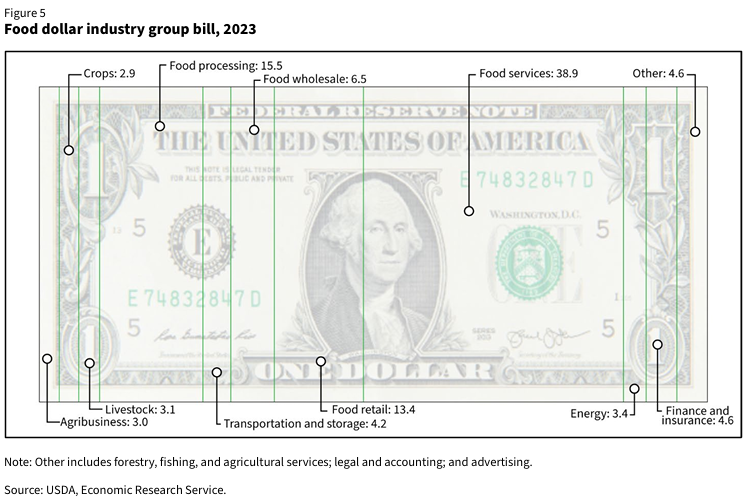
To understand the economic plight of the modern farmer, one must dissect the "Food Dollar." The USDA’s Economic Research Service (ERS) tracks where the money goes once a consumer swipes their credit card at a grocery store or pays for a meal at a restaurant. The distribution is revealing.
The vast majority of the "food dollar" is captured by the middle-tier actors: food processors, manufacturers, packaging companies, wholesalers, retailers, and food service providers. When a consumer buys a loaf of bread, a bag of salad, or a frozen dinner, the cost is heavily weighted toward the labor, transportation, energy, and marketing involved in transforming raw commodities into consumer-ready products.
In 2023, the data confirmed a trend that has been accelerating for years: the "farm share" of that dollar has plummeted. While consumers face inflationary pressures and rising grocery bills, those increases are rarely passed down to the producer. Instead, they are absorbed by the logistical and processing overhead that dominates the modern supply chain.
A Chronology of Decline: From Parity to Precarity
The decline of the farmer’s share is not a sudden phenomenon; it is the culmination of a half-century shift toward industrial consolidation.
- The Mid-20th Century (1950s–1970s): Agriculture was defined by a more localized supply chain. The distance between the farm gate and the dinner table was shorter, and the "middleman" costs were significantly lower. Farmers retained a higher percentage of the retail price because they often performed more of the processing and distribution themselves.
- The Industrialization Era (1980s–2000s): The rise of the "get big or get out" mentality, championed by federal agricultural policy, encouraged specialization and massive scale. As production consolidated, so did the processing and retail sectors. Giant corporations began to dictate terms, and the farmer became a price-taker rather than a price-setter.
- The Digital and Logistical Shift (2010s–Present): The rise of e-commerce, global supply chains, and the dominance of massive food service conglomerates have further squeezed the producer. Every new layer added to the supply chain—from high-tech packaging to sophisticated marketing campaigns—is funded by taking a larger slice of the food dollar, leaving the farmer with the scraps.
Supporting Data: The Shrinking Farm Census
The financial squeeze is directly reflected in the demographic collapse of American agriculture. The USDA’s chart gallery, which tracks the number of farms over time, offers a sobering visual aid to this crisis. As the percentage of the food dollar allocated to the farm has declined, so too has the absolute number of small and mid-sized family farms.
The math is simple: when the margins are this thin, only the largest operations—those with the capital to survive on razor-thin profit margins through sheer volume—can remain in business. This creates a feedback loop. As small farms fold, the land is consolidated into larger corporate holdings, which in turn demand even more industrial infrastructure, further distancing the consumer from the producer.
Official Responses and the Policy Stagnation
The USDA, through its various research initiatives, has documented this shift with clinical precision. Their reports provide the raw data that exposes the systemic inequity. However, translating this data into policy change has proven to be a Herculean task.
Legislative bodies often point to the complexity of global markets and the efficiency of the current food system as justifications for the status quo. The argument is that high-volume, low-margin production keeps food "affordable" for the American public. Yet, this ignores the hidden costs: the environmental degradation caused by intensive monoculture, the loss of rural economic vitality, and the vulnerability of a food system that relies on incredibly long, fragile supply chains.
The Farm Bill, the primary legislative vehicle for agricultural policy, has become a battleground of competing interests. While it allocates billions in subsidies, much of this funding is directed toward commodity crops and insurance programs that disproportionately benefit large-scale operations, failing to address the fundamental structural issue: the farmer’s shrinking share of the value chain.
The Implications: Why It Matters
The implications of a system where the producer receives less than 6% of the value of their product are profound and multifaceted.
1. The Death of Rural Communities
When farmers are unable to earn a living wage, rural towns wither. The "middle class" of agriculture—the family farmer who supports the local hardware store, the local school, and the local bank—is disappearing. This hollows out the American heartland, creating "food deserts" in areas that actually produce the bulk of the nation’s caloric intake.
2. Environmental Stewardship and Climate Change
There is a direct link between farm economics and environmental outcomes. When farmers are forced to maximize output at any cost just to break even, they are incentivized to ignore long-term soil health. Practices like cover cropping, diverse crop rotation, and regenerative grazing require time, labor, and financial cushion—things that a farmer receiving less than 6 cents on the dollar simply cannot afford.
3. The Fragility of the Supply Chain
The recent global disruptions—from pandemics to geopolitical conflicts—have exposed the weaknesses of a highly centralized, long-distance food system. When producers are pushed to the brink, the entire supply chain becomes brittle. A more resilient system would rely on localized, smaller-scale producers who are economically empowered to diversify their output and serve their regional markets.
A Path Forward: Reimagining the Farm Bill
If we are to salvage the future of American agriculture, the upcoming Farm Bill must be more than a continuation of existing policy; it must be a radical departure. We need a fundamental rethink that prioritizes two core objectives:
First, the promotion of small-scale organic and regenerative farming. This is not a return to the past, but an embrace of a more efficient future. Regenerative practices mitigate climate change by sequestering carbon in the soil and improve water retention, making farms more resilient to extreme weather. By incentivizing these practices, we can begin to heal the landscape while repopulating the Midwest with a new generation of farmers who understand the value of the land.
Second, we must ensure that farmers make an adequate living. This requires structural changes to market access. This means investing in regional processing infrastructure—local mills, creameries, and slaughterhouses—that allow farmers to capture more of the value-added process. It means antitrust enforcement to break the monopolies that currently control the processing and distribution sectors. And it means creating "short-chain" food systems that connect farmers directly to consumers, bypassing the bloated middleman layers that currently siphon off the vast majority of the food dollar.
Conclusion
The fact that a farmer receives less than 6 cents of every food dollar is a moral and economic indictment of our current food system. It is a system that favors efficiency over equity, and volume over value. If we continue on this path, we will eventually be left with a sterile, corporate-controlled landscape that is incapable of sustaining itself or the people who rely on it.
It is time to rewrite the rules. We must ensure that those who steward our land and feed our nation are treated as the foundational partners they are, rather than the forgotten link in a chain that prioritizes profit over people and the planet. The data is clear; the only remaining question is whether we have the political will to change it.