








For nearly half a century, the term "Post-Traumatic Stress Disorder" (PTSD) has served as the primary linguistic and clinical vessel for human suffering in the wake of violence and catastrophe. Yet, as recent scholarship and historical analysis suggest, the 45-year history of this diagnostic category stands in stark contrast to 4,000 years of documented human reactions to trauma. The tension between these two timelines—the scientific and the narrative—raises a fundamental question for modern medicine: Is PTSD a biological discovery, or is it a modern translation of a universal human experience that might be losing its meaning in the process of medicalization?
Main Facts: The Conflict of Framing
The core of the debate lies in how we interpret the "tremor." For four millennia, the symptoms we now categorize as PTSD—intrusive memories, hypervigilance, and emotional numbing—have been recorded in Mesopotamian cuneiform, Greek epics, and Shakespearean drama. However, it was only in 1980, with the publication of the Diagnostic and Statistical Manual of Mental Disorders (DSM-III), that these reactions were formalized into a distinct pathological entity.
This transition from "narrated suffering" to "clinical categorization" is not a neutral evolution. Framing trauma as a "disorder" shifts the focus from the event to the individual’s internal mechanics. While this medicalization has provided a gateway for insurance reimbursements, pharmaceutical interventions, and standardized care, critics argue it risks stripping the experience of its historical, communal, and moral context. As modern clinicians increasingly rely on "four symptom clusters" to define a patient’s reality, they may be ignoring the "fully human reaction" that has remained consistent across civilizations.
Chronology: From Cuneiform to the DSM
The history of trauma is as old as written language itself, and its evolution reveals a shifting landscape of how society views the broken spirit.
The Ancient and Pre-Modern Record (2000 BCE – 1700 CE)
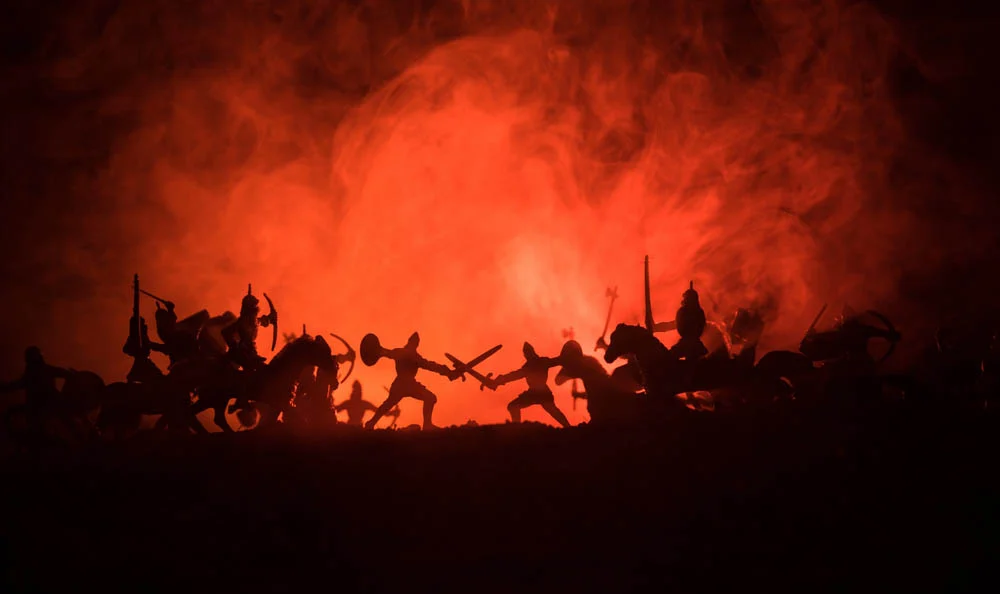
The earliest accounts of post-traumatic reactions appear in the cuneiform laments following the destruction of Ur (circa 2027–2003 BCE). These texts describe survivors "trembling" in the presence of corpses and suffering from persistent, unstoppable images of death. In 490 BCE, the Greek historian Herodotus documented the case of Epizelus at the Battle of Marathon, who suffered "psychogenic blindness" after witnessing a comrade’s death, despite receiving no physical wound.
By the 17th century, the record moved from the battlefield to the domestic and urban spheres. Samuel Pepys, writing in his diary six months after the Great Fire of London (1666), described a persistent inability to sleep without "great terrors of fire." Shakespeare, in Macbeth (1606), provided a vivid depiction of sleepwalking and the "invisible bloodstains" of guilt and trauma—symptoms that today’s clinicians would immediately label as dissociative intrusions.
The Era of Moral and Economic Management (1800 – 1945)
In the 19th century, the framing began to shift toward the physiological and the economic. Johannes Hofer’s 1688 concept of "nostalgia" was re-examined—not as mere homesickness, but as a physical illness caused by the loss of a community or landscape. During World War I, the interpretation of trauma became overtly political. In Italy, traumatized soldiers were labeled scemi di guerra ("war fools") and subjected to faradic currents (electric shocks) intended to "discipline" them back into service.
A pivotal moment occurred at the Munich Congress of 1916. The German psychiatric community formally rejected the concept of "traumatic neurosis." While the public justification was scientific, historical documents reveal the true motive was economic: acknowledging the condition would have bankrupted the state through insurance claims and weakened the national war effort.
The Modern Clinical Era (1980 – Present)
The introduction of PTSD into the DSM-III in 1980 was largely a response to the homecoming of Vietnam War veterans and the advocacy of feminist movements highlighting "rape trauma syndrome." For the first time, a psychiatric diagnosis was explicitly linked to an external event rather than an internal personality flaw. However, this progress came with a trade-off: the "universal human response" was now officially a "disorder."
Supporting Data: The Variability of "Science"
One of the most compelling arguments against viewing PTSD as a fixed biological reality is the lack of consensus among modern diagnostic systems. The two primary manuals used today—the DSM-5 (American) and the ICD-11 (World Health Organization)—do not agree on what PTSD actually is.
- Symptom Clusters: The DSM-5 identifies four symptom clusters and 20 specific symptoms. The ICD-11, by contrast, focuses on three clusters and only six core symptoms.
- Prevalence Rates: In a significant Dutch population study, researchers found that the same group of people yielded different "illness" rates depending on the manual used. The DSM-5 produced a 1.3% prevalence rate, while the ICD-11 produced a 1.0% rate.
- Complex PTSD: The ICD-11 recognizes "Complex PTSD" (C-PTSD)—a category for prolonged, repeated trauma—which the DSM-5 still does not include as a standalone diagnosis.
These discrepancies suggest that a diagnosis is not a "photograph" of a natural phenomenon but an "operational convention." Depending on which book a clinician opens, a patient is either "mentally ill" or "not ill," proving that the threshold for pathology is a moving target shaped by committee consensus rather than immutable biological markers.
Official Responses and Institutional Perspectives
The institutionalization of trauma has always been a gatekeeping exercise. Historically, the medical establishment has been quick to recognize the trauma of those "wearing the right uniforms" while ignoring the suffering of civilians.
The "battered child syndrome," identified by Kempe, did not gain medical recognition until 1962. Similarly, "rape trauma syndrome," pioneered by Burgess and Holmstrom, only appeared in 1974. These delays highlight a systemic bias: when the victims are women or children, the "science" of trauma often moves slower than it does for soldiers.
Today, official responses to trauma are heavily tied to welfare and legal systems. A PTSD diagnosis is often the only key that unlocks disability benefits, specialized therapy, or legal defense. This creates a "politics of suffering" where the diagnostic manual acts as a gatekeeper for social recognition. Institutions favor the current medicalized model because it is quantifiable and manageable, even if it fails to capture the existential depth of the patient’s experience.
Implications: What is Lost in Translation?
As we move toward a more "neuro-centric" view of trauma, we risk losing the dimensions of suffering that our ancestors understood intuitively.
The Loss of "Place" and "Body"
The old concept of "nostalgia" recognized that a human being could be shattered by the loss of their environment. Today’s focus on "negative alterations in cognition" fails to capture the specific pain of the refugee or the climate migrant—the sense that the world that sustained them has vanished. Similarly, "conversion manifestations"—where the body expresses trauma through paralysis or blindness—have been pushed to the margins of the PTSD diagnosis, relegated to "neurological disorders." In doing so, we lose the understanding of the body as a vessel that "speaks" when words fail.
The Danger of Pathologizing Resilience
If the reactions to trauma are consistent across 4,000 years of history, gender, and culture, can they truly be called "abnormal"? Calling these reactions a "disorder" implies a malfunction. However, hypervigilance in a violent household or nightmares after a war are not malfunctions; they are the psyche’s attempt to process experiences that human beings were never meant to endure. By pathologizing these responses, we shift the burden of "correction" onto the victim rather than addressing the violent contexts that produced the suffering.
Toward a Secular Clinical Understanding
The challenge for 21st-century psychiatry is to use the DSM as a map, not the territory. A "secular clinical understanding" of trauma would involve:
- Prioritizing Context: Moving from "What is wrong with you?" to "What happened to you?"
- Recognizing Historical Continuity: Acknowledging that a patient’s symptoms are part of a 40,000-year-old human heritage of survival.
- Integrating Narrative and Science: Holding the neurobiology of trauma in one hand and the human story in the other.
The ancient writers who chronicled the grief of Achilles or the terrors of Job did not have a diagnostic code. They had something arguably more profound: a way of seeing that did not separate the individual’s pain from the moral and historical weight of the world. As we look toward the future of mental health, we must ensure that in our quest for clinical precision, we do not become blind to the "forty centuries of narrated suffering" that still echo in our clinics today. Every time a clinician notes a diagnosis, they are not just recording a "disorder"—they are participating in an ancient human ritual of witnessing.