







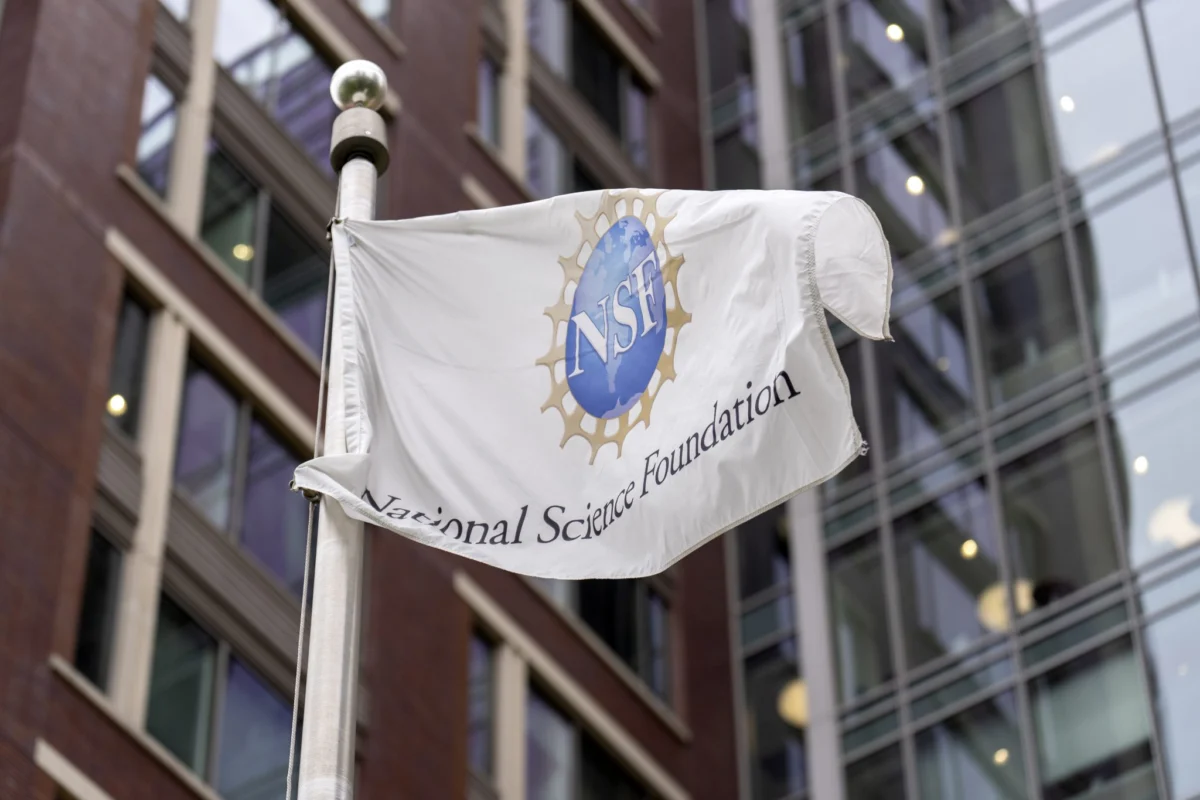
In a move that has sent shockwaves through the American scientific establishment, the Trump administration issued a sweeping directive on Friday, April 24, 2026, abruptly terminating the tenure of all 22 members of the National Science Board (NSB). The dismissal, delivered via email on a Friday afternoon, effectively decapitated the independent oversight body responsible for guiding the National Science Foundation (NSF) and its nearly $9 billion annual research portfolio.
This unprecedented intervention marks a significant escalation in the administration’s efforts to reshape the landscape of federally funded science. By clearing the board—a group traditionally composed of the nation’s most esteemed experts from academia and private industry—the White House has signaled a potential shift toward a more centralized, politically aligned approach to science policy, leaving the future of foundational research in fields ranging from quantum computing to digital health in a state of profound uncertainty.
The Anatomy of the Dismissal: A Friday Afternoon Purge
The termination notice, brief and devoid of specific cause, reached the inboxes of the 22 NSB members as they were preparing for the weekend. The language was stark: “Your positions are terminated, effective immediately.”
The NSB, a congressionally mandated body, serves as the governing board for the NSF. Its members, who serve staggered six-year terms, provide independent counsel to both the President and Congress. Their duties are foundational to the functioning of American science: they set policy, approve major funding awards, and act as a firewall against political interference in scientific inquiry.
At the time of the firing, the board was already operating at less than full capacity, with 22 of 24 seats filled. The vacuum created by the April 24, 2025, resignation of NSF Director Sethuraman Panchanathan had already left the agency in a fragile state. The mass firing of the board now leaves the foundation without its primary oversight mechanism, effectively freezing the decision-making pipeline for billions of dollars in prospective research grants.
Chronology of Institutional Instability
The events of April 2026 did not occur in a vacuum. To understand the gravity of the situation, one must look at the mounting pressures placed on the NSF over the past 24 months:
- April 2025: The resignation of Director Sethuraman Panchanathan, which deprived the NSF of its permanent leadership and created a leadership vacuum that persisted for a year.
- Late 2025 – Early 2026: The administration proposed a series of aggressive budget cuts to the NSF, signaling a desire to reallocate federal resources away from basic research and toward more immediate, commercially focused priorities.
- Spring 2026: Increasing friction between the NSB and the Executive Branch regarding the prioritization of AI research and the oversight of grant distributions.
- April 24, 2026: The administration issues the termination order, effectively purging the board.
The Role of the NSB: Why Oversight Matters
The National Science Board is the steward of American scientific integrity. By design, it is intended to be a non-partisan, expert-led body that insulates the NSF from the changing tides of political fashion. Its members—often university presidents, Nobel laureates, and industry titans—ensure that the NSF’s investment portfolio remains focused on long-term, high-risk, high-reward research that the private sector is unwilling or unable to fund.
When the board is dissolved, the agency loses its "institutional memory." Without the NSB to review and authorize major awards, the NSF risks a paralysis of its grant-making capabilities. This disruption will inevitably trickle down to universities and research institutions across the country, where thousands of projects—from climate change modeling to fundamental physics—rely on the steady, predictable flow of federal funds.
Implications for Digital Health and Artificial Intelligence
One of the most concerning aspects of the board’s dismissal is the potential ripple effect on the burgeoning field of digital health. The NSF has long been a quiet, critical financier of the "plumbing" of modern medicine. Its focus areas include:
- Foundational AI: The development of machine learning algorithms that interpret complex biological data.
- Data Science Infrastructure: The computational frameworks that allow for the storage and analysis of massive, decentralized health datasets.
- Systems Research: The study of how complex socio-technical systems—such as telehealth platforms and clinical decision support tools—interact with human practitioners.
As the healthcare industry increasingly turns to AI to manage physician burnout, improve diagnostic accuracy, and streamline hospital operations, the need for rigorous, federally funded research has never been greater. If the oversight of these grants is compromised or redirected by the administration, the pace of innovation in digital health could suffer.
"This is not just about abstract science," says Dr. Elena Rossi, a policy analyst specializing in health technology. "The NSF funds the early-stage research that eventually becomes the standard of care. By destabilizing the body that oversees these grants, the administration is effectively putting a bottleneck on the next generation of medical breakthroughs."
Official Responses and Political Fallout
The response from Capitol Hill was swift and vitriolic. Senator Maria Cantwell (D-WA), ranking member of the Committee on Commerce, Science, and Transportation, condemned the move as a "dangerous attack on the institutions and expertise that drive American innovation."
"The abrupt termination of members of the National Science Board represents a dangerous attack on the institutions and expertise that drive American innovation and discovery," Senator Cantwell said in a statement. "This action, combined with the administration’s devastating proposed budget cuts to the National Science Foundation, signals a reckless disregard for the scientific enterprise and the universities and broader innovation ecosystem that anchor our nation’s competitiveness."
Other lawmakers have expressed concern that the purge is part of a broader "war on expertise," aimed at replacing independent scientists with political appointees who may prioritize short-term industrial outcomes over the long-term pursuit of fundamental knowledge.
The White House has yet to provide a detailed justification for the firings, though internal sources suggest the administration is seeking to align the NSF’s priorities more closely with a new, undisclosed "National Innovation Strategy" that emphasizes rapid technological deployment over basic, curiosity-driven research.
The Future of U.S. Scientific Competitiveness
The dismissal of the board raises a fundamental question: What does the future hold for the U.S. research ecosystem?
The NSF’s annual $9 billion budget is the lifeblood of the American scientific enterprise. If the process of approving these funds becomes politicized, or if the board is replaced with individuals lacking the necessary academic and technical credentials, the global standing of U.S. science could be at risk.
Already, international observers are noting the shift. In an era where global competition for dominance in AI and biotechnology is intensifying, the U.S. has traditionally relied on its decentralized, merit-based research funding to maintain its lead. By centralizing control and removing the buffers of independent oversight, the administration may inadvertently be hampering the very innovation it claims to want to accelerate.
Conclusion: A Turning Point
The events of April 24, 2026, represent a watershed moment in the relationship between the federal government and the scientific community. The National Science Board was created to ensure that science remained "on tap, not on top," serving the national interest through evidence-based policy.
By terminating the board, the administration has removed a crucial check on its power. The consequences of this action—whether they result in a temporary administrative lull or a permanent transformation of the NSF’s mission—will be felt for years to come. For researchers, university administrators, and the healthcare industry, the immediate future is one of vigilance. As the dust settles, the scientific community must grapple with a new reality where the traditional safeguards of their craft have been dismantled, and the path forward remains obscured by political uncertainty.
The question remains: Can the National Science Foundation, in its current state of flux, continue to anchor the nation’s innovation ecosystem? For now, the answer is as uncertain as the next federal funding cycle.