






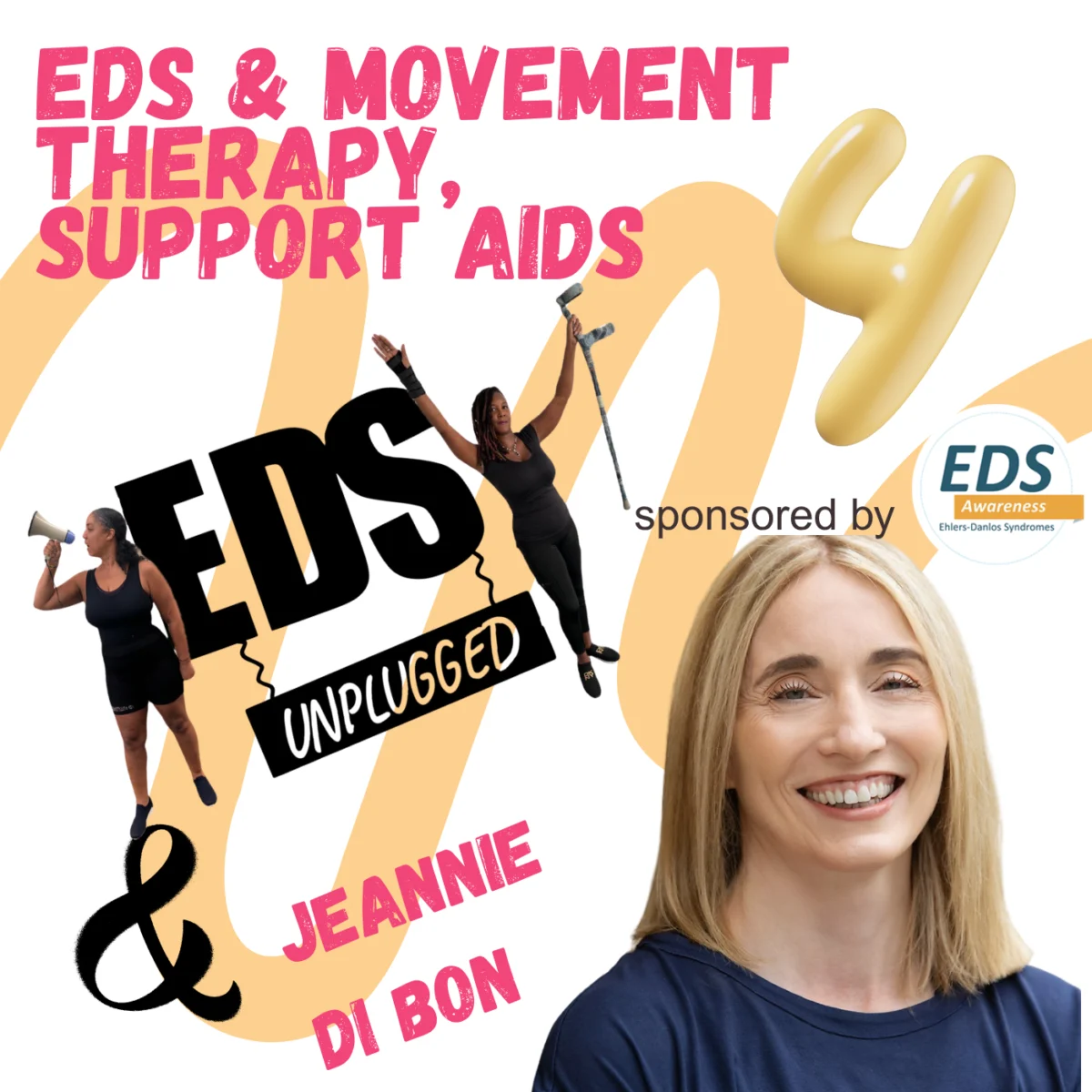
The management of Ehlers-Danlos Syndrome (EDS) and hypermobility spectrum disorders (HSD) has long been mired in outdated medical advice and a “tough it out” culture that often leaves patients feeling dismissed, gaslit, and physically worse. In the fourth episode of the EDS Unplugged podcast, hosts Cassandra A. Campbell and Marcia Brock sat down with Jeannie Di Bon, a pioneering movement therapist, educator, and the founder of The Zebra Club, to challenge the traditional approach to exercise for the hypermobile community.
Di Bon, who lives with hypermobile EDS herself, introduced her evidence-based "Integral Movement Method" (IMM). The discussion offered a transformative perspective: for those with connective tissue disorders, the path to stability is not found in high-intensity strength training, but in nervous system regulation, proprioceptive awareness, and a "go low, go slow" philosophy.
The Evolution of a Specialist: A Personal and Professional Journey
Jeannie Di Bon’s expertise is born from a 35-year personal journey of navigating chronic pain and systemic health issues. Her story is representative of many in the EDS community: misdiagnosed for years, she struggled with unexplained headaches, IBS, and chronic pain from the age of 12. It was only after having children—when her physical instability became acute—that she sought professional intervention.
"I was hanging off my joints," Di Bon recalled, noting that a physiotherapist first suggested Pilates in 2007. What began as a personal rehabilitation project quickly evolved into a career. By 2010, she began working with patients referred by other clinicians, many of whom were hypermobile. It wasn’t until 2017, while seeking treatment for Mast Cell Activation Syndrome (MCAS), that a specialist formally diagnosed her with hypermobile EDS.
This dual experience—as both a patient and a clinician—has allowed Di Bon to bridge the gap between abstract clinical guidelines and the lived reality of the patient. "I’ve been there myself," she explains. "All the things I saw these patients doing, it’s like, I’ve done that. I can communicate the watch-points and how we need to do things because I really feel it in my own body."
The Integral Movement Method: A Three-Pillar Foundation
Di Bon’s Integral Movement Method (IMM) rejects the common, and often harmful, advice that patients should simply "get stronger" to manage their hypermobility. Instead, the IMM is built upon three essential pillars: Safety, Stability, and Strength.
1. Nervous System Regulation
Di Bon argues that many hypermobile individuals exist in a constant state of "bracing"—a physical manifestation of chronic pain and the trauma of being dismissed by the medical establishment. "If you come to see me with your shoulders up to your ears and you aren’t breathing properly, how on earth are you going to do strength training?" she asks. Before attempting to build muscle, the nervous system must be calmed through breathwork and relaxation.
2. Awareness-Based Movement
The IMM prioritizes proprioception—the body’s ability to sense movement, action, and location. Because those with EDS often lack this spatial awareness, the method focuses on slow, controlled movements that help the patient reconnect with their body, preventing the overextension that leads to injury.
3. Strength
Strength is the final step, not the first. By establishing safety and stability first, patients can eventually move into strength training without the fear of triggering a flare-up or causing further damage.
Supporting Data and Evidence-Based Outcomes
A significant portion of the conversation focused on the validation of the IMM through clinical research. Di Bon noted that her program, Strengthen Your Hypermobile Core, was the subject of an eight-week study published in 2024.
The research, which tracked patient outcomes over six months, yielded statistically significant improvements across several metrics. Crucially, the data showed that participants’ physical activity scores did not increase—meaning the improvements were not the result of "doing more" exercise. Instead, the benefits were derived from moving differently. This is a groundbreaking finding for the community, as it removes the pressure to perform high-intensity workouts that often lead to "crash-and-burn" cycles.
The "Zebra Club": Creating a Global Ecosystem
To make this methodology accessible, Di Bon founded The Zebra Club, an app-based platform designed specifically for the hypermobile population. Since its launch in 2019, it has evolved into a global ecosystem that integrates three primary needs: Movement, Education, and Community.
The platform provides short, tailored classes that allow users to choose their intensity based on their daily capacity—whether they are experiencing a high-fatigue day or feeling strong enough for stability work. The app is endorsed by medical professionals worldwide and serves as a "safe space" where patients feel validated, rather than judged.
Implications: Pacing, Advocacy, and the Use of Aids
A recurring theme in the discussion was the concept of "pacing." Both the hosts and the guest emphasized that for those with chronic conditions, life is a series of trade-offs. "If I do X, what is the consequence?" is a daily mental calculation.
Rethinking Medical Aids
The discussion addressed the controversy surrounding the use of braces and support aids. While some clinicians advise against them, fearing "muscle atrophy," Di Bon and the hosts firmly disagree. They argue that if a brace or a device like a Body Braid allows a person to be more functional, move with confidence, and participate in daily life, the benefits far outweigh the theoretical risks.
"Why would we not want to help people if they need support?" Di Bon asks. She advocates for using these aids to facilitate movement, rather than replacing it. For many, a simple ankle brace or ring splint can be the difference between isolation and connection.
The Role of Advocacy
The conversation highlighted the importance of patient advocacy. With the Ehlers-Danlos Society preparing for new classifications of EDS and HSD, the medical landscape remains confusing for many. Di Bon encouraged listeners to "print out the blogs and bring them to your doctor." She reminded listeners: "You are the expert of your body. If something doesn’t feel right… don’t be afraid to advocate for yourself."
Conclusion: A Message of Hope
The episode concluded with a powerful message for those feeling defeated by their bodies. The "go low, go slow" mantra serves as a reminder that recovery is not a sprint, but a marathon. By incorporating "movement snacks"—such as pelvic tilts while brushing teeth or gentle breathing exercises in bed—individuals can maintain a connection to their bodies even during severe flare-ups.
For those interested in exploring these methods further, Di Bon offers a wealth of resources, including over 300 free videos on her Hypermobility Channel on YouTube and in-depth educational blogs at jeanniedibon.com.
As the EDS Unplugged podcast highlights, the future of managing Ehlers-Danlos Syndrome lies not in the rigid, outdated exercise routines of the past, but in a compassionate, individualized, and nervous-system-first approach. For the zebra community, the path forward is one of self-compassion, informed movement, and the radical realization that they are the true authorities on their own health.