








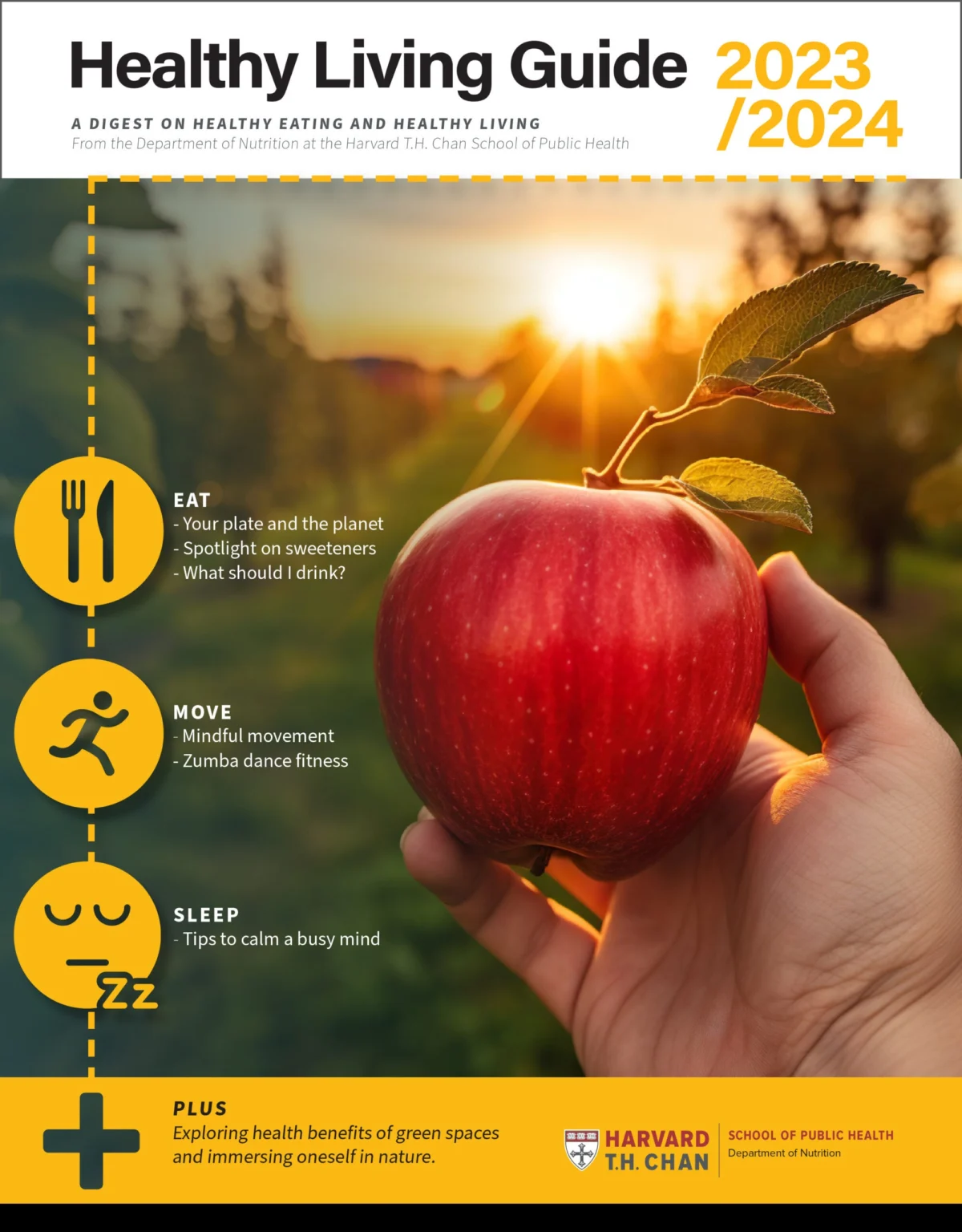
In an era defined by rapid technological advancement and often chaotic lifestyle patterns, the pursuit of holistic well-being has never been more critical. As the calendar turns to 2024, the Department of Nutrition at the Harvard T.H. Chan School of Public Health has released its fourth annual Healthy Living Guide. This year’s edition is more than just a collection of dietary advice; it serves as a manifesto for integrating mindfulness into the fabric of public health.
Guided by the wisdom of the late Thich Nhat Hanh—who once remarked, "The apple in your hand is the body of the cosmos"—this year’s publication emphasizes the profound connection between our personal dietary choices and the health of the planet. By marrying rigorous scientific research with the ancient practice of mindful awareness, the Department of Nutrition aims to provide a roadmap for navigating the complexities of modern health.
Main Facts: A Holistic Approach to Wellness
The Healthy Living Guide 2023-2024 is anchored by three primary pillars: nutrition, physical activity, and restorative sleep. However, this edition distinguishes itself through its primary focus on the Thich Nhat Hanh Center for Mindfulness in Public Health.
The Center, launched in 2023, represents a paradigm shift in how public health institutions approach wellness. Rather than focusing solely on biological outcomes, the Center explores the intersection of cognitive awareness and physical health. The Guide argues that "mindful eating" is not merely a tool for weight management, but a necessary practice for environmental sustainability. By becoming more aware of the origin, production, and consumption of our food, individuals can foster a healthier relationship with their bodies and, by extension, the global ecosystem.
Key takeaways from the guide include:
- The Impact of Ultra-Processed Foods (UPFs): A deep dive into the latest research linking UPFs to adverse mental health outcomes.
- The Science of Movement: Evidence-based insights into how rhythmic exercise—such as Zumba—improves cardiovascular health and mood.
- Chronobiology: An exploration of "chronotypes"—the biological predisposition to wakefulness and sleep—and how aligning one’s schedule with their natural circadian rhythm can lead to significant long-term health improvements.
Chronology: The Evolution of the Healthy Living Guide
The journey to the current edition reflects the growing demand for evidence-based, accessible wellness resources from one of the world’s leading research institutions.
- 2020-2021: The inception of the Healthy Living Guide series, designed to provide the public with a reliable, science-backed counter-narrative to the plethora of fad diets and wellness misinformation prevalent on social media.
- 2021-2022: The focus expanded to address the pandemic’s impact on mental health and sedentary lifestyles, highlighting the need for structured at-home fitness and nutritional resilience.
- 2022-2023: A pivot toward chronic disease prevention, featuring extensive analysis on diet quality and the long-term benefits of plant-forward eating patterns.
- 2023-2024: The launch of the Thich Nhat Hanh Center for Mindfulness in Public Health and the current edition of the Guide, which formalizes the integration of mindfulness into the department’s primary research objectives.
Supporting Data: Evidence-Based Insights
The Guide draws upon a massive repository of longitudinal data and meta-analyses conducted by Harvard researchers. Central to this year’s data is the mounting evidence concerning the dangers of ultra-processed foods.
Studies cited in the report indicate that diets high in UPFs—characterized by artificial ingredients, excessive sodium, and refined sugars—are not only correlated with obesity and cardiovascular disease but are increasingly linked to systemic inflammation that affects neurological health. The Guide presents findings that suggest a direct, inverse relationship between the consumption of whole, minimally processed foods and the risk of developing depressive symptoms.
Furthermore, the research on sleep chronotypes provides a compelling argument for personalized medicine. By utilizing standardized assessment tools, the Guide demonstrates that individuals who force themselves into schedules that contradict their biological "clock" experience higher levels of cortisol and metabolic dysfunction. The data suggests that acknowledging whether one is an "early bird" or a "night owl" is not a matter of preference, but a vital component of hormonal and metabolic regulation.
Official Responses and Strategic Vision
The leadership at the Harvard Department of Nutrition emphasizes that this Guide is intended to serve as an "interactive toolkit." Dr. Walter Willett and his colleagues have long advocated for a shift from prescriptive, rigid dieting to sustainable, lifestyle-oriented health patterns.
"The goal is to move beyond the ‘diet culture’ that has dominated public discourse for decades," a representative from the Department stated during the launch of the Thich Nhat Hanh Center. "By introducing mindfulness, we are asking the public to engage with their health on a level that is sustainable, ethical, and intellectually stimulating. We are looking at the population level—how can we create environments that make healthy choices the default for everyone, everywhere?"
The integration of the Thich Nhat Hanh Center’s research into the Guide signifies a formal recognition by the academic community that emotional and mental awareness are essential components of physical public health. It is a response to the growing global crisis of lifestyle-related diseases, suggesting that the "cure" lies as much in our behavioral habits as it does in medical intervention.
Implications: The Future of Public Health
The release of this Guide has significant implications for how we define "healthy living" in the 21st century.
1. The Decentralization of Health Information
By providing a free, downloadable PDF with printable tip sheets, the Harvard Department of Nutrition is attempting to democratize high-quality health information. The goal is to reach beyond the confines of academia and provide actionable data to the average consumer who may feel overwhelmed by conflicting headlines.
2. The Rise of "Mindful Public Health"
The emphasis on mindfulness represents a departure from traditional "calories-in, calories-out" models. The implication here is that behavioral change is impossible without cognitive engagement. If the public learns to eat with awareness, they are naturally more likely to select foods that are beneficial for both their health and the environment, effectively solving two problems with one approach.
3. A Focus on Planetary Health
The Guide implicitly acknowledges that human health is a subset of planetary health. By advocating for mindful consumption, the Department is highlighting the environmental footprint of food systems. This suggests that the next decade of public health policy will be increasingly focused on the intersection of nutrition and sustainability.
Conclusion: A Call to Action
The 2023-2024 Healthy Living Guide is not meant to be read once and placed on a shelf. It is designed to be a living document. The Department of Nutrition encourages readers to utilize the provided summaries and tip sheets to track their progress, test their knowledge against previous years’ findings, and ultimately, cultivate a more intentional lifestyle.
As we move through 2024, the challenge for the public is to translate this information into action. Whether it is by swapping an ultra-processed snack for a whole-food alternative, adjusting one’s daily schedule to better align with natural sleep-wake cycles, or simply taking a moment of mindfulness before a meal, the cumulative impact of these small changes is where the future of public health resides.
For those interested in exploring the research in full, the Harvard T.H. Chan School of Public Health has made the entire 2023-2024 publication available for download. By engaging with these resources, individuals can begin the process of not only improving their personal health outcomes but contributing to a broader, more conscious movement in global public health.
To access the full suite of resources, including the printable Healthy Living Guide (PDF) and supplemental articles on nutrition, sleep, and physical activity, please visit the official website of the Harvard Department of Nutrition. Test your knowledge, apply the research, and embrace a more mindful year ahead.