








The history of human suffering is as old as civilization itself, yet the clinical framework we use to describe it is a relatively recent invention. While the term "Post-Traumatic Stress Disorder" (PTSD) only entered the medical lexicon in 1980 with the publication of the DSM-III, the psychological echoes of war, disaster, and personal tragedy have been documented for over 4,000 years. From the cuneiform tablets of ancient Mesopotamia to the sleep-deprived diaries of 17th-century Londoners, the symptoms we now categorize as a psychiatric disorder have always been present.
However, a growing body of historical and phenomenological analysis suggests that the transition from "narrated suffering" to "clinical categorization" is not merely a triumph of scientific progress. Instead, it represents a fundamental shift in framing—a move from seeing trauma as a collective, human response to an overwhelming world, to viewing it as a localized dysfunction within the individual brain.
Main Facts: The Invention of a Category
For forty centuries, trauma was the province of poets, historians, and philosophers. In 1980, it became the province of the American Psychiatric Association (APA). This transition was not sparked by a sudden biological discovery, but by a complex intersection of social activism, the aftermath of the Vietnam War, and a need for a standardized diagnostic language.
The current clinical definition of PTSD relies on four "symptom clusters": intrusions (flashbacks and nightmares), avoidance of triggers, negative alterations in cognition and mood, and hypervigilance. While these clusters accurately describe the experiences of many survivors, the act of "medicalizing" these symptoms has profound implications. As noted by researchers like W. Paganin, the framing of trauma is never neutral. To label a reaction as a "disorder" is a choice to prioritize the individual’s biological "malfunction" over the context of the event that caused it.
Today, the two primary diagnostic systems—the DSM-5 (used primarily in the U.S.) and the ICD-11 (the World Health Organization’s standard)—do not even agree on what constitutes PTSD. The DSM-5 lists twenty possible symptoms, while the ICD-11 focuses on a core set of six. This discrepancy highlights the fact that psychiatric categories are "operational conventions"—tools designed for insurance, research, and clinical communication—rather than immutable biological truths.
Chronology: A 4,000-Year Timeline of Trauma
The history of trauma can be divided into three distinct shifts in framing: trauma as a moral or spiritual crisis, trauma as a physical or neurological injury, and trauma as a psychiatric disorder.
Ancient Roots: The Tremor of Ur and the Blindness of Marathon
The earliest records of post-traumatic reactions date back to the destruction of the Sumerian city of Ur (circa 2027–2003 BCE). Cuneiform laments describe survivors spending nights "trembling" among corpses, haunted by intrusive images that would not cease. In 490 BCE, the Greek historian Herodotus recorded the case of Epizelus during the Battle of Marathon. Epizelus was struck by sudden, psychogenic blindness after witnessing the death of a comrade, despite suffering no physical wound—a classic example of what would later be called a conversion disorder.
The Early Modern Era: Nightmares and "Nostalgia"
In 1606, William Shakespeare depicted the "invisible bloodstains" and sleepwalking of Lady Macbeth, capturing the obsessive guilt and physiological arousal associated with trauma. Sixty years later, Samuel Pepys’s diary provided a vivid account of the psychological aftermath of the Great Fire of London (1666). Pepys noted that for months he could not sleep "without great terrors of fire," documenting a state of hyper-arousal that fits modern PTSD criteria perfectly.
In 1688, Swiss physician Johannes Hofer coined the term "nostalgia" to describe the debilitating suffering of mercenaries far from home. At the time, it was viewed as a physical illness caused by the loss of a "place" or community. This framing recognized trauma as a rupture between the individual and their social world.
The Industrialization of War: 1914–1945
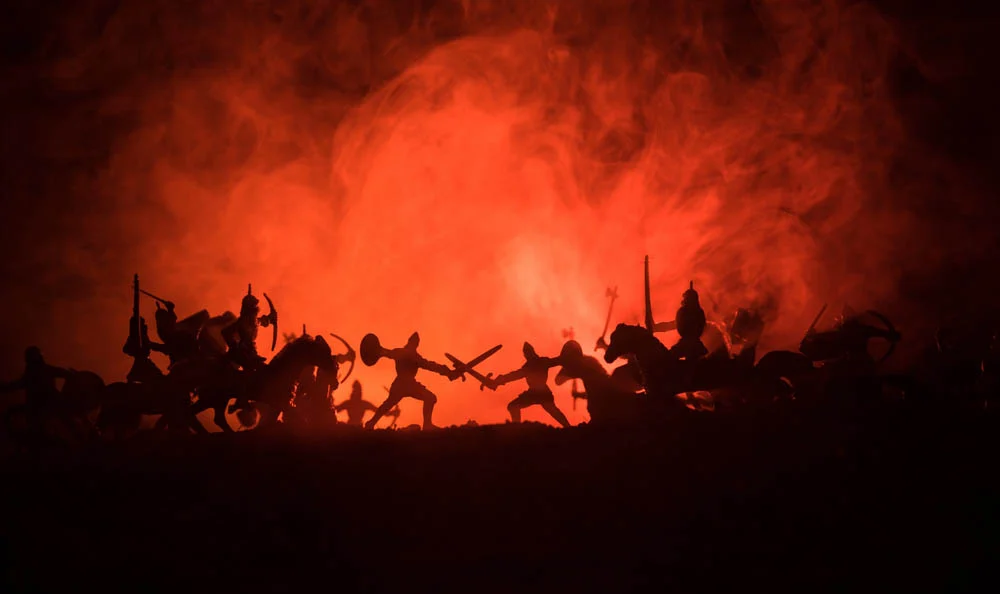
The World Wars forced psychiatry to confront trauma on a mass scale. In Italy, traumatized soldiers were often dismissed as scemi di guerra ("war fools") and subjected to painful faradic currents (electrotherapy) to force them back to the front. In Germany, the 1916 Munich Congress saw psychiatrists formally reject the concept of "traumatic neurosis." This was not a scientific decision but an economic one; recognizing the condition would have required the state to pay massive insurance claims and would have undermined the military effort.
The Modern Era: 1980 to the Present
The entry of PTSD into the DSM-III in 1980 was the result of intense lobbying by Vietnam veterans and anti-war psychiatrists. For the first time, the "etiological agent" (the traumatic event) was placed outside the individual, acknowledging that an external experience could cause lasting mental harm.
Supporting Data: The Discrepancy of the Manuals
The belief that modern psychiatry has finally "solved" the mystery of trauma is challenged by the data. When researchers apply different diagnostic manuals to the same population, the results vary significantly, suggesting that the diagnosis is as much about the "map" as it is about the "territory."
A study conducted on a Dutch population sample revealed the following:
- PTSD Prevalence (DSM-5): 1.3%
- PTSD Prevalence (ICD-11): 1.0%
- Complex PTSD (ICD-11): 1.6% (a category not recognized by the DSM-5).
This means that a patient might be considered "mentally ill" under one manual and "healthy" (or suffering from a different condition) under another. Furthermore, modern classifications have largely moved away from "conversion manifestations" like the psychogenic blindness seen in Herodotus’s time. These are now relegated to "functional neurological disorders," fragmenting what was once understood as a unified bodily response to horror.
Official Responses and Institutional Gatekeeping
The medicalization of trauma has created a complex system of gatekeeping. Because a PTSD diagnosis is often the only "key" to unlocking disability benefits, veterans’ pensions, or specialized therapy, the criteria for the diagnosis are fiercely contested.
Historically, the recognition of trauma has been faster for those in uniform than for civilians. While "shell shock" was debated in the 1910s, it took until 1962 for "battered child syndrome" to be recognized, and 1974 for "rape trauma syndrome" to enter the clinical conversation. Institutions—whether they are military boards, insurance companies, or government welfare agencies—have a vested interest in how "narrow" or "broad" the diagnostic criteria are. When the criteria are tightened (as in the ICD-11), it often reduces the number of people eligible for support, effectively using science to serve administrative or economic ends.
Implications: What is Lost in Translation?
The most profound implication of the 4,000-year history of trauma is that our modern clinical language, while useful, may also be reductive. By focusing on "negative alterations in cognition," we risk losing the deeper meaning of concepts like Hofer’s "nostalgia." Trauma is often not just a "broken" brain; it is the pain of losing a community, a sense of safety, or a place in the world.
The De-Contextualization of Suffering
When we pathologize a reaction to war or violence, we shift the focus away from the context (the war) and onto the body of the survivor. If the reactions of Achilles, Job, and Vietnam veterans are essentially the same across millennia, then these reactions are not "abnormal." They are the consistent, human way the psyche responds to things no human should have to experience. Calling them a "disorder" implies a malfunction, whereas they may actually be a functional, albeit painful, attempt by the organism to survive.
A Call for a "Secular" Clinical Understanding
The archaeological record of trauma teaches us that the DSM is a tool, not a bible. For clinicians, the challenge is to use the diagnostic codes for administrative necessity while maintaining a "way of seeing" that encompasses the whole person. This involves moving from the question "What is wrong with you?" to "What happened to you?"
As we move forward, the goal of trauma-informed care should not be to simply "correct" a series of symptoms. It should be to recognize the "weight of history" borne by the individual. The nightmares of a refugee or the hypervigilance of a domestic violence survivor are not just codes in a chart; they are echoes of a 4,000-year-old story of human endurance. By acknowledging this prehistory, psychiatry can move toward a more compassionate, less reductive understanding of what it means to be human in a world that is often shattering.
Citation: Paganin, W. (2026). Core symptoms of PTSD across four millennia: a phenomenological and nosographic analysis – from ancient Mesopotamian texts to modern psychiatric classifications. Medical Humanities (BMJ).