











In a significant pivot intended to stabilize its long-term financial trajectory, German medical technology giant Carl Zeiss Meditec has announced a sweeping restructuring program. The company, a leader in ophthalmology and microsurgery equipment, disclosed that it expects to eliminate up to 1,000 positions globally over the next three years. This decision comes as the organization grapples with a contraction in its primary revenue streams and a challenging macroeconomic environment that has stifled growth in its key markets, most notably the Americas.
Main Facts: A Strategic Pivot for Profitability
The announcement, released alongside the firm’s half-year financial report for fiscal year 2025-26, outlines a rigorous cost-saving roadmap designed to restore profit margins. The restructuring is not merely a reduction in headcount; it represents a fundamental shift in how the company manages its supply chain, research and development (R&D) footprint, and product portfolio.
At the heart of the crisis is a cooling demand for the company’s intraocular lens (IOL) business. Traditionally a high-margin, reliable revenue generator, the IOL segment has faced significant headwinds. The company explicitly cited a "weak investment climate" in the Americas as a primary driver for the decline in sales. When healthcare providers and surgical centers delay capital expenditures—such as upgrading laser platforms or purchasing high-end diagnostic tools—the impact ripples immediately through the balance sheets of medical device manufacturers like Zeiss.
Chronology of Financial Contraction
To understand the scale of the current restructuring, one must look at the recent downward trajectory of the company’s performance:
- Fiscal Year 2024-25: The company began to report softening demand, noting that high interest rates and regulatory hurdles were beginning to influence purchasing behavior among hospitals and clinics.
- Early 2025: The company initiated early-stage cost-control measures, but these proved insufficient to offset the decline in volume, particularly in the premium lens and refractive laser markets.
- First Half of Fiscal Year 2025-26: The official results revealed a 5.7% year-over-year revenue decline, totaling 991 million euros. More alarmingly, adjusted earnings before interest, tax, and amortization (EBITA) plummeted to 60.5 million euros, down from 112.6 million euros during the same period in the previous year.
- Post-Announcement (Current Phase): Management has now initiated a formal "profitability improvement program," which includes the target of 1,000 job cuts and a total overhaul of manufacturing and R&D strategies.
Supporting Data: The Anatomy of a Financial Slump
The data provided in the latest financial communication paints a clear picture of a company struggling to maintain its premium positioning in a cost-sensitive market.
Revenue Breakdown and Margin Pressure
The drop to 991 million euros in revenue represents more than a simple fluctuation; it signifies a structural challenge. When revenue declines while operating expenses remain fixed, the result is the sharp contraction in EBITA that shareholders witnessed this cycle. The company has essentially seen its profitability nearly halved, dropping from 112.6 million euros to 60.5 million euros.

Regional Vulnerabilities
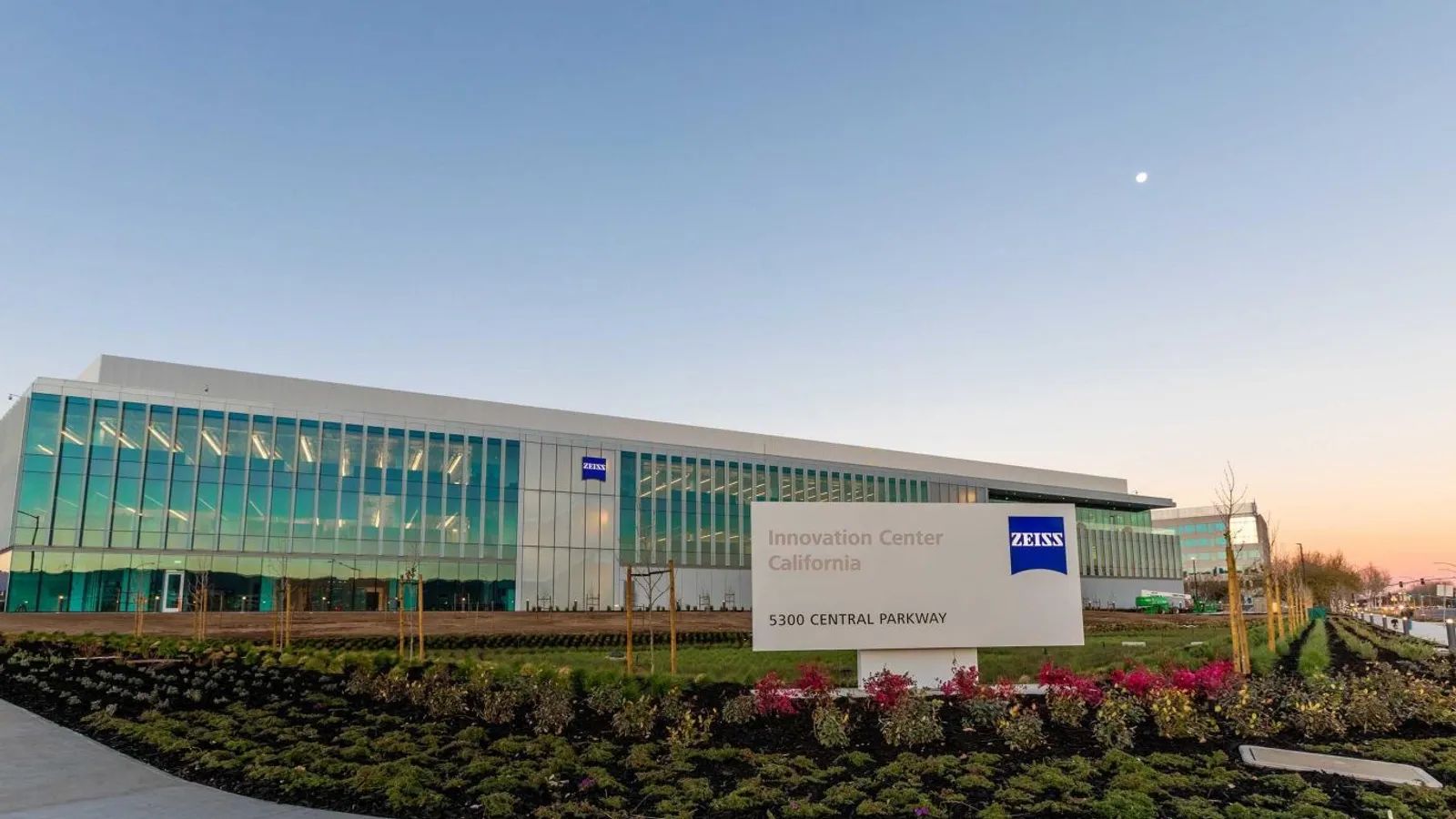
The "Americas" region—a critical pillar of Zeiss Meditec’s global footprint—has become a focal point of instability. The Dublin, California-based innovation center, which serves as the U.S. headquarters, remains a state-of-the-art facility, but the underlying demand for the technology housed within has failed to keep pace with operational costs. This weakness is being mirrored in other regions where similar economic volatility, driven by geopolitical uncertainty and fluctuating regulatory environments, has caused providers to adopt a "wait-and-see" approach.
The Target: 200 Million Euros
The primary benchmark for this restructuring is a target of more than 200 million euros in annual earnings improvement by the end of fiscal year 2028-29. To achieve this, the company is not just cutting labor costs; it is pruning its portfolio. Management intends to clear out "less profitable products," effectively narrowing their focus to core technologies where they maintain a dominant market share and higher margins.
Official Responses and Strategic Rationale
CFO Justus Felix Wehmer has been the public face of this difficult transition. In a formal statement accompanying the financial release, Wehmer articulated that the current market environment is no longer favorable to the company’s existing cost structure.
"Geopolitical and regulatory uncertainties have created a challenging market environment," Wehmer stated. He emphasized that the company can no longer afford to carry the inefficiencies that were perhaps ignored during years of high growth.
The strategy, as outlined by the leadership, involves three pillars:
- Operational Efficiency: Optimizing the supply chain to reduce waste and lead times.
- Geographic Realignment: Shifting R&D and manufacturing activities to "cost-efficient countries." This is a euphemism for moving labor-intensive processes away from high-cost European and North American hubs to regions with lower overhead.
- Portfolio Rationalization: Discontinuing products that do not contribute to the long-term profitability goals, allowing the company to concentrate its resources on high-growth areas like digital ophthalmology and advanced diagnostic imaging.
Implications: What This Means for the Medical Device Sector
The move by Carl Zeiss Meditec sends a cautionary signal to the broader medtech industry. If a market leader of this stature is forced to initiate such significant cuts, it suggests that the "post-pandemic boom" in medical capital equipment has definitively ended.

Impact on the Workforce
The loss of 1,000 positions is a significant blow to the company’s internal morale and operational expertise. While the company has not yet released the specific departments or regions that will be most affected, it is likely that the administrative and non-core R&D roles will bear the brunt of the cuts. The transition over the next three years will be a period of significant uncertainty for employees.
The China Strategy
Interestingly, the restructuring is taking place in tandem with an aggressive "China-for-China" strategy. The company is doubling down on its manufacturing presence in China to serve that massive market, while simultaneously seeking to expand "cost-efficient capacities" elsewhere. This dual approach—investing in growth markets while cutting costs in saturated ones—is a complex balancing act that requires precise execution.
Long-term Outlook for Shareholders
For investors, the promise of 200 million euros in added annual earnings by 2029 is the carrot at the end of a very difficult three-year road. The market’s reaction will likely hinge on the company’s ability to execute these cuts without damaging its reputation for innovation. Zeiss is, at its core, an engineering-led company; if it cuts too deep into its R&D capabilities, it risks losing its competitive edge against rivals like Alcon or Johnson & Johnson Vision.
Conclusion: A New Era of Discipline
Carl Zeiss Meditec is currently undergoing a painful but necessary evolution. The era of unchecked growth is being replaced by an era of extreme fiscal discipline. By acknowledging the weakness in its core IOL business and taking proactive steps to streamline its operations, the company is signaling to the market that it is prioritizing sustainability over scale.
The coming years will be defined by the success or failure of this restructuring. If the company can successfully optimize its supply chain and refocus its R&D without losing its place as a leader in vision technology, it will emerge as a leaner, more resilient entity. However, the human cost—the potential loss of 1,000 skilled professionals—serves as a stark reminder of the volatility inherent in today’s global medical technology market. For now, all eyes are on the leadership team as they attempt to navigate these turbulent waters, balancing the need for immediate profit recovery with the necessity of long-term innovation.