











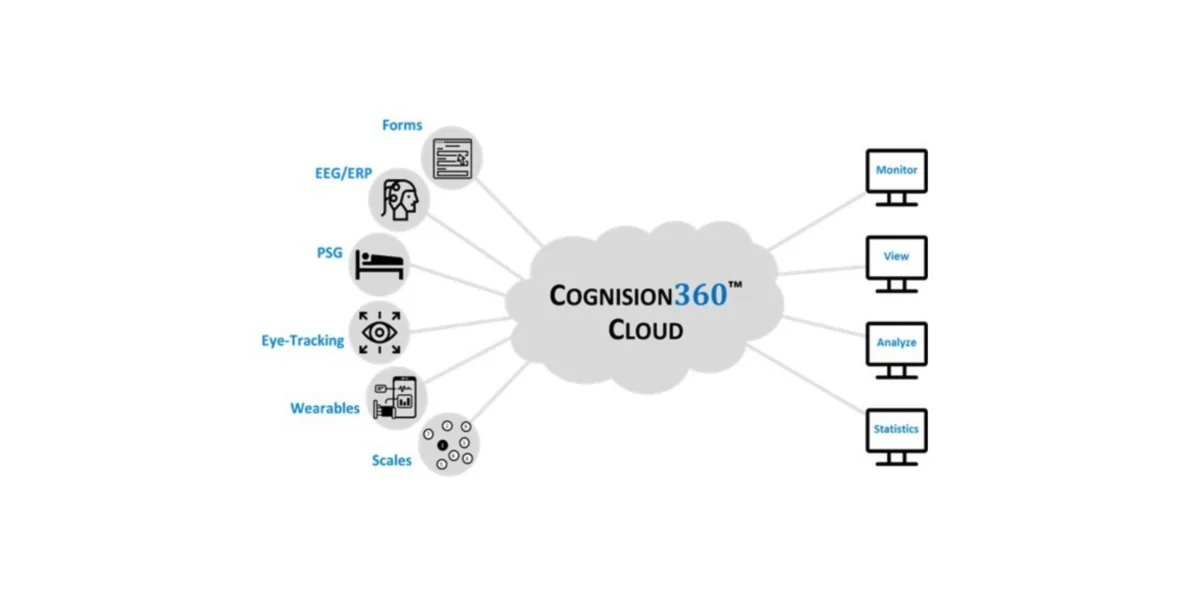
In the high-stakes world of central nervous system (CNS) drug development, the difference between a breakthrough therapy and a failed trial often comes down to data integrity. As pharmaceutical companies increasingly lean into complex neurobiomarkers—ranging from sleep architecture to cognitive performance—the logistical burden of managing disparate data streams has become a primary bottleneck. Today, Cognision is addressing this systemic inefficiency with the launch of Cognision360, a web-based, end-to-end platform designed to unify neurobiomarker data into a single, regulatory-ready ecosystem.
The Fragmented Landscape of CNS Research
For decades, multi-site clinical trials in neurology and psychiatry have been plagued by a "siloed" reality. A typical trial protocol might require a subject to undergo polysomnography (PSG) at a sleep lab, complete cognitive assessments on a tablet, wear activity trackers for longitudinal data, and provide electroencephalography (EEG) recordings for neuro-electrical mapping.
Each of these modalities historically operates through its own proprietary software, vendor-specific hardware, and independent data storage protocols. The resulting "Frankenstein" data architecture creates massive operational hurdles:
- Manual Transcription: Data must be manually extracted, reformatted, and uploaded, introducing significant human error.
- Version Control: With multiple sites and varying equipment, maintaining consistency in data collection becomes a monumental administrative task.
- Delayed Database Locks: Because data is fragmented, cleaning and reconciling the final dataset can take months, delaying critical submissions to regulatory bodies like the FDA and EMA.
Cognision360 arrives as a direct response to these pain points, offering a centralized architecture that digitizes and standardizes the entire neurobiomarker pipeline.
Chronology and Development: Building for Regulatory Rigor
The development of Cognision360 was not a sudden pivot but a strategic evolution based on years of observing the "data integration gap" in clinical research.
Phase 1: Identifying the Bottleneck
Cognision’s leadership observed that pharmaceutical sponsors were investing millions in sophisticated biomarker strategies, only to see the value of those investments eroded by integration failures. The realization was that technology was moving faster than the infrastructure required to manage it.
Phase 2: User-Centric Engineering
Unlike many digital health tools that prioritize flashy features, Cognision focused on the "clinical reality" of the site coordinator. By embedding protocol-defined workflows directly into the software, the platform ensures that every user, regardless of their location or technical expertise, performs tests in the exact sequence and manner required by the study protocol.
Phase 3: The Regulatory Pivot
As the FDA and EMA began releasing stricter guidance on digital health technology, Cognision shifted its engineering focus toward "transparent analytics." Recognizing that opaque, "black-box" artificial intelligence models were often rejected during the validation process, the company committed to deterministic, rules-based analytical methods, ensuring that every data point could be traced back to its origin.
Core Features and Technological Architecture
Cognision360 is built to function as the "single source of truth" for neurobiomarker data. Its technical framework includes several key innovations:
Automated Metadata Tagging
The most significant time-saver within the platform is the automatic tagging of data at the point of collection. Whether it is an ERP measurement or a wearable sensor output, the system attaches metadata—subject ID, site location, treatment arm, and visit timepoint—in real-time. This eliminates the need for manual file labeling, which is a leading source of "lost" or corrupted data in large-scale trials.
The Power of Integration
The platform serves as an aggregator for:
- Polysomnography (PSG): Full integration with standard sleep diagnostic outputs.
- EEG/ERP: High-resolution neuro-electrical data.
- Wearable Sensors: Real-world evidence (RWE) gathered in the patient’s home.
- eCOAs: Electronic clinical outcome assessments that capture patient-reported data.
Secure, Cloud-Native Infrastructure
Hosted in a validated Microsoft Azure environment, Cognision360 is built for enterprise-grade security. It provides an extensive API layer, allowing it to "talk" to existing clinical trial management systems (CTMS). This ensures that sponsors do not have to abandon their current infrastructure but can instead augment it with Cognision’s specialized neuro-data capabilities.
Official Perspectives: The Philosophy of Transparency
The launch of Cognision360 is underpinned by a clear philosophy: in clinical research, simplicity and reproducibility are more valuable than complexity.
Igor Korolev, DO, PhD, vice president of neuroscience and digital health at Cognision, emphasized the financial and scientific impact of the current status quo. "We’re seeing sponsors invest millions in sophisticated biomarker strategies, only to lose weeks or months wrestling with data integration issues," Korolev stated. "Cognision360 provides an end-to-end framework that ensures multi-modal neurobiomarker data meets regulatory expectations for consistency and integrity from day one."
Complementing this, KC Fadem, chief technology officer at Cognision, addressed the growing skepticism surrounding AI in medical diagnostics. "The platform employs deterministic, rules-based analytical methods with expert-defined data relationships rather than non-transparent artificial intelligence models," Fadem noted. "For regulatory submissions, transparency, reproducibility, and traceability aren’t nice-to-haves—they’re requirements. Our approach is designed with that reality in mind."
Implications for the Future of Drug Development
The introduction of Cognision360 has profound implications for the pharmaceutical industry, particularly in the context of emerging trial models.
Accelerating Decentralized Trials (DCTs)
Decentralized and hybrid clinical trials are becoming the new standard. However, monitoring patients remotely requires a robust data stream that is accessible to investigators in real-time. By providing a secure web interface, Cognision360 allows authorized users to perform remote monitoring and data analysis without requiring the patient to visit a physical site for every data check-in.
Supporting Bayesian Adaptive Designs
Modern FDA guidance encourages the use of Bayesian adaptive trial designs, which allow for modifications to a study based on interim data analysis. To do this effectively, sponsors need access to clean, analyzed data on a rolling basis. Cognision360’s automated workflow facilitates this, turning data acquisition into a continuous stream rather than a batch-process event.
Reducing the "Time to Filing"
The final step of any drug development program is the database lock, a notoriously slow process involving the reconciliation of thousands of data points. By automating the capture, cleaning, and formatting of data, Cognision360 significantly accelerates this process. For pharmaceutical companies, this translates to shorter development timelines, reduced burn rates, and, potentially, faster market entry for life-saving CNS medications.
Conclusion: Setting a New Standard for Integrity
As the pharmaceutical industry faces increasing pressure to deliver innovative treatments for complex conditions like Alzheimer’s, depression, and sleep disorders, the tools used to measure success must be as advanced as the drugs themselves. Cognision360 represents a shift toward an era of "intelligent integration."
By removing the manual friction that has historically slowed down neuroscience research, Cognision is allowing sponsors to focus on the science rather than the logistics. In an environment where every week counts toward a patent life and every data point is subject to intense regulatory scrutiny, Cognision360 offers not just a platform, but a strategic advantage in the race to bring new therapies to patients.