











For a patient or their family, a cancer diagnosis often feels like standing at the edge of a vast, uncharted territory. Amidst the flurry of medical terminology and treatment plans, one term frequently emerges: the "clinical trial." While often associated with the cutting edge of medicine, the concept can be shrouded in misconceptions. Are they a last resort? Are they dangerous? Are they accessible?
To demystify this critical component of modern oncology, it is essential to understand that clinical trials are not merely experiments—they are the engines of progress. Every standard-of-care treatment available in clinics today, from chemotherapy to life-saving immunotherapies, was once a hypothesis tested within the rigorous framework of a clinical trial.
The Foundation of Modern Oncology: What Are Clinical Trials?
At their core, cancer clinical trials are structured research studies designed to evaluate new ways to prevent, detect, or treat cancer. They represent the bridge between laboratory discovery and patient application. Without the willingness of patients to participate in these studies, the evolution of medicine would grind to a halt.
Clinical trials are highly diverse in their objectives. While the public often envisions them as tests for new drugs, they also encompass:
- Prevention Trials: Studies looking for better ways to prevent disease in people who have never had cancer or to prevent recurrence.
- Screening and Diagnostic Trials: Research aimed at identifying more accurate or earlier methods of detecting cancer.
- Quality of Life Trials: Research focused on improving the day-to-day experience of patients by managing symptoms and reducing the side effects of traditional treatments.
- Treatment Trials: Investigations into new therapies, including surgical techniques, radiation approaches, and, increasingly, revolutionary immunotherapies that harness the body’s own immune system to fight malignant cells.
The Chronology of Scientific Discovery
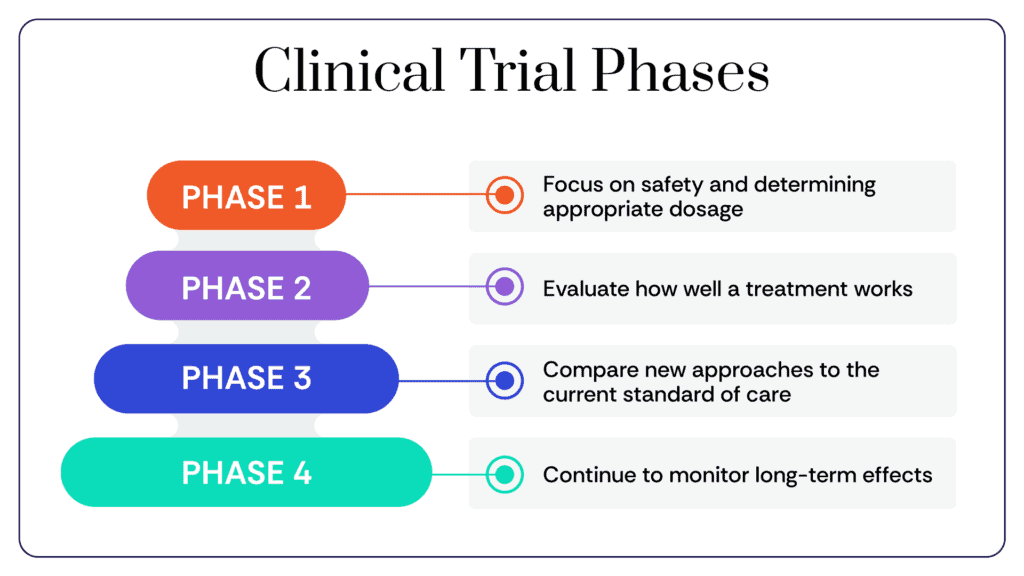
The journey of a clinical trial is a methodical, multi-phase process designed to prioritize patient safety above all else. This chronological progression ensures that by the time a treatment reaches the wider public, its efficacy and risk profile are well-documented.

Phase I: Safety First
The primary objective of Phase I trials is to determine the highest dose that can be given safely without causing severe side effects. These trials typically involve a small number of patients and focus on how the body processes the new treatment.
Phase II: Measuring Efficacy
Once a safe dosage range is established, Phase II trials examine whether the treatment actually works against specific types of cancer. Researchers look for evidence of tumor shrinkage or stabilization and continue to monitor safety closely.
Phase III: The Gold Standard
Phase III trials compare the new treatment to the current standard of care. These are usually large, randomized studies that serve as the final hurdle before a new treatment is submitted to regulatory agencies like the FDA for approval.
Phase IV: Long-Term Monitoring
Even after a drug is approved and reaches the market, Phase IV trials—or post-marketing surveillance—continue to track the drug’s long-term effects on larger populations to identify rare or delayed side effects.
The Case for Participation: Why Trials Matter
The decision to participate in a clinical trial is deeply personal, yet it carries significant weight for the broader medical community. For the individual, a trial can offer access to breakthrough therapies years before they are widely available. It also provides a level of medical oversight that is often more intensive than standard treatment, as patients in trials are monitored by specialized multidisciplinary teams.

However, the benefit extends beyond the individual. As Kristin Kleinhofer, a Stage 4 Leukemia survivor, notes: "I began to look at clinical trials, and it wasn’t only that I was fighting for my life, but I really wanted to pay it forward, help cancer research, and help other cancer patients, even if it wasn’t going to work for me." This altruistic motivation is the heartbeat of clinical research. Every participant is a contributor to a collective effort that incrementally improves survival rates for generations to come.
Dispelling Myths: The "Last Resort" Fallacy
One of the most persistent and damaging myths is the notion that clinical trials are exclusively for patients who have exhausted all other options. This could not be further from the truth. While trials are indeed a powerful option for patients with advanced or treatment-resistant cancer, they are also frequently available for newly diagnosed patients.
In many instances, receiving a trial-based therapy as a first-line treatment can result in better long-term outcomes than standard protocols. Furthermore, as immunotherapy and precision medicine advance, trials are increasingly targeting specific genetic markers of a tumor rather than just its location, making them relevant at various points throughout the treatment journey.
Critical Considerations: Weighing the Risks and Rewards
Choosing to join a trial is a significant decision that requires a clear-eyed assessment of the pros and cons.
The Potential Benefits:

- Access to Innovation: Being among the first to benefit from the next generation of cancer treatments.
- Enhanced Care: Frequent check-ins, scans, and direct access to leading specialists.
- Altruistic Contribution: Helping refine medicine for future patients.
The Potential Challenges:
- Uncertainty: Because the treatment is experimental, its effectiveness is not guaranteed.
- Side Effects: As with any medical intervention, new treatments carry the risk of unexpected or known side effects.
- Logistical Demands: Participation often requires more frequent hospital visits, blood draws, and diagnostic imaging than standard care, which can be taxing on both time and finances.
- Eligibility Constraints: Not everyone qualifies for every trial. Eligibility criteria are strict, focusing on variables like age, stage of disease, prior treatments, and genetic markers. These rules exist to ensure the validity of the research and the safety of the patient.
Navigating the Financial Landscape
Financial concerns are a valid hurdle for many families. It is important to distinguish between "study costs" and "routine care costs." Generally, the clinical trial sponsor covers the cost of the experimental drug and any specialized testing required strictly for the trial. However, standard care—such as primary doctor visits, hospital stays, or non-experimental medications—is typically billed to the patient’s insurance provider. Engaging with a financial counselor at the medical facility or a clinical trial navigator is a recommended step to avoid surprises.
Empowerment Through Inquiry: A Guide for Patients
The path to participating in a trial begins with a conversation. Patients should not hesitate to ask their oncologists about available options. To facilitate these discussions, it is recommended to bring a prepared list of questions.
10 Essential Questions for Your Oncology Team
- Are there trials specific to my diagnosis? Ask if your genetic markers or tumor histology make you a candidate for specific protocols.
- What is the trial’s primary goal? Is it testing a new drug, a combination of therapies, or quality-of-life improvements?
- How does this compare to my standard options? Understand the "why" behind the trial.
- What are the anticipated benefits? What have researchers observed in earlier phases?
- What are the potential risks? Discuss both known side effects and the potential for unknown reactions.
- What phase is the trial in? This provides context for how much is already known about the treatment.
- What is the logistical commitment? Clarify the number of visits, travel requirements, and time duration.
- What if the treatment is ineffective? Understand the "exit" strategy and what subsequent options remain available.
- How will the costs be handled? Specifically, ask what is covered by the sponsor versus insurance.
- How will this affect my daily life? Focus on quality of life and the ability to maintain personal routines.
Conclusion: A Path Toward Possibility
The landscape of oncology is shifting rapidly. As we move away from "one-size-fits-all" treatments, the importance of clinical trials as a vehicle for personalized, precision medicine only grows. For many, these trials represent more than just a medical procedure; they represent a lifeline and a sense of agency in a journey that can often feel beyond one’s control.
As Sharon Belvin, a Stage 4 Melanoma survivor, poignantly states: "Clinical trials are the lifeline for long-term survival rates with cancer… If it wasn’t for clinical trials, I wouldn’t be here."
Whether or not a clinical trial is the right choice for you, the act of asking the question is an act of empowerment. It is an exploration of all available avenues, a commitment to informed decision-making, and a testament to the enduring human spirit in the face of adversity. If you or a loved one are navigating a cancer diagnosis, utilize available resources like the CRI Clinical Trial Finder to begin your search. Remember, you do not have to navigate this journey alone; the answers you seek may be closer than you think.