By MedTech Insights Editorial Staff
Published September 14, 2026
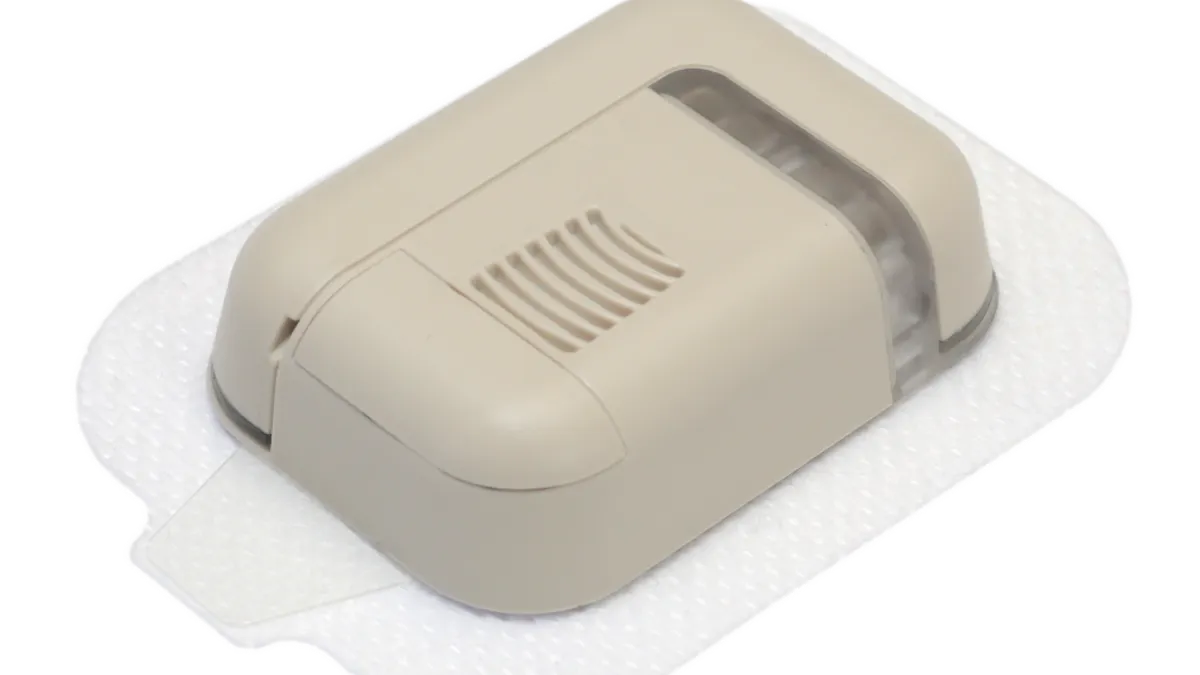
In a move that promises to reshape the competitive landscape of the diabetes technology sector, Beta Bionics announced on Monday that it has secured FDA clearance for its inaugural patch pump, "Mint." This milestone marks a pivotal transition for the company, moving it from a niche player in the automated insulin delivery (AID) space to a direct challenger of industry giant Insulet, the long-standing leader in the tubeless patch pump market.
The clearance of the Mint device is not merely a product launch; it is a strategic maneuver that positions Beta Bionics to capture a significant share of the growing patient demographic that demands discretion, portability, and ease of use in their glucose management hardware.
Main Facts: The Mint Advantage
The Mint patch pump arrives at a critical juncture in medical technology. Designed to be more compact than current market alternatives, the device is engineered to provide a low-profile, tubeless experience. By eliminating the physical tubing associated with traditional pumps, Beta Bionics is addressing one of the most significant barriers to patient compliance and quality of life for those living with Type 1 diabetes.
Beta Bionics has confirmed that the device will be commercially available through the pharmacy channel exclusively—a strategic distribution choice aimed at streamlining access for patients. The company has set an aggressive manufacturing target, planning to produce at least 1.5 million disposable units in 2027 to meet anticipated demand.
Furthermore, the system is designed with an emphasis on interoperability. Mint will launch with full compatibility for continuous glucose monitors (CGMs) from industry leaders Abbott and Dexcom, ensuring that users are not forced into a closed-loop ecosystem that limits their CGM preference.
Chronology: A Rapid Path to Market
The road to the Mint clearance has been characterized by an accelerated development timeline that has surprised many industry analysts.
- Early 2025: Beta Bionics solidifies the design architecture for the Mint platform, focusing on a miniaturized form factor.
- Late 2025: Initial clinical data sets the stage for a submission strategy, with the company prioritizing a robust regulatory filing.
- Early 2026: Beta Bionics engages in proactive, high-frequency dialogues with the FDA, aiming to expedite the 510(k) process.
- September 14, 2026: The FDA grants official clearance for the Mint patch pump.
- Q1 2027 (Projected): Official full-scale U.S. commercial launch.
This timeline is notably ahead of the company’s internal projections. Initial forecasts from early 2026 had suggested that a launch would not occur until the fourth quarter of 2027. By beating this timeline by nearly nine months, Beta Bionics has gained a critical "first-mover" advantage in the next generation of patch pump technology, forcing competitors to adjust their own roadmaps in real-time.
Supporting Data and Financial Implications
The financial impact of the announcement was immediate. Following the disclosure, Beta Bionics adjusted its 2026 revenue guidance downward by $10 million, establishing a new range of $121 million to $126 million. Management explained that this conservative adjustment is not a sign of weakness, but rather a strategic anticipation of "wait-and-see" behavior among its current user base. Some potential customers of the existing iLet Bionic Pancreas system are expected to delay their purchase to wait for the 2027 launch of the Mint platform.
The scale of the 2027 production—1.5 million units—suggests that Beta Bionics is positioning itself for a massive expansion in market share. This volume is indicative of a company that is no longer content with being a specialized medical device provider but is instead aiming for a broader, high-volume consumer health play.
Market analyst feedback has been largely positive. Industry observers noted that for many patients, the decision to choose one pump over another comes down to the aesthetic and physical form factor. Having a "commercially available" patch pump is a "major product enhancement," according to industry analysts, as it removes the last remaining technical gap between Beta Bionics and its larger, more established rivals.
Technological Evolution: The ‘3D Intelligence’ Algorithm
Beyond the physical hardware of the Mint pump, Beta Bionics is simultaneously pushing for a leap in software capability. The company has submitted its new "3D Intelligence" dosing algorithm to the FDA for 510(k) clearance. This algorithm represents a sophisticated evolution in automated insulin delivery.

The 3D Intelligence system offers three distinct settings, allowing the user—in consultation with their clinician—to tailor the pump’s response to their specific physiological needs:
- Legacy Integration: Allows users to retain the original algorithm found in the iLet Bionic Pancreas, providing continuity for those who are satisfied with their current performance.
- Optimized Learning: An updated version that incorporates real-world clinical experience and data gathered from thousands of current iLet users over the past several years.
- Measured Correction: A specialized setting that provides a more conservative, measured response to high blood glucose levels. This is specifically designed for patients who may be highly sensitive to insulin or those who prefer a more gradual correction profile to avoid the "rollercoaster" effect of over-correction.
Strategic Partnerships and Future Integration
The ecosystem surrounding Beta Bionics continues to broaden. While Mint’s compatibility with Abbott and Dexcom is confirmed, the company’s existing partnerships are also evolving.
Senseonics, the developer of the Eversense long-term implantable CGM, recently announced an integration with the iLet Bionic Pancreas. This partnership is significant as it demonstrates a commitment to "hardware-agnostic" care. While the company has not yet confirmed whether the Senseonics integration will extend to the Mint patch pump at launch, industry experts suggest that such a move would be a natural progression. Providing a long-term, implantable CGM paired with a small, tubeless patch pump would represent a "holy grail" for many patients—a near-total removal of the daily physical burdens of diabetes management.
Implications for the MedTech Sector
The entry of Beta Bionics into the patch pump market creates a significant competitive pressure cooker. For years, the tubeless pump space has been dominated by a select few, leading to a period of relative stagnation in innovation.
1. Pricing and Access
With Beta Bionics utilizing the pharmacy channel, the move signals a broader trend in medical device procurement. Pharmacy channels allow for more direct patient access and simplified insurance billing, which could force incumbent companies to re-evaluate their own distribution strategies to remain price-competitive.
2. The War for the User Interface
The competition is no longer just about insulin delivery accuracy; it is about the "patient experience." The smaller footprint of the Mint device, combined with the 3D Intelligence algorithm, shifts the burden of clinical decision-making further toward the software. The winner of this space will be the company that can best balance automation with user control.

3. Investor Sentiment
For investors, the $10 million downward adjustment in 2026 revenue is seen as a tactical sacrifice for long-term growth. The shift from a tubed pump (iLet) to a patch pump (Mint) is a transition from a hardware-heavy model to a high-volume disposable model, which typically carries different margin structures and long-term recurring revenue potential.
4. Patient Outcomes
Ultimately, the primary implication is for the patient. The diversification of the market ensures that patients are no longer limited to a "one-size-fits-all" solution. Whether a patient requires the simplicity of the original iLet algorithm or the refined, user-centric settings of the 3D Intelligence system, the market is finally moving toward a level of personalization that was previously unimaginable.
As Beta Bionics prepares for its 2027 commercial rollout, the company stands at the threshold of a new era. The Mint device is not just a pump; it is a statement of intent. In a market where millions of lives depend on the reliability and discretion of their technology, Beta Bionics has signaled that it is ready to lead. All eyes will now be on the company’s manufacturing ramp-up and the subsequent real-world performance of the Mint platform as it hits the market in the coming months.