









In the high-stakes world of modern biohacking, the quest for immortality has transitioned from the realm of science fiction into a multi-billion-dollar industry. At the center of this cultural phenomenon is tech billionaire Bryan Johnson. The subject of the Netflix documentary Don’t Die, Johnson has become the public face of an aggressive, data-driven mission: to achieve the lowest possible “biological age.”
Johnson’s regimen is exhaustive, involving millions of dollars in annual expenditure on dozens of daily supplements, hyperbaric oxygen therapy, and even controversial plasma infusions. To track his progress, he relies on "bio age testing." According to his own data, Johnson claims he is aging in reverse, boasting a biological profile over five years younger than his chronological age. Yet, as with all things in the cutting-edge medical space, the narrative is not without friction. A New York Times investigation recently challenged these claims, suggesting that despite his efforts, Johnson’s biological age may have actually increased by a decade.
This discrepancy highlights the central question facing health enthusiasts and practitioners today: Does biological age testing offer a legitimate window into our longevity, or is it merely an expensive, unproven trend?
What is Biological Age?
To understand these tests, one must first distinguish between chronological age—the simple passage of time—and biological age, which measures how your cells and organ systems are actually functioning.
Consider two 50-year-old men: "Chang," who maintains a sedentary lifestyle in a highly polluted urban center, subsisting on processed foods and nicotine; and "Jabari," who prioritizes strength training, a nutrient-dense diet, meditation, and a connection to nature. While both have lived for 50 years, their physiological "clocks" are ticking at vastly different rates. Biological age testing attempts to quantify these differences by looking at biomarkers—specific indicators of health that suggest how well your body is maintaining its structural and functional integrity.
The Science of Measurement: From Telomeres to Methylation
How do these tests actually look under the hood of human aging? The methodology varies, but most commercial kits focus on a few key biological "clocks."
DNA Methylation
Some of the most sophisticated tests analyze DNA methylation, a process where chemical tags attach to DNA and alter its expression. As we age, these methylation patterns shift in predictable ways. Algorithms like the "Horvath Clock" and "DunedinPACE" utilize this data to estimate the pace of aging. While these are powerful tools for research, their application for the individual is still in its infancy.
Telomere Analysis
Telomeres act as the protective caps at the end of chromosomes, similar to the plastic tips on shoelaces. As cells divide, these tips naturally shorten. Eventually, when they become too short, the cell can no longer divide and dies. While researchers use "flow-FISH" testing to study genetic diseases, many commercial kits sold to the public utilize a less precise method called qPCR. These consumer tests are often more of a novelty than a clinical diagnostic tool.
VO2 Max
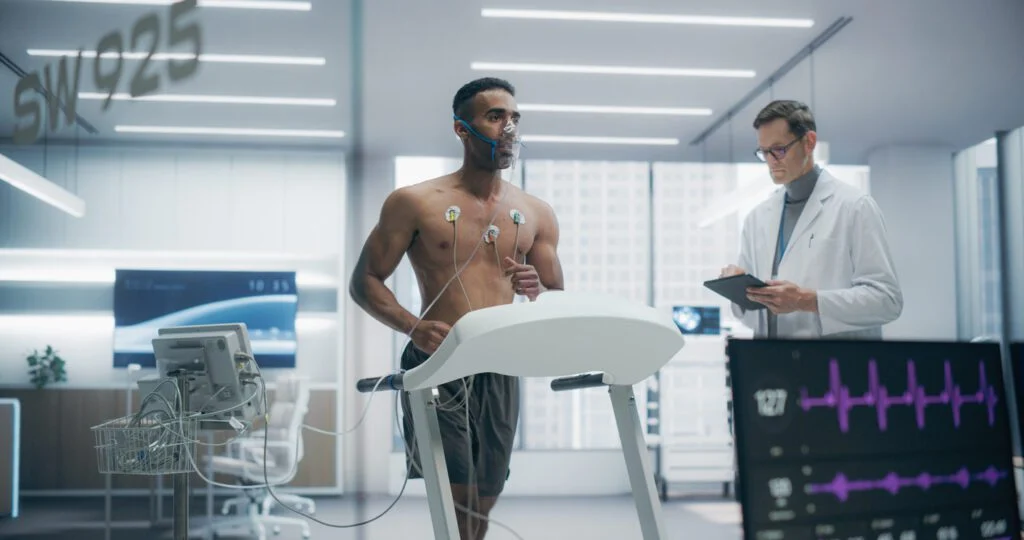
Once the exclusive domain of elite athletes, VO2 max—the measure of how much oxygen your body can utilize during intense exercise—is now considered a premier indicator of longevity. A higher VO2 max correlates with a lower risk of heart disease, stroke, and diabetes. The decline of VO2 max, which drops roughly 10 percent per decade after age 30, serves as a poignant "canary in the coal mine" for the aging body.
Proactive Wellness: The Five "Free" Biomarker Tests
You do not need a billionaire’s budget to track your health trajectory. Before the era of high-tech blood panels, researchers relied on simple, functional tests that carry significant predictive weight regarding mortality and morbidity.
- The Sitting-Rising Test (SRT): This assesses balance and strength simultaneously. By lowering yourself to the floor and standing back up without using your hands or knees as leverage, you test the musculoskeletal integrity that is vital for preventing falls and maintaining independence in later life.
- Grip Strength: Often overlooked, grip strength is a startlingly accurate predictor of future physical decline. Weakness in the hands often mirrors weakness throughout the body and is linked to poor recovery from surgery and increased risk of cardiovascular issues.
- The Balance Test: Standing on one foot for 10 to 60 seconds (depending on age) is more than a party trick; it is a complex coordination of the brain, inner ear, and skeletal muscles. An inability to hold this position is often a warning sign of systemic health erosion.
- The Pittsburgh Fatigability Scale: Unlike simple tiredness, chronic "fatigability" is a clinical indicator that your body is struggling to manage energy, often signaling underlying issues like anemia, depression, or metabolic dysfunction.
- Body Composition: Weight is an unreliable metric. Using a simple tape measure to monitor waist-to-hip ratios and overall body composition is a free, validated way to track the metabolic health of your tissues.
Doctor-Approved Testing: When to Seek Professional Guidance
While DIY tests provide a snapshot, they cannot replace the standard of care provided by a physician. If you are serious about longevity, annual blood panels remain the gold standard. Monitoring markers such as Apolipoprotein B (ApoB), C-reactive protein, and Hemoglobin A1c provides a actionable look at your risk for cardiovascular disease and diabetes—the two leading causes of premature death.
Furthermore, DEXA scans for bone density are critical for aging adults. Bones are not just structural supports; they are endocrine organs that secrete osteocalcin, a hormone that regulates muscle function and brain health. A loss of bone density is a profound signal that the body’s internal hormonal environment is shifting toward a state of decline.
The Perils of the "Hard Sell"
If you decide to venture into commercial bio-age testing, proceed with caution. The industry is rife with companies that pair alarming, often ambiguous test results with a "hard sell" for proprietary supplements or expensive, unproven protocols.
Remember these three rules:
- Organs age at different rates. A test that looks at blood markers may not reflect the aging of your kidneys or heart. Do not view a single number as the "final word" on your life expectancy.
- Lifestyle beats data. If you are eating a whole-food diet, sleeping eight hours, and training consistently, a test showing a "high biological age" should not derail your efforts. Behavioral change takes time to manifest in the blood.
- Context is everything. Data is simply a mirror. If you see a reflection you don’t like, the solution is not to look away—it is to change your daily actions.
Implications: The Data-Action Gap
The true value of bio-age testing lies not in the vanity of being "younger" than your peers, but in the power of accountability. If your VO2 max is dropping or your blood glucose is trending upward, you have a concrete prompt to adjust your training intensity or dietary habits.
However, the most common mistake is ignoring the "big rock" strategies. No amount of specialized peptide therapy or expensive blood testing can undo the damage caused by chronic sleep deprivation, sedentary living, or poor nutritional habits. Before turning to the high-tech, ensure you have mastered the high-impact basics.
As the "don’t die" movement gains momentum, it is important to remember that the goal is not merely to add years to your life, but to add life to your years. Use your data to inform your behavior, trust in proven science over viral trends, and remember that the best way to predict your biological age is by consistently choosing habits that sustain human vitality.
References and Further Reading
For those interested in the clinical validation of these markers, please consult the latest peer-reviewed literature on telomere dynamics, DNA methylation clocks, and cardiovascular mortality predictors available through the NIH PubMed database.