









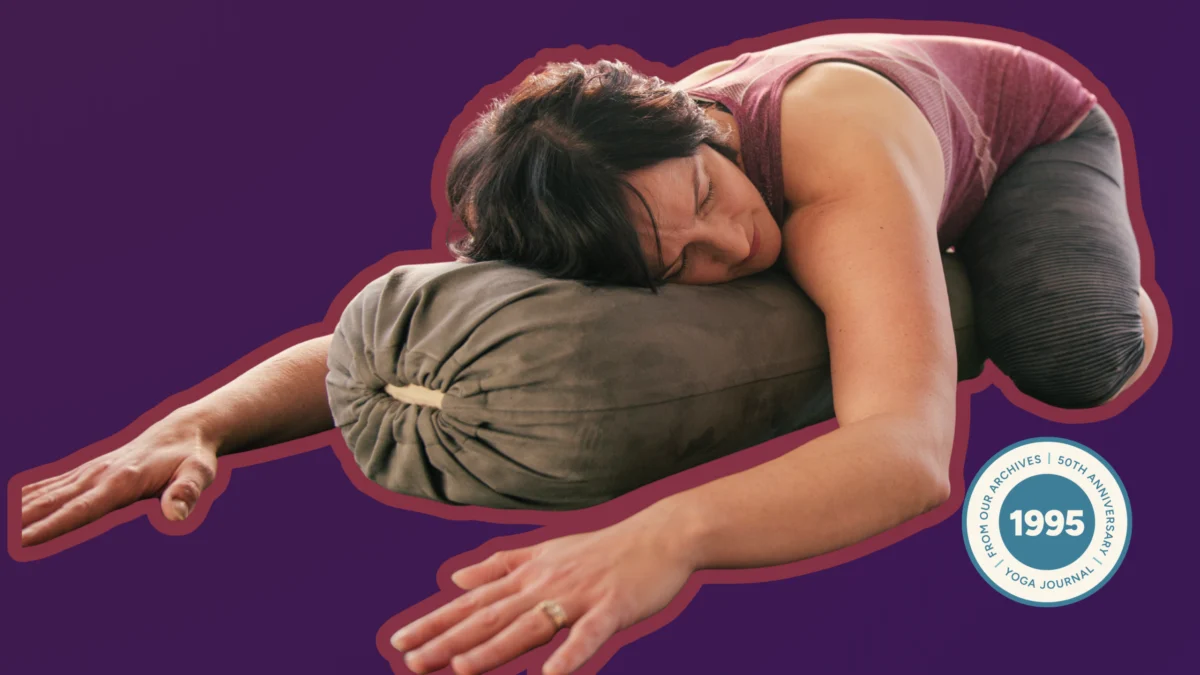
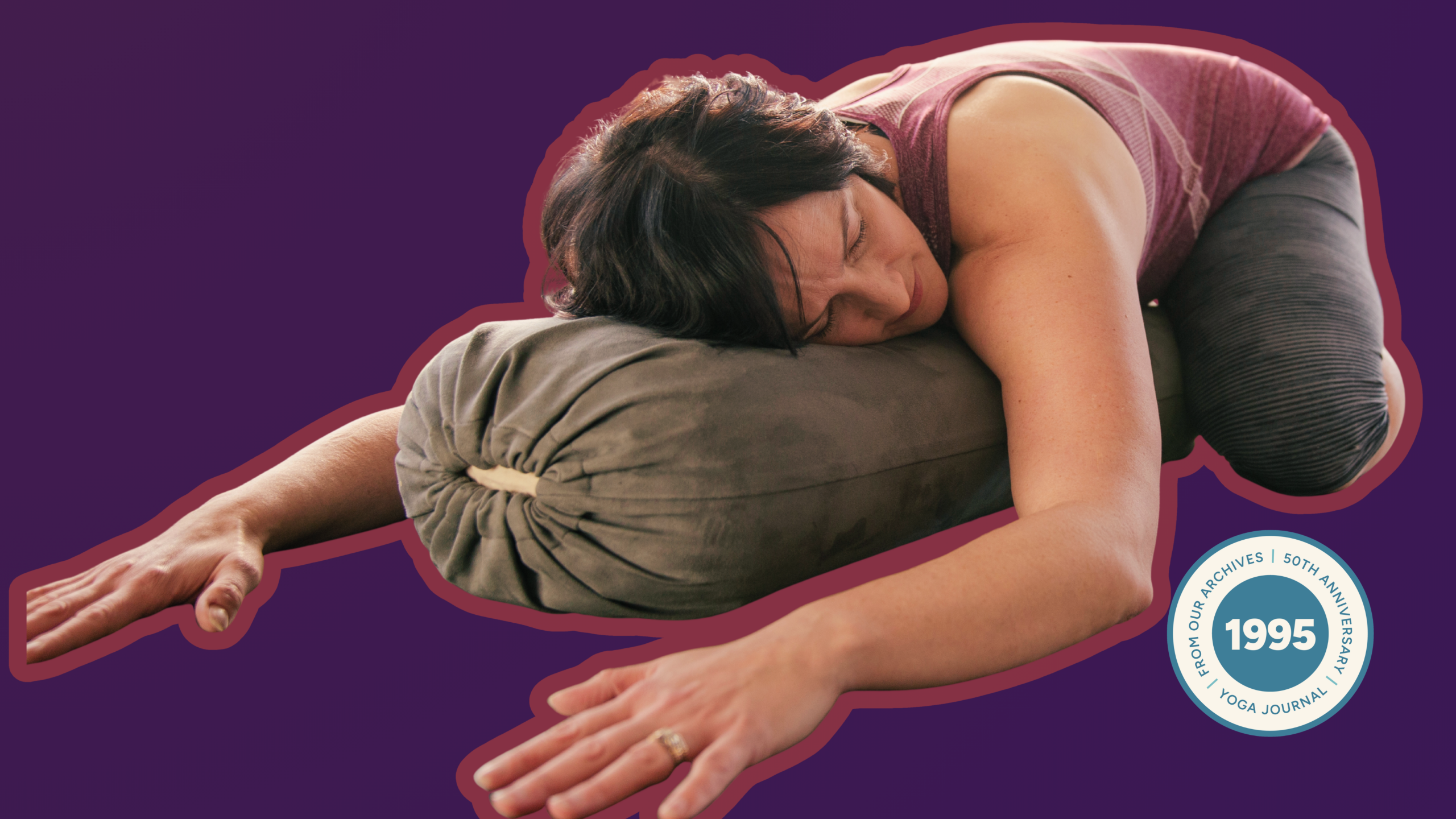
Originally published in the September-October 1995 issue of Yoga Journal, this archival feature remains a cornerstone for those seeking respite from the relentless pace of modern life. As we navigate the complexities of 2026, the wisdom of restorative practice offers a timeless remedy for the epidemic of burnout.
In an era defined by constant connectivity and the blurring lines between professional obligation and personal time, the human nervous system is under unprecedented strain. Whether one is balancing the demands of a modern career or the intricate responsibilities of family and community, the modern individual is often left with little time for self-care. Yet, paradoxically, it is precisely when we are most exhausted that we are least likely to prioritize recovery.
Restorative yoga is not merely a physical practice; it is a physiological reset button. By utilizing props to fully support the body, practitioners can shift their nervous system from a "fight-or-flight" sympathetic state to a "rest-and-digest" parasympathetic state. This 15-minute sequence, curated for its efficiency and efficacy, proves that deep healing does not require hours of commitment—only the intentional choice to pause.
The Core Philosophy: Moving Beyond Active Practice
Traditionally, yoga classes are structured around active, heat-building sequences, often concluding with a brief period of stillness. However, a dedicated restorative session flips this hierarchy. In a restorative practice, the goal is not to stretch or strengthen in the conventional sense, but to facilitate complete muscular release and mental quietude.
By creating a "perfect environment"—a quiet room with minimal, thoughtful props—the practitioner can achieve profound relaxation in as little as 15 minutes. This sequence consists of three foundational poses: Legs-Up-the-Wall (Viparita Karani), Supported Child’s Pose (Salamba Balasana), and the Basic Relaxation Pose (Savasana).
Chronology of the 15-Minute Sequence
To maximize the benefits of this practice, the poses should be performed in the specific order outlined below. This progression is designed to move the body from a state of circulation-focused recovery to deep, meditative stillness.
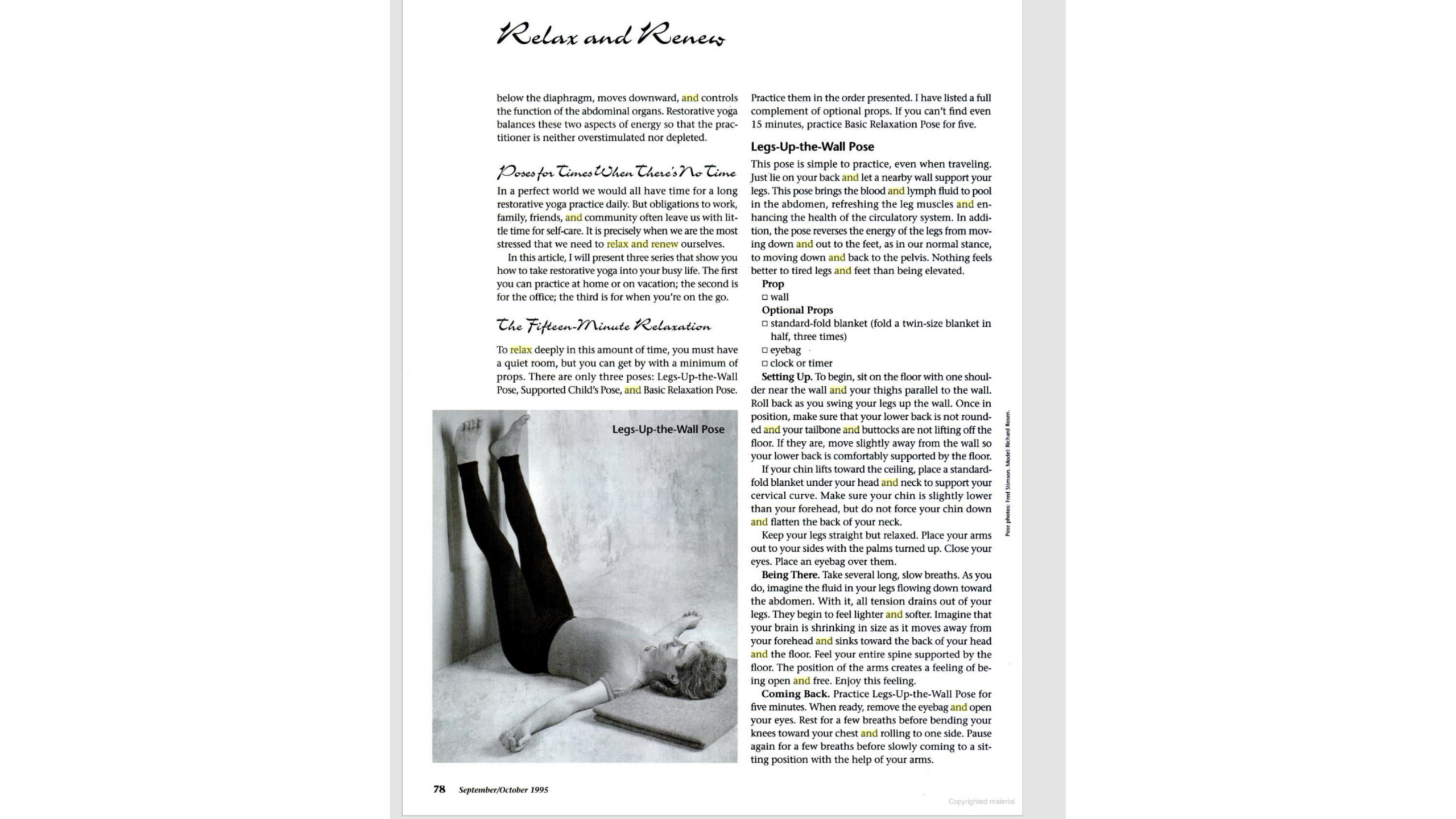
1. Legs-Up-the-Wall Pose (Five Minutes)
This inverted posture is arguably the most accessible restorative tool, ideal even for those traveling or working in confined spaces.
- The Mechanism: By elevating the legs against a wall, the practitioner encourages the pooling of blood and lymph fluid toward the abdomen. This reverses the gravitational strain of our daily upright stance, refreshing the leg muscles and relieving the circulatory system of the work required to pump blood back from the extremities.
- Execution: Sit sideways against a wall, then roll onto your back as you swing your legs upward. Ensure your lower back remains flat against the floor. If the back rounds, scoot slightly away from the wall. Support the neck with a folded blanket if necessary to maintain the natural cervical curve.
- The Internal Experience: As you close your eyes, visualize the tension draining from your legs. Feel the brain "shrinking" away from the forehead, sinking toward the back of the skull. This physical sensation of release is the first step in quieting the mind.
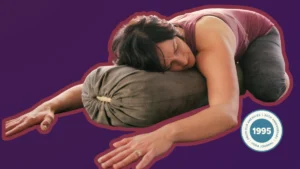
2. Supported Child’s Pose (Three Minutes)
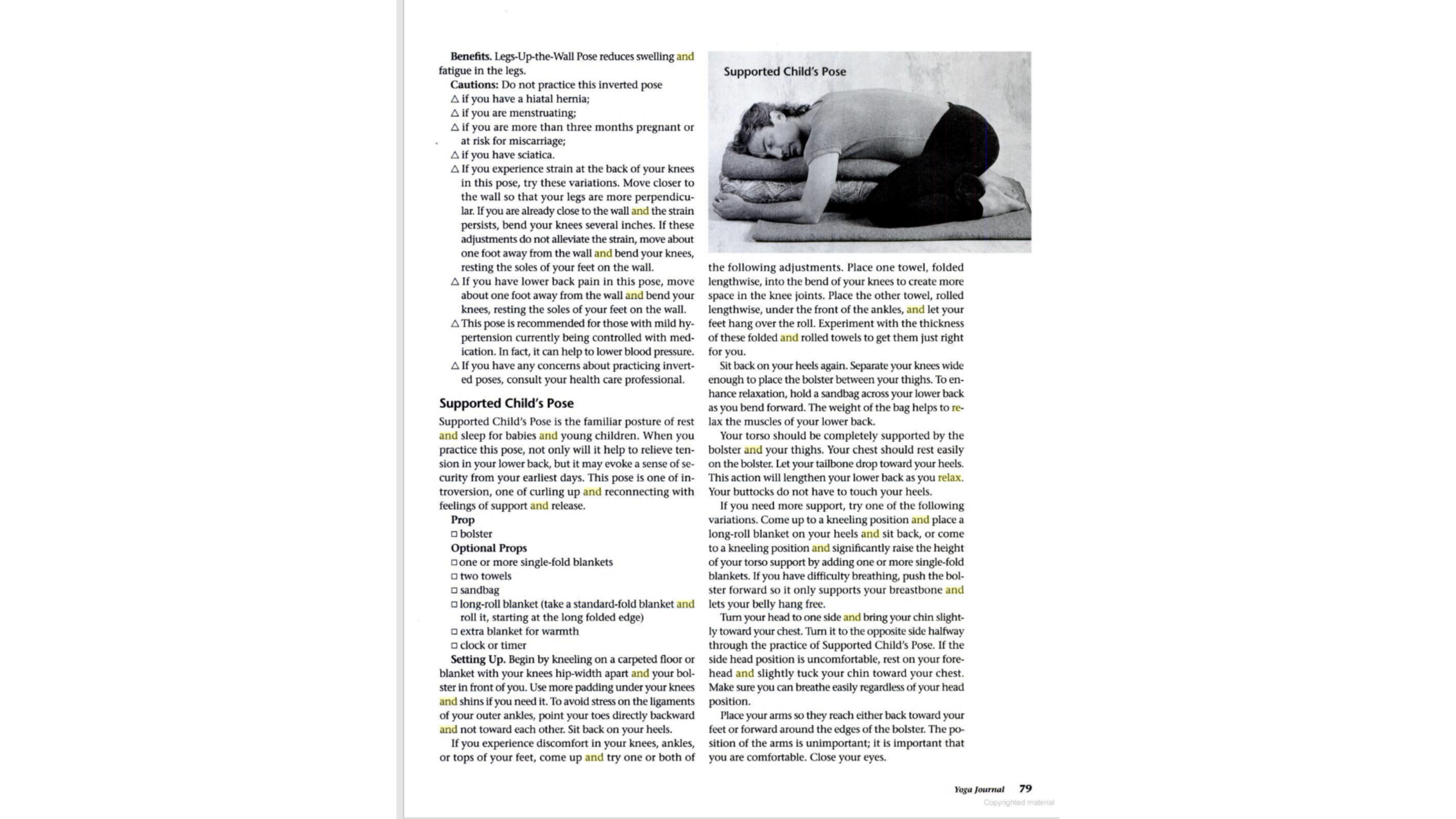
Drawing inspiration from the natural fetal position, this pose invokes a primal sense of security. It is an exercise in introversion, allowing the practitioner to turn their focus inward.
- The Mechanism: By using a bolster to support the torso, the lower back muscles are allowed to lengthen and release without the strain of a deep, active stretch. The counter-pressure of the bolster against the abdomen is particularly beneficial for digestion and can alleviate discomfort from menstrual cramps.
- Execution: Kneel on a padded surface with a bolster placed vertically between your knees. Sit back on your heels and drape your torso forward over the bolster. Adjust the height of the support as needed to ensure the chest rests easily.
- The Internal Experience: This pose provides a sanctuary. As the shoulders move away from the ears, the weight of the torso is fully surrendered to the support. Turning the head to one side—and switching halfway through—ensures cervical symmetry.
3. Basic Relaxation Pose (Five to Seven Minutes)
The heart of the restorative practice, this pose is the ultimate skill of "doing nothing." It is the most important component of the sequence.
- The Mechanism: Total physical stillness allows for the down-regulation of the heart rate and blood pressure. By removing all effort, the practitioner signals to the body that it is safe to exit the stress response.
- Execution: Lie flat on the back, legs slightly apart, arms at the sides with palms up. Use blankets under the head and, if necessary, under the knees to eliminate any residual tension in the lower back.
- The Centering Breath: Once established in the pose, the practitioner introduces the "Centering Breath." This involves slow, deep inhalations followed by focused exhalations, refined to the texture of fine silk. This controlled breathing pattern bridges the gap between physical relaxation and mental clarity.
Supporting Data and Physiological Implications
The benefits of this 15-minute restorative routine are supported by both anecdotal evidence and physiological observation. Chronic stress is linked to a host of health issues, including hypertension, suppressed immune function, and systemic inflammation.
By consistently practicing the Basic Relaxation Pose, the practitioner can mitigate these risks. Clinical observations suggest that the deliberate act of deep, supported relaxation can:
- Lower heart rate and blood pressure: By stimulating the Vagus nerve, restorative yoga encourages the body to exit the stress cycle.
- Improve Sleep Quality: By quieting the frontal lobes of the brain, the transition into deep, restorative sleep becomes more seamless.
- Manage Chronic Pain: By releasing the muscular "armoring" that often accompanies chronic pain, the practitioner can reduce the overall pain threshold.
Official Perspectives and Expert Guidance
The methodology presented here draws heavily from the teachings of B.K.S. Iyengar, whose seminal work, Light on Yoga, remains a standard for alignment and restorative practice. The emphasis on props is not a concession to weakness, but a sophisticated tool for precision. Iyengar’s philosophy suggests that by supporting the body’s weight, the mind is freed from the distraction of effort, allowing for a deeper exploration of the self.
Practitioners are cautioned, however, to listen to their bodies. If a pose causes agitation or shortness of breath, the instruction is clear: return to normal breathing immediately. Restorative yoga is an invitation, not a mandate.
Broader Implications for Modern Society
The 1995 archive serves as a reminder that our struggles with time and stress are not new, but they have certainly intensified. The implications of adopting a 15-minute restorative practice are profound. If society as a whole moved toward even a fraction of this intentional recovery, we would likely see a shift in public health markers related to burnout and mental fatigue.
In a world that prizes output, restorative yoga is a revolutionary act of input. It asserts that the human being is not a machine to be driven to exhaustion, but a living system that requires periodic stillness to function optimally. As we look back on these 1995 guidelines, they appear less like a relic and more like a necessary survival strategy for the 21st century.
Summary of Safety Precautions
- Inversions (Legs-Up-the-Wall): Not recommended for those with high blood pressure, glaucoma, or serious respiratory conditions.
- Centering Breath: Avoid during active illness, such as fever, sinusitis, or pneumonia, as the deep breathing may exacerbate respiratory congestion.
- Individual Adjustment: Always use the "Coming Back" instructions—slowly rolling to the side and using the arms to rise—to prevent injury or blood pressure spikes when moving from a horizontal to a vertical position.
By dedicating just a quarter of an hour to this practice, the modern individual can reclaim their sense of balance, proving that even in a fast-paced world, the most profound progress is often found in the ability to be perfectly, and supportively, still.