









Broad, rounded shoulders—often described as “capped” or “boulder” delts—are the hallmark of a truly elite physique. Whether you are a casual gym-goer aiming for an aesthetic silhouette or a competitive bodybuilder striving for the coveted V-taper, the deltoid muscle group is the primary architect of the wide-shouldered look. However, many athletes find themselves frustrated by a lack of progress, often seeing their upper back and neck thicken while their actual shoulder width remains stagnant.
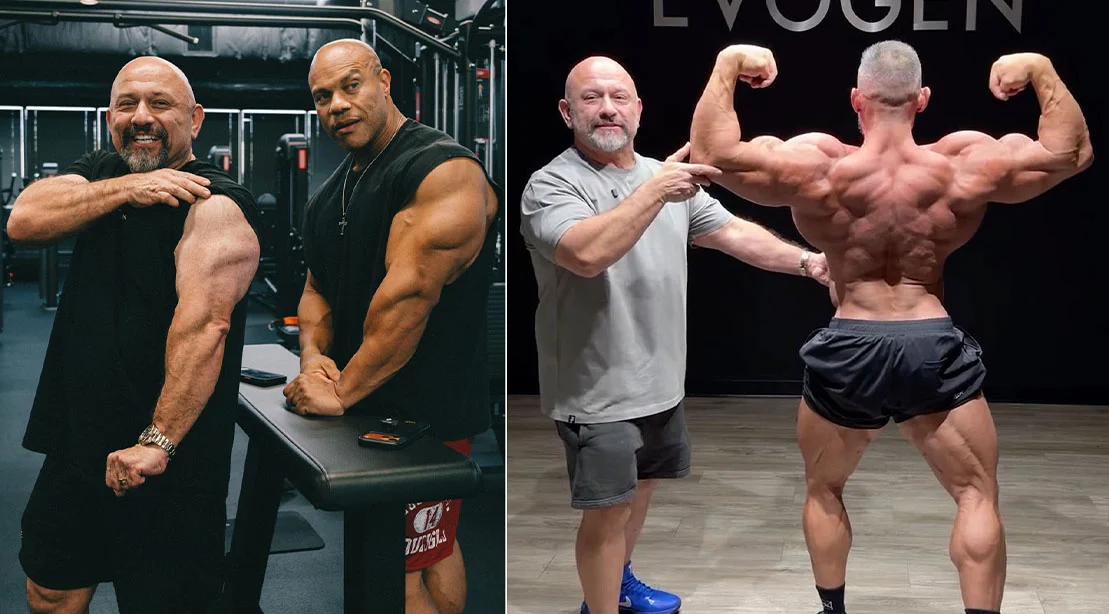
According to Hany Rambod, the legendary coach famously dubbed "The Pro Creator," the secret to building world-class shoulders isn’t found in heavy ego-lifting. Having guided icons like Phil Heath, Jay Cutler, Hadi Choopan, and Derek Lunsford to a combined 25 Olympia titles, Rambod possesses perhaps the most successful track record in the history of the sport. His philosophy on shoulder development is both simple and counter-intuitive: stop trying to move the mountain, and start focusing on the muscle.
The Anatomy of the Misconception: Delts vs. Traps
To understand why so many lifters fail to isolate their deltoids, one must first understand the anatomy of the upper body. The shoulder joint is a complex structure primarily powered by the deltoids—comprised of the anterior (front), lateral (side), and posterior (rear) heads. These muscles work in constant concert with the trapezius, a large, triangular muscle that spans from the neck down to the middle of the back.
The problem arises when an athlete attempts to move excessive weight during exercises like lateral raises or overhead presses. When the load exceeds the capacity of the deltoids to handle the tension through a full range of motion, the body’s kinetic chain compensates. The trapezius muscles "kick in" to assist in hoisting the weight, effectively hijacking the movement.
While the traps are essential for back thickness and neck stability, they are not the primary drivers of width. In fact, as Rambod points out, over-developing the traps relative to the delts can create a visual paradox: a thick, massive neck and high traps can actually make the shoulders appear narrower, undermining the very "alpha" aesthetic most lifters are trying to cultivate.
Chronology of a Coaching Philosophy
Hany Rambod’s methodology didn’t emerge overnight; it was forged through decades of trial and error in the high-stakes environment of professional bodybuilding. In the early days of his coaching career, Rambod observed a recurring theme: lifters who prioritized heavy weight often developed a "hunched" or "tight" look that lacked the fluid, wide proportions required for the Olympia stage.
Over the years, as Rambod began working with the sport’s most elite competitors, he shifted his focus from raw power output to "FST-7" (Fascia Stretch Training) and precise tension control. By observing his clients—from the mass-monster era of Jay Cutler to the aesthetic precision of Phil Heath—Rambod realized that the most effective hypertrophy occurred when the muscle was placed under constant, controlled tension rather than explosive, momentum-based force.
This evolution led to his current mandate: the "Delt-Isolation Method." It is a refinement of form that prioritizes the mind-muscle connection, ensuring that the delts remain the primary movers throughout the entirety of the set.
Supporting Data: Why "More" Isn’t Always "Better"
The traditional bodybuilding mantra—"lift heavy to get big"—is only half the story. Scientific research published in reputable journals, such as the Journal of Strength and Conditioning Research, has consistently shown that hypertrophy can be achieved across a wide spectrum of intensities.
Studies indicate that significant muscle growth occurs even at 40% of an individual’s one-rep max, provided that the volume is sufficient and the set is taken close to failure. This supports Rambod’s assertion that you do not need to push maximal loads to stimulate growth. In fact, when you use a "medium to heavy" weight that you can control perfectly, you minimize the risk of injury and maximize the time under tension (TUT).
When you swing the weight, you are utilizing momentum—a physical force that takes the load off the muscle at the point of peak contraction. By keeping the weight moderate and the movement strict, you ensure that the muscle fiber, not the skeleton or the momentum, is bearing the load. This is the physiological bridge between "moving iron" and "building muscle."
The "Pro Creator" Speaks: Official Coaching Guidelines
Rambod’s advice on training is not merely anecdotal; it is a tactical approach to physique management. Below are the core tenets of his methodology for shoulder development:
1. Eliminate Momentum
Rambod is emphatic: "Once you swing, you engage the traps." Whether you are performing a cable lateral raise or a dumbbell press, the moment your torso begins to rock or your knees begin to bend to help initiate the lift, you have lost the target muscle. If you cannot perform a rep without swinging, the weight is too heavy.
2. Prioritize Constant Tension
"It’s not about how much weight you move; it’s about where you’re putting the tension." Rambod advises his athletes to treat every repetition as an opportunity to isolate the deltoid. This involves a slow, controlled eccentric (lowering) phase and a deliberate, focused concentric (lifting) phase.
3. Balanced Development
For the competitive bodybuilder, symmetry is the ultimate metric. If the traps overpower the delts, the "width" of the physique is compromised. Rambod’s training programs often include exercises specifically designed to keep the delts in a constant state of fatigue while keeping the traps as "quiet" as possible. This means avoiding excessive "shrug" patterns during lateral movements.
4. The 8-12 Rep Range
While the 40% intensity threshold is scientifically valid for hypertrophy, Rambod typically keeps his elite athletes in the classic 8-12 rep range. This allows for enough metabolic stress to trigger growth without requiring the heavy, ego-driven loads that invite trap recruitment.
Implications for the Modern Lifter
The implications of Rambod’s approach are significant for anyone involved in strength training. For the novice, it serves as a corrective measure—a warning that heavy lifting is not a substitute for proper technique. By adopting a "form-first" mentality early on, lifters can avoid the common trap of developing "upper back dominance" that plagues many intermediate athletes.
For the advanced athlete, it is a call to return to basics. It is easy to get caught up in the pursuit of personal records (PRs) on the overhead press, but if those PRs come at the expense of shoulder width and structural balance, they are ultimately counter-productive.
Furthermore, this philosophy has a psychological component. It shifts the athlete’s mindset from "conquering the weight" to "connecting with the muscle." This mental shift is what separates the casual gym-goer from the true bodybuilder. It requires the humility to lower the weight, endure the "burn" of a high-volume set, and focus on the quality of the contraction rather than the number on the dumbbell.
Conclusion: The Path to Wider Shoulders
The pursuit of wide, capped shoulders is a journey of precision. Hany Rambod’s success as "The Pro Creator" is not a result of secret supplements or magical genetics; it is the result of applying relentless logic to the mechanics of the human body.
By understanding that the traps and delts are partners that can easily become enemies, you can tailor your training to ensure that your effort translates into tangible width. If you find yourself hitting a plateau, or if you feel your neck is getting thicker while your shoulders remain narrow, take a step back. Reduce the weight, cut out the momentum, and focus on the tension. As Rambod reminds us, "Make every rep count." In the world of bodybuilding, where fractions of an inch can determine the difference between first place and second, that attention to detail is everything.
To keep up with Hany Rambod’s latest training insights and to follow his athletes’ journeys to the Olympia, you can visit his official Instagram channel or his training website.