By Keith Appleton, LMSW, Combat Veteran
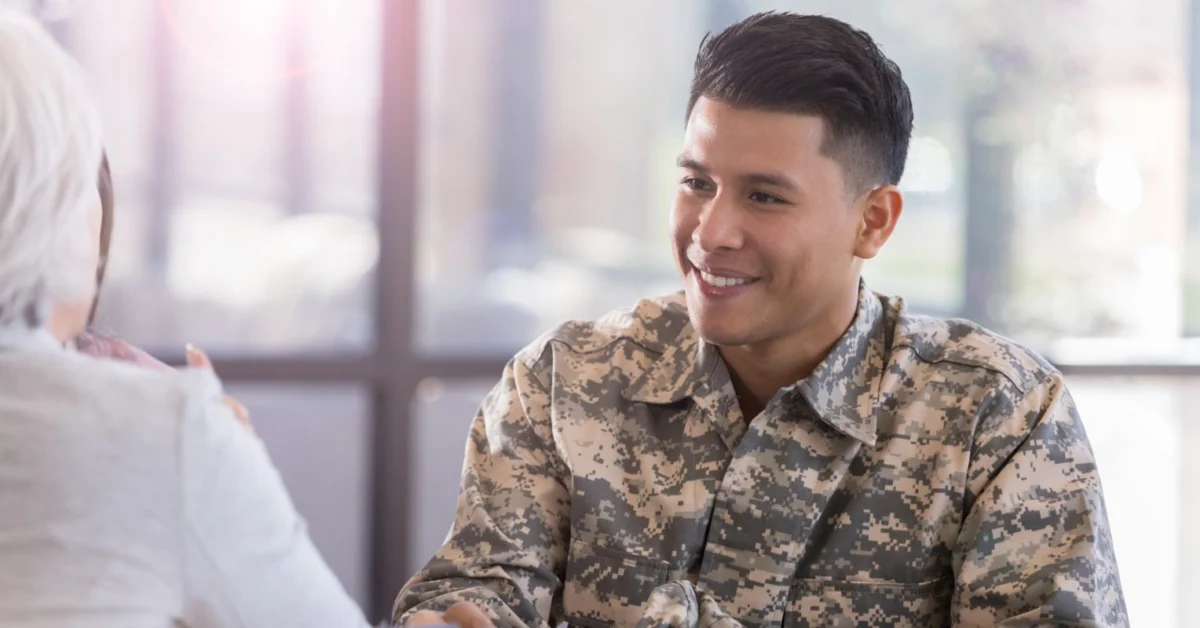
In the sterile, fluorescent-lit environment of a detox ward, a veteran sat on the edge of his bed, his bags packed, eyes fixed on the exit. He was battling the dual ghosts of Post-Traumatic Stress Disorder (PTSD) and chemical dependency. He was ready to walk out, convinced that no civilian clinician could possibly grasp the visceral reality of his pain. As a fellow veteran, I didn’t approach him with generic sympathy; I approached him with the language of our shared past. I reframed his treatment not as a "therapeutic intervention," but as a mission—a final, crucial objective to secure his own future. He stayed.
That moment remains a touchstone in my practice, underscoring a critical, often-overlooked truth: mental health care for veterans is only as effective as the clinician’s ability to navigate the unique cultural architecture of military life.
The Scope of the Crisis: By the Numbers
The statistics surrounding veteran mental health are sobering, highlighting a significant gap between the need for support and the utilization of services. According to data from the National Center for PTSD (2023), approximately 7% of U.S. veterans live with PTSD, while more than 20% struggle with substance-use disorders. Despite these high prevalence rates, over half of the veterans who require care never receive it.
The U.S. Department of Veterans Affairs (2022) identifies the primary barriers as the stigma surrounding mental health and a pervasive, deeply held belief among service members that civilians "just don’t get it." This is not merely a lack of trust; it is a manifestation of the "civilian-military divide." Military service is not a career; it is an identity forged in the crucible of absolute structure, rigid hierarchies, shared hardship, and a code of sacrifice that has no civilian equivalent.
The Chronology of Identity: From Uniform to Isolation
To understand the veteran, one must understand the evolution of their identity. The process begins in basic training, where individual personality is subsumed into a collective unit identity.
The Symbols of Service
In the military, a uniform is more than clothing; it is a ledger of one’s history. Badges, combat patches, service ribbons, and specialty schools—these are the tangible markers of a soldier’s story. During my time in the 101st Airborne Division, I wore my Combat Action Badge and Air Assault Wings with profound pride. These were not mere ornaments; they were shorthand. They signaled to other soldiers exactly where I had been, what I had survived, and what I was capable of. They sparked an immediate, wordless camaraderie.
When a veteran transitions to civilian life, these symbols are stripped away overnight. Suddenly, the language of the mission is gone, the hierarchy disappears, and the "tribe" is disbanded.
The Attachment Rupture
Drawing on the work of John Bowlby (1980), we can view this transition through the lens of attachment theory. The military acts as a "secure base"—a structure that provides safety, purpose, and clear expectations. When a veteran leaves the service, they often experience an "attachment rupture." Without a new, similarly cohesive group to anchor them, this loss results in profound disorientation, grief, and isolation. As Sebastian Junger articulated in his seminal book Tribe (2016), humans have a primal, evolutionary need to belong to a purpose-driven group. When that is lost, the modern veteran is often left drifting in a society that lacks the communal support structures found in the military.
Supporting Data: Why "Civilian-Style" Care Often Fails
The failure of traditional, non-specialized therapy often lies in its inability to validate the "whole" veteran experience. Research into trauma-informed care emphasizes that veterans respond best to clinicians who mirror the values they were trained to uphold: mentorship, goal-setting, and mission-focused guidance.
A study by Hurley (2021) confirms that culturally competent care is not just a "nice-to-have" amenity—it is life-saving. When clinicians utilize modalities like Eye Movement Desensitization and Reprocessing (EMDR) or Cognitive Behavioral Therapy (CBT) through a military-informed lens, they tap into the veteran’s existing capacity for discipline. Veterans who are used to working toward specific objectives in the field find resonance in the structured, goal-oriented nature of these therapies.
The Role of the Family: Healing the System
The veteran’s recovery does not happen in a vacuum. Families are often the first responders to the trauma, yet they are frequently excluded from the clinical process. Following the principles of Murray Bowen’s family systems theory (1978), we must view the veteran’s struggles as part of a larger relational ecosystem.
I recall treating a veteran who suffered from severe "moral injury"—the psychological distress resulting from actions (or inactions) that violate one’s core ethical code. In this case, it was the guilt of not deploying with his unit after 9/11. By bringing his spouse into the therapy sessions, we were able to reframe his service and his identity as a protector and provider, effectively healing the fractures in their home life that had been exacerbated by his internal shame. When families are empowered as allies rather than kept in the dark, they become the most potent support system available.
Implications: A New Mission for Clinicians
If we are to effectively treat the veteran population, the approach must shift from "treating a patient" to "serving a mission." This requires a fundamental change in how clinicians interact with those who have served.
Practical Steps for Clinicians:
- Cultural Inquiry: Begin the therapeutic alliance by asking about the veteran’s Military Occupational Specialty (MOS). Show genuine interest in the meaning behind their patches and insignia.
- Narrative Integration: Therapy should not focus solely on trauma. We must integrate the "positive" memories of service—the pride, the camaraderie, and the beauty of the experience. Research by Dell’Osso et al. (2022) indicates that narrating positive deployment experiences is vital for fostering post-traumatic growth.
- Reframing Identity: Help the veteran transition from the past-tense "I was a soldier" to the present-tense "I am a leader, mentor, and protector."
- Family Inclusion: Actively involve the spouse and family in the treatment plan to ensure the healing extends beyond the office walls.
Conclusion: The Mission Continues
We must move beyond the superficial view that equates military service only with the horrors of war. Veterans carry their experiences like invisible badges—they are marks of character that deserve recognition, not avoidance.
For the clinician, the family member, and the broader society, the mandate is clear: we must serve those who served with precision and cultural competence. When we do this, therapy ceases to be a sterile clinical procedure. It becomes a new, vital mission—one that honors the courage of the past while providing the tools to build a meaningful, purposeful future. The uniform may have been left behind, but the call to service, for both the veteran and those who care for them, remains as urgent as ever.
References
- Bowen, M. (1978). Family Therapy in Clinical Practice. Jason Aronson.
- Bowlby, J. (1980). Attachment and Loss: Vol. 3. Loss, Sadness and Depression. Basic Books.
- Davis, L. Y. (2023). Moral Injury: The Hidden Adversary of War.
- Dell’Osso, L., et al. (2022). Post Traumatic Growth (PTG) in the Frame of Traumatic Experiences. Clinical Neuropsychiatry.
- Hurley, E. C. (2021). A Clinician’s Guide for Treating Active Military and Veteran Populations with EMDR Therapy. Springer Publishing.
- Junger, S. (2016). Tribe: On Homecoming and Belonging. Twelve.
- National Center for PTSD. (2023). PTSD in Veterans: Facts and Figures. U.S. Department of Veterans Affairs.
- Shapiro, F. (2018). Eye Movement Desensitization and Reprocessing (EMDR) Therapy: Basic Principles, Protocols, and Procedures. Guilford Press.
- U.S. Department of Veterans Affairs. (2022). National Veteran Suicide Prevention Annual Report.