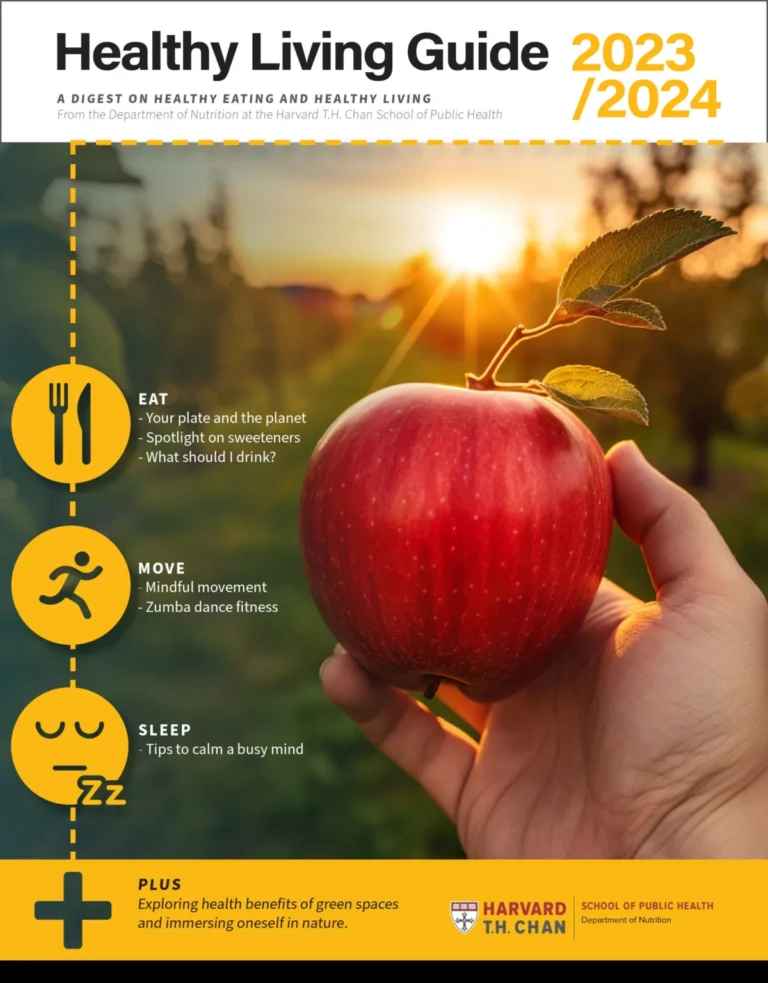





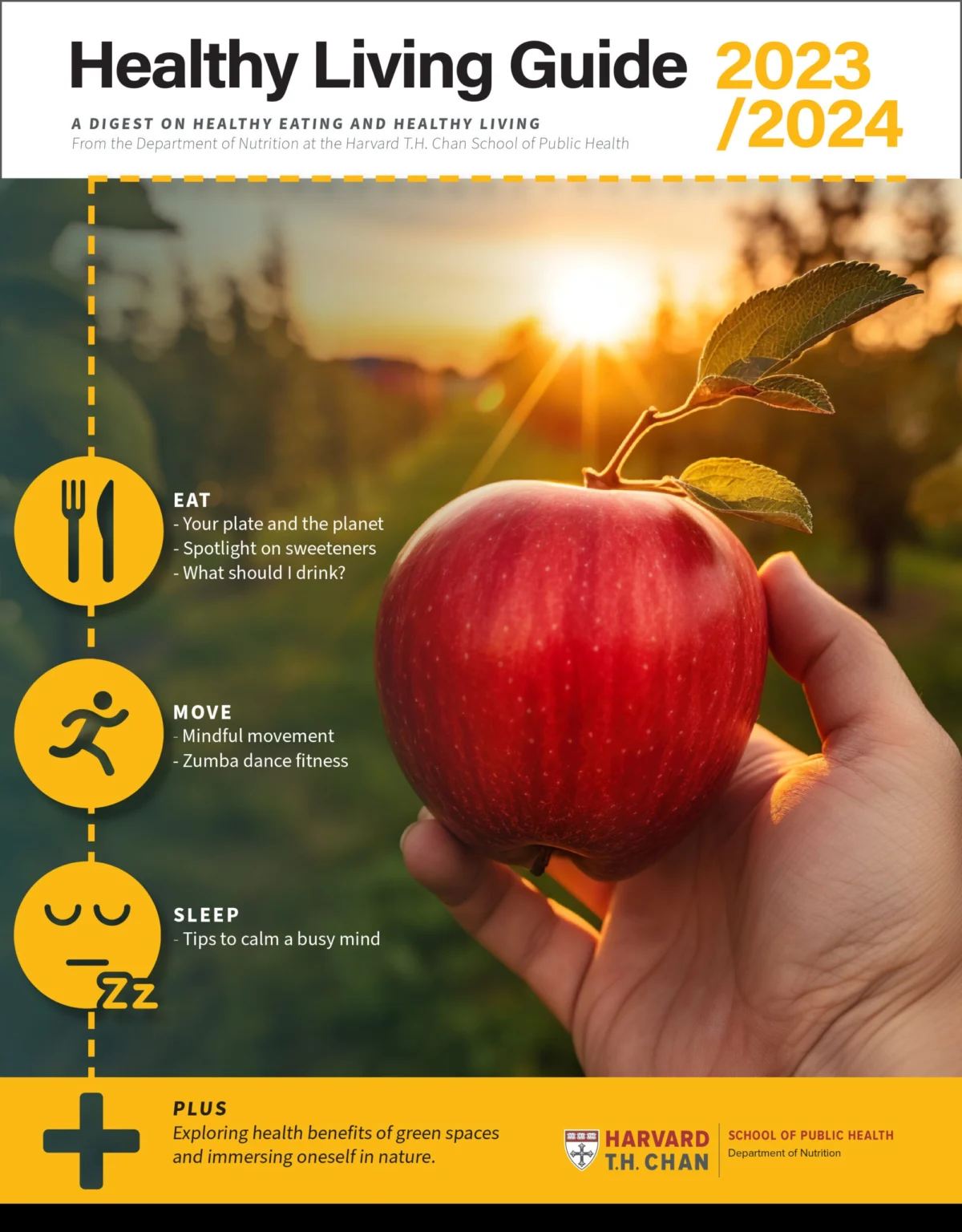
As the world turns the page on another calendar year, the perennial pursuit of wellness remains a top priority for millions. Amidst a cacophony of wellness trends and often conflicting dietary advice, the Department of Nutrition at the Harvard T.H. Chan School of Public Health has released its fourth annual Healthy Living Guide. This year’s edition marks a significant evolution in the publication, weaving together the traditional pillars of physical health with the burgeoning scientific field of mindfulness.
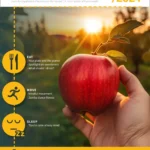
By anchoring its philosophy in the words of the late Thich Nhat Hanh—"The apple in your hand is the body of the cosmos"—this year’s guide invites readers to transcend the binary of "good food versus bad food" and instead embrace a more interconnected, sustainable approach to nutrition and lifestyle.
Main Facts: A Convergence of Science and Mindfulness
The 2023-2024 Healthy Living Guide is not merely a list of dietary restrictions or workout regimes. Instead, it serves as a comprehensive synthesis of the latest academic research distilled into actionable, public-facing advice.
The primary shift in this year’s edition is the integration of the Thich Nhat Hanh Center for Mindfulness in Public Health. Established in 2023, the Center represents a bold institutional commitment to exploring how mindfulness practices can be scaled to improve global health outcomes. The guide posits that the act of eating is a foundational point of contact between an individual and the planet. By fostering a mindful connection to our food—how it is sourced, prepared, and consumed—the guide argues that we can achieve a dual benefit: improved personal metabolic health and reduced environmental degradation.
Beyond mindfulness, the publication maintains its commitment to the "Big Three" of wellness:
- Nutrition: Navigating the complex landscape of ultra-processed foods.
- Physical Activity: Moving beyond the gym with accessible, joy-centered movement.
- Sleep: Understanding biological rhythms and the science of "chronotypes."
Chronology: The Evolution of the Healthy Living Guide
To understand the weight of this year’s release, it is necessary to contextualize the publication’s trajectory over the last four years.
- 2020-2021 (The Inception): The inaugural edition was launched in response to the COVID-19 pandemic, focusing on fundamental nutrition and immune support during a time of global uncertainty. It aimed to provide a stable, evidence-based anchor for people confined to their homes.
- 2021-2022 (The Expansion): The second edition broadened its scope to include mental health, recognizing that the pandemic’s toll was as much psychological as it was physiological.
- 2022-2023 (The Integration): This edition solidified the importance of sleep and systemic physical health, encouraging readers to view lifestyle choices as interconnected systems rather than isolated habits.
- 2023-2024 (The Holistic Turn): The current edition represents the most significant paradigm shift yet. It is the first to explicitly merge the Department of Nutrition’s rigorous clinical research with the philosophical and psychological frameworks of mindfulness, setting the tone for the future of public health policy.
Supporting Data: Why Modern Wellness Needs a New Framework
The Harvard researchers highlight several critical data points that have informed this year’s guide. The rise of ultra-processed foods (UPFs) remains a centerpiece of their clinical concern.
The Ultra-Processed Food Crisis
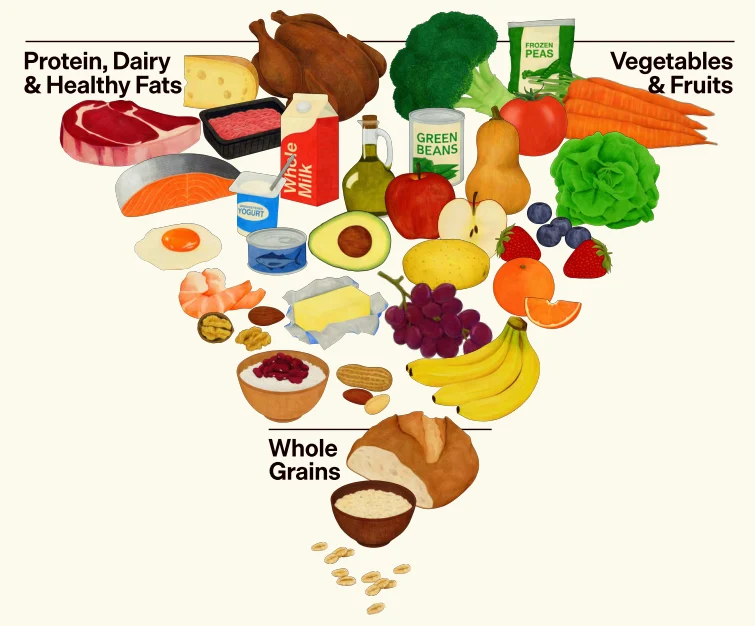
Recent longitudinal studies cited by the Department indicate that diets high in ultra-processed foods are increasingly linked not only to obesity and metabolic syndrome but also to declining mental health outcomes. The guide highlights that the "convenience" of modern diets comes at a significant cost to the gut-brain axis. By emphasizing whole, plant-forward diets, the guide provides a roadmap for weaning off reliance on engineered, hyper-palatable foods.
The Science of Sleep and Chronotypes
The guide introduces readers to the concept of "chronotypes"—the internal biological clocks that dictate our preference for sleep and wakefulness. Rather than imposing a "one-size-fits-all" morning routine, the researchers argue that acknowledging one’s natural chronotype—whether one is an "early bird" or a "night owl"—can lead to better sleep hygiene, increased focus, and improved hormonal regulation.
Movement as Medicine
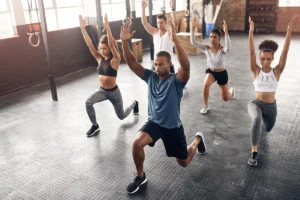
Addressing physical activity, the guide moves away from the rigid "no pain, no gain" mentality of the early 2000s. Instead, it highlights the efficacy of "rhythmic movement," specifically citing the benefits of dance-based workouts like Zumba. Data shows that movement synchronized with music not only increases caloric expenditure but also stimulates the release of neurotransmitters like dopamine and serotonin, further bridging the gap between physical health and psychological well-being.
Official Responses and Perspectives
Dr. Frank Hu, Chair of the Department of Nutrition, has frequently noted that the public is often overwhelmed by the "noise" of modern wellness media. "The goal of the Healthy Living Guide," he explains, "is to cut through the marketing hype and provide the public with a reliable, peer-reviewed compass. We are not just looking at what you eat, but how your environment, your sleep, and your mental state conspire to dictate your long-term health."
The establishment of the Thich Nhat Hanh Center for Mindfulness in Public Health has also garnered significant praise from the broader academic community. Critics have long argued that public health interventions are often too clinical and disconnected from the human experience. By incorporating mindfulness, the Department is signaling a shift toward "human-centric" medicine, which recognizes that behavior change is rarely achieved through data alone; it requires intentionality, patience, and compassion.
Implications: A New Era for Public Health
The release of the 2024 guide carries profound implications for how we view health policy and individual agency.
1. Planetary Health as Public Health
The most striking implication is the explicit link between individual diet and planetary sustainability. By promoting "mindful eating," the guide suggests that as individuals become more conscious of their own satiety and the quality of their food, they are naturally inclined to make choices that are more sustainable for the earth. This is a subtle but powerful nudge toward a more eco-conscious society.
2. The De-medicalization of Lifestyle
The guide suggests that health is not something that is "done to" us by doctors, but something we cultivate through daily, mindful rituals. This de-medicalization is crucial for empowering marginalized communities, who may have limited access to high-cost healthcare but have ready access to the principles of mindful eating, sleep hygiene, and rhythmic movement.
3. Resilience in a Digital Age
Finally, the emphasis on mindfulness serves as an antidote to the "always-on" nature of modern life. In an era where digital distractions are ubiquitous, the act of pausing to consider one’s sleep patterns, one’s movement, and one’s food choices becomes a radical act of self-preservation.
Conclusion: Moving Forward
As we navigate 2024, the Harvard Healthy Living Guide stands as a reminder that the path to vitality is not found in a pill or a trend, but in the slow, consistent application of scientific knowledge to our daily lives. Whether through the simple act of choosing a whole apple over a processed snack or adjusting one’s schedule to align with a natural chronotype, the guide encourages readers to see their health as a continuous, dynamic process.
For those interested in actionable steps, the Department of Nutrition has provided a wealth of resources, including printable tip sheets and summary guides. By synthesizing these diverse strands of research into a single, cohesive document, Harvard continues to provide the gold standard for evidence-based wellness in the modern age.
For more information and to access the full resources, visit the Harvard T.H. Chan School of Public Health – The Nutrition Source.