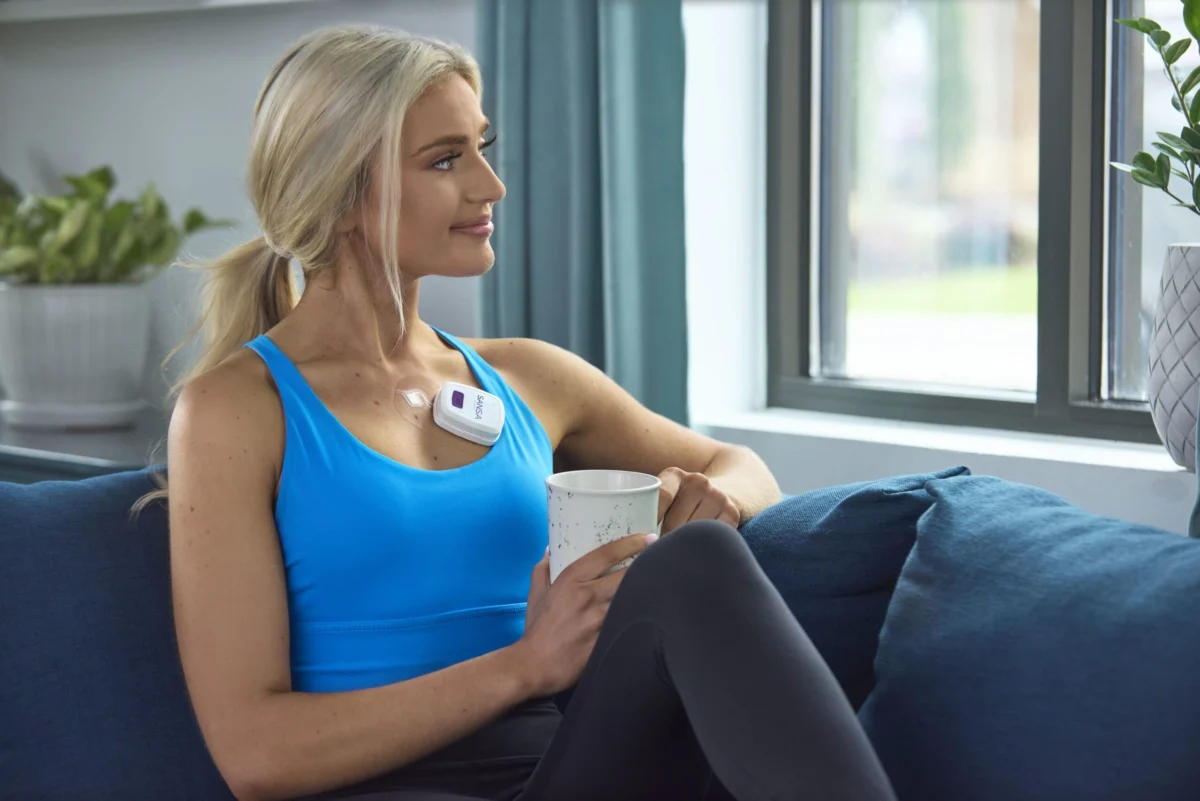
In a significant advancement for the field of home sleep diagnostics and cardiology, Huxley Medical has announced the expansion of its SANSA platform. The company has integrated a "hypoxic burden" metric into its chest-worn diagnostic patch and introduced SANSA GO, a new service model designed to streamline the diagnostic workflow for clinical practices. These developments, unveiled ahead of the SLEEP 2026 conference, aim to bridge the long-standing gap between sleep medicine and cardiac care by providing actionable data from a single, patient-friendly device.
The Evolution of the SANSA Platform: A Multi-Diagnostic Powerhouse
The SANSA platform has already established a footprint in the medical community through its unique ability to consolidate multiple diagnostic functions into a single, chest-worn wearable. Previously cleared by the US Food and Drug Administration (FDA) for the assessment of obstructive sleep apnea (OSA), central sleep apnea (CSA), and electrocardiogram (ECG) monitoring, the platform was engineered to simplify the often-daunting process of home sleep testing.
By adding the hypoxic burden metric, Huxley Medical is moving beyond simple apnea-hypopnea index (AHI) reporting. Hypoxic burden—a measure of the total amount of respiratory-related oxygen desaturation—is increasingly recognized by clinical researchers as a more sensitive predictor of cardiovascular risk than traditional AHI scores. By layering this metric onto a device already capable of capturing high-fidelity ECG data, Huxley Medical provides clinicians with a comprehensive view of the bidirectional relationship between nocturnal breathing disorders and heart health.
SANSA GO: Replicating the Cardiac Monitoring Workflow
A major hurdle in the adoption of home sleep testing (HST) has historically been the logistical burden on clinics. Managing inventory, coordinating shipments, and ensuring patient compliance often results in a fractured diagnostic process.
With the launch of SANSA GO, Huxley Medical is leveraging the logistics model already perfected in the cardiac electrophysiology space. Just as clinics manage ambulatory ECG patches—either handing them directly to patients during a visit or shipping them to a patient’s home—SANSA GO allows providers to toggle between these two modalities seamlessly. This flexibility is intended to reduce the "time-to-diagnosis," ensuring that patients with suspected arrhythmias or sleep-disordered breathing are evaluated as efficiently as possible.
Professional Perspectives: Integrating Sleep and Cardiology
The clinical utility of this dual-modality monitoring is underscored by the experiences of leading specialists. Luigi Di Biase, MD, PhD, section head of electrophysiology and director of arrhythmia services at Montefiore Einstein, highlights the logistical necessity of this integrated approach.
"When monitoring our atrial fibrillation patients, we switch between handing out ambulatory ECG patches in clinic or shipping to patients at home, depending on what’s best for the patient," says Dr. Di Biase. "SANSA now gives us the same easy-to-operationalize workflow to manage underlying sleep apnea that’s often making their heart disease worse."
This sentiment is echoed by primary care providers who often serve as the first line of defense in identifying comorbid conditions. Kunal Agarwal, MD, medical director at TidalHealth, emphasizes the diagnostic efficiency afforded by the new platform capabilities. "Hypoxic burden and ECG in the same test help me discern who I can manage in primary care and who needs to move quickly to treatment and cardiology follow-up," Dr. Agarwal explains. "As a primary care physician, I am often the first clinician to evaluate patients with sleep apnea and cardiovascular disease. SANSA’s ease of use and access to both sleep and cardiac information from a single study helps guide more efficient patient care."
Supporting Data: The Link Between Hypoxic Burden and Heart Disease
The decision to integrate hypoxic burden into the SANSA platform is supported by compelling clinical data. A recent population study involving 325 patients wearing the SANSA device revealed significant correlations between respiratory metrics and cardiovascular health.
The study found that patients with pre-existing cardiovascular disease—including atrial fibrillation and other complex arrhythmias—were more than twice as likely to demonstrate an elevated hypoxic burden compared to those without cardiovascular comorbidities. This data suggests that hypoxic burden is a critical physiological marker that can identify high-risk patients who might otherwise be overlooked by traditional AHI-based screening. By identifying these individuals early, clinicians can prioritize them for intervention, potentially preventing the progression of cardiac conditions exacerbated by nocturnal hypoxia.
Implications for the Future of Diagnostic Medicine
The integration of these features represents a paradigm shift in how chronic disease is managed. Historically, sleep medicine and cardiology have functioned as distinct siloes. A patient might undergo an HST for snoring, receive a CPAP prescription, and then, months later, visit a cardiologist for palpitations. This fragmented care model often leads to delayed diagnoses and suboptimal treatment outcomes.
By placing cardiac monitoring and respiratory diagnostic capabilities on a single patch, Huxley Medical is facilitating "co-management." The implications for the healthcare system are twofold:
- Clinical Efficiency: By consolidating tests, clinics reduce the overhead associated with redundant patient visits, device training, and data reconciliation.
- Improved Patient Outcomes: Earlier detection of arrhythmias during sleep-disordered breathing episodes allows for faster initiation of therapy, such as anti-arrhythmic medication or ablation, which may be more effective if the underlying sleep apnea is treated concurrently.
Chronology of Development and Commercialization
The trajectory of the SANSA platform has been marked by a series of strategic FDA clearances and clinical validations. Following the initial clearance for OSA and CSA detection, the company moved quickly to obtain authorization for its ECG monitoring capabilities.
The upcoming presentation at the SLEEP 2026 conference serves as a focal point for the company’s commercial strategy. The findings from Dr. Agarwal’s study will provide the scientific foundation for the broad rollout of the hypoxic burden metric. Huxley Medical has confirmed that both the SANSA GO service model and the enhanced hypoxic burden software will become commercially available nationwide during the conference, which is scheduled for June 14-17.
Conclusion: Bridging the Gap
As medical technology continues to evolve, the trend toward multi-modal diagnostics is clear. Huxley Medical’s commitment to refining the SANSA platform demonstrates an understanding that modern healthcare requires more than just accurate data; it requires data that is delivered within a workflow that fits the realities of modern clinical practice.
By prioritizing both the accuracy of the diagnostic output—through metrics like hypoxic burden—and the convenience of the delivery model—through SANSA GO—Huxley Medical is positioning its platform to be a cornerstone of modern cardiovascular and sleep medicine. As the healthcare industry shifts toward value-based care, tools that can simultaneously reduce costs and improve patient outcomes are likely to see rapid adoption. The upcoming launch at SLEEP 2026 represents a critical milestone in this transition, promising to provide physicians with the insights they need to treat the "whole patient" rather than just their individual symptoms.
With the integration of cardiovascular-specific metrics into a home-based diagnostic tool, the lines between the specialist’s office and the home environment continue to blur, favoring a more continuous, data-driven approach to patient health management. The medical community will be watching closely as these new capabilities are deployed in clinics across the country.