




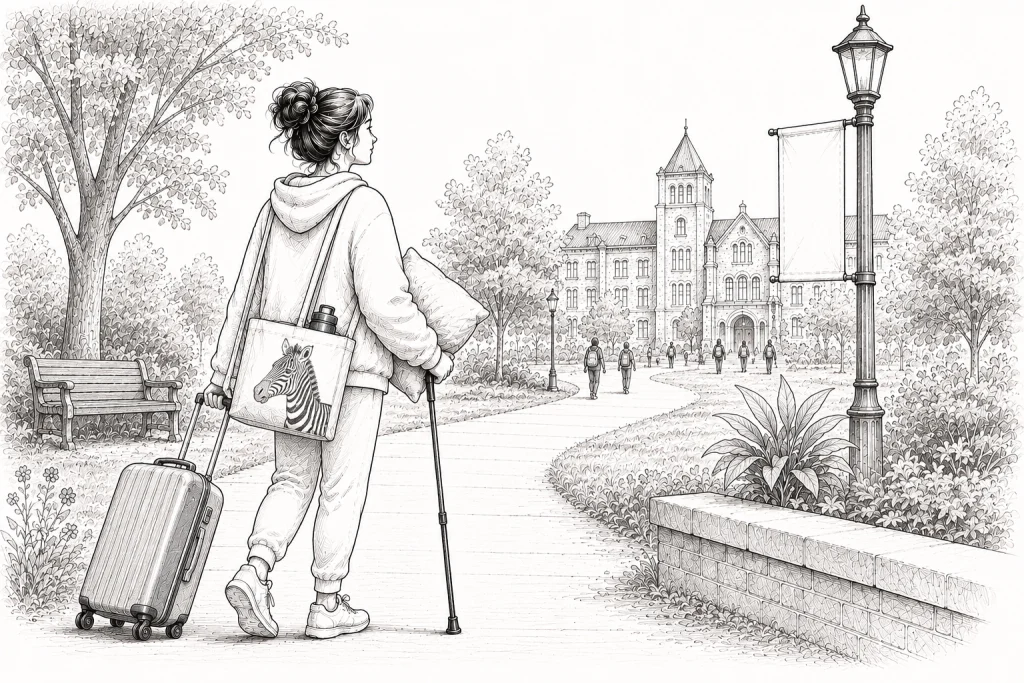
The transition to college is a milestone defined by newfound autonomy, intellectual discovery, and the promise of future career paths. For the average student, the shift involves navigating new social circles and academic rigors. However, for students living with Ehlers-Danlos Syndrome (EDS) and its associated comorbid conditions, the transition involves an additional layer of logistical complexity. Balancing chronic pain, systemic fatigue, and unpredictable flare-ups with a demanding course load requires not just resilience, but a strategic approach to campus life.
Main Facts: Understanding the EDS Campus Experience
Ehlers-Danlos Syndrome is a group of connective tissue disorders characterized by joint hypermobility, tissue fragility, and chronic pain. Because EDS is often systemic, it rarely exists in a vacuum. Many students also navigate comorbid conditions such as Postural Orthostatic Tachycardia Syndrome (POTS), Mast Cell Activation Disorders (MCAS), gastrointestinal dysfunction, chronic migraines, and neurodivergence, including Autism Spectrum Disorder.
The fundamental challenge for these students is the "invisible" nature of their disability. Unlike mobility aids, which provide immediate visual cues to peers and faculty, the internal toll of EDS—frequent subluxations, debilitating fatigue, and autonomic dysregulation—is often hidden. Success in a collegiate environment necessitates moving from a reactive stance to a proactive one, ensuring that infrastructure is in place before a crisis occurs.
A Chronological Approach to Campus Integration
Preparation for college with a chronic illness should ideally begin months before the first lecture.
- Pre-Enrollment (6–9 months out): Research the university’s Disability Services (DS) office. Identify their specific documentation requirements. Not all institutions have the same standards for medical evidence.
- The Transition Period (3 months out): Schedule a meeting with the DS office. Do not wait until the first week of classes, when offices are typically overwhelmed.
- The First Month: Focus on "energy accounting." Identify the physical layout of the campus, the proximity of classrooms, and the availability of accessible routes. Establish a relationship with professors by introducing yourself during office hours, framing your needs as a way to ensure your best performance in their class.
- Mid-Semester: Re-evaluate your accommodations. If a specific classroom setup is causing joint pain or if a testing schedule is triggering symptom flares, reach out to DS immediately to modify your plan.
Supporting Data: The Impact of Early Intervention
Data suggests that students with chronic illnesses who register with disability services early are significantly more likely to persist through graduation compared to those who attempt to "tough it out." Proactive registration serves as a safety net. For the "spoonie" community—a term affectionately used by chronic illness patients to describe the limited daily energy reserves they possess—having formal accommodations acts as an insurance policy against the unpredictable nature of EDS.
Official Responses and Institutional Obligations
Under the Americans with Disabilities Act (ADA) and Section 504 of the Rehabilitation Act, colleges are required to provide reasonable accommodations to students with disabilities. It is important to note that the responsibility of initiating this process lies with the student.
When requesting accommodations, it is helpful to present a "complete picture." This means providing medical documentation that outlines not just the diagnosis, but the functional limitations that arise from it. If a request is denied, students are encouraged to engage in the "interactive process." Schools are often willing to provide alternatives if the initial request is deemed unreasonable or creates an "undue burden." Always advocate for the underlying goal: equal access to education.
Strategies for Academic Thriving
Practical Supports (The "Self-Help" Approach)
Before seeking formal intervention, students can implement "low-stakes" adjustments. These include:
- Ergonomic Optimization: Investing in specialized chairs, lumbar support cushions, or standing desks if the university allows.
- Energy Management: Utilizing a campus map to calculate the physical exertion required to move between buildings.
- Communication: Proactively emailing professors to discuss the need for minor adjustments, such as standing up during long lectures to prevent syncope (fainting) or joint locking.
Formal Classroom Accommodations
A simple test to determine if you need a formal accommodation is: Does this limitation prevent me from accessing the same educational experience as my peers? If the answer is yes, proceed to the DS office.
1. Attendance and Flexibility:
For students with MCAS or POTS, attendance can be volatile. Requesting "flexible attendance" policies—whereby a student may have a pre-agreed-upon number of absences beyond the syllabus limit—can alleviate the pressure of choosing between health and grades.
2. Note-Taking and Recording:
Joint pain in the hands or wrists is a common EDS symptom. Requesting permission to record lectures, or asking for access to note-taking software and peer-provided notes, ensures that a flare-up does not lead to a missed educational opportunity.
3. Testing Accommodations:
Exams are often high-stress environments that exacerbate pain. Essential accommodations include:
- Extended Time: To account for pain-related breaks or cognitive fog.
- Alternative Environments: Taking exams in a low-distraction, quiet room.
- Physical Adjustments: The ability to take breaks to stretch or use a specialized chair.
- Writing Aids: For those with severe hand pain, the use of a computer or a scribe is a standard, reasonable accommodation.
Housing and Lifestyle Accommodations
The dormitory experience is the most significant physical challenge for an EDS student.
- Proximity: Request housing near the center of campus or near major lecture halls to minimize walking distances.
- Accessibility: Prioritize ground-floor rooms or buildings with reliable, high-speed elevators.
- Environment: Requesting temperature-controlled rooms is vital for patients with temperature-sensitive conditions like POTS or MCAS.
- Dining: For students with GI issues or Mast Cell disorders, working with dining services to ensure access to allergen-safe, low-histamine, or specific dietary requirements is critical.
Implications for the Future
The goal of these accommodations is not to provide an advantage, but to level the playing field. When a student with EDS utilizes a cane, a wheelchair, or a note-taker, they are exercising their right to participate in an academic environment that was historically designed for able-bodied individuals.
By framing disability as a part of the diversity of the student body, we change the conversation from "accommodating a problem" to "supporting a student." Academic success for a student with EDS is rarely linear. It is a journey of self-advocacy, trial and error, and consistent communication with institutional stakeholders.
Final Thoughts: The Path Forward
College should be defined by the rigor of your coursework, the depth of your research, and the growth of your character—not by the limitations of your body. The barriers faced by students with Ehlers-Danlos Syndrome are real, but they are not insurmountable.
As you embark on this chapter, remember that you are your own best advocate. Use the resources provided by your university, stay in constant contact with your Disability Services counselor, and remember that asking for help is a sign of strategic maturity. Education is a fundamental right, and with the right supports in place, the halls of higher learning are open to everyone, regardless of the challenges they face.
Author’s Note: This guide is intended to empower students. If you find yourself struggling to navigate the bureaucracy of your specific institution, reach out to local disability advocacy groups or student organizations on campus. You are not alone in this process.