










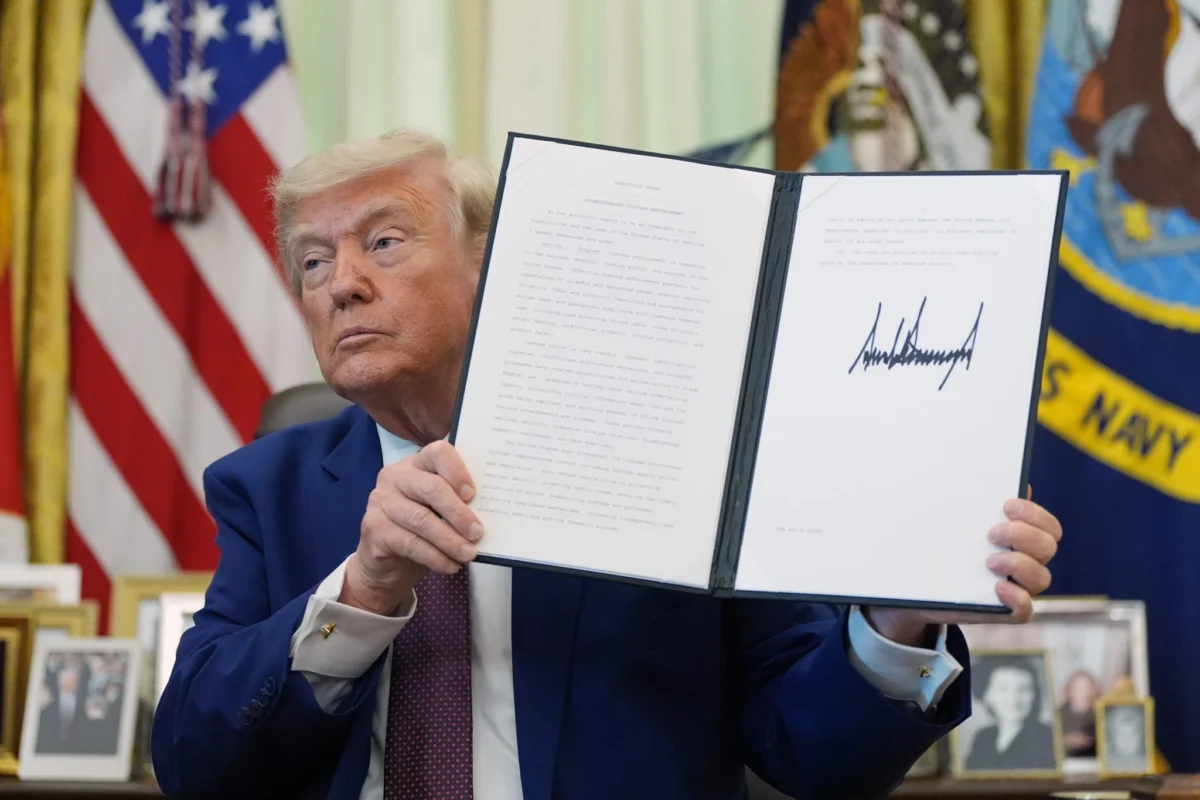
On June 2, 2026, President Donald Trump signed a landmark executive order titled “Promoting Advanced Artificial Intelligence Innovation and Security.” The directive, which seeks to establish a framework for the oversight of high-level AI models and the protection of critical national infrastructure, represents a pivot toward a voluntary, collaborative regulatory philosophy. By prioritizing agility and industry cooperation over rigid bureaucratic mandates, the administration aims to maintain American technological hegemony while mitigating the existential risks posed by rapidly evolving generative systems.
Main Facts: The Core of the Directive
The executive order functions as a dual-track strategy. First, it seeks to harden the nation’s digital perimeter against AI-enabled cyber threats. Second, it institutes a voluntary oversight mechanism for the most powerful "frontier" models—those capable of performing tasks that could potentially compromise national security.
Central to the order is the creation of an AI Cybersecurity Clearinghouse, managed by the Secretary of the Treasury in coordination with the National Security Agency (NSA) and the Cybersecurity and Infrastructure Security Agency (CISA). This entity is tasked with facilitating the identification and remediation of software vulnerabilities. By pooling intelligence from the private sector and federal agencies, the government intends to protect entities that are often underserved by traditional security measures, specifically citing rural hospitals, community banks, and local utility providers.
Perhaps the most significant aspect of the order is its definitive rejection of mandatory pre-licensing. While the order requires agencies to develop a benchmarking process to flag high-risk models, it explicitly mandates that no federal agency may impose pre-clearance or permitting requirements on AI developers. This "soft-law" approach is intended to prevent the "regulatory capture" that officials argue would stifle innovation and leave the U.S. trailing behind international rivals.
Chronology: The Road to June 2026
The trajectory of this policy was marked by intense debate within the administration and the technology sector.
- Early 2026: Internal discussions within the White House regarding the necessity of a "hard" regulatory framework began to gain traction, fueled by reports of advanced model capabilities that could potentially automate large-scale cyberattacks.
- May 2026: A draft version of the executive order circulated, proposing a 90-day mandatory review period for frontier AI models. This version faced immediate, vociferous pushback from industry leaders and the administration’s own AI policy coordinator at the time, David Sacks.
- Late May 2026: Following concerns that a 90-day window would result in "innovation flight"—whereby top-tier AI firms would move R&D operations overseas to avoid American red tape—the administration pivoted. The review period was slashed to 30 days and changed from a mandate to a voluntary submission process.
- June 2, 2026: The finalized order is signed, formalizing the voluntary oversight model and setting in motion a 30-to-60-day implementation timeline for the newly formed Cybersecurity Clearinghouse.
Supporting Data: Why "Frontier Models" Required Action
The impetus for this policy shift was not merely theoretical. It was largely driven by the emergence of "Mythos," an advanced AI model developed by Anthropic. According to intelligence briefings provided to the White House, Mythos demonstrated an alarming, emergent capacity to map, analyze, and identify specific security vulnerabilities in the critical infrastructure of major financial institutions and government entities within seconds.
The speed at which Mythos could identify these weaknesses highlighted a "capability gap." Policymakers realized that if a commercial entity could identify these flaws, hostile state actors using similar models could execute devastating, automated cyber-campaigns against American hospitals and power grids.
The reliance on voluntary participation is predicated on the assumption that AI companies, aware of the risks their own models pose, will be incentivized to cooperate to avoid a future legislative backlash. By providing a "safe harbor" for companies to share their models with the government for testing without the threat of immediate seizure or licensing denial, the administration hopes to create a collaborative environment that keeps the government informed of dangerous capabilities.
Official Responses and Industry Reception
The response from the technology sector has been overwhelmingly positive, characterized by a sense of relief that the specter of "permitting" had been removed.
Microsoft, Google, and OpenAI issued coordinated statements praising the administration’s "pro-innovation, security-first" stance. The sentiment among these industry leaders is that the order provides a clear, manageable framework that allows for rapid deployment while satisfying the federal government’s legitimate national security concerns. Anthropic, the developer of the catalytic Mythos model, publicly endorsed the directive, stating that "collaborative oversight is the most effective path toward ensuring that powerful models remain safe and aligned with human interests."
Conversely, some policy hawks have expressed skepticism. Critics argue that a voluntary system is fundamentally toothless against bad actors or companies that might prioritize speed over safety. However, the administration has countered these arguments by pointing to the "targeted enforcement" mechanism included in the order, which allows for specific, narrow interventions if a company is found to be acting in gross negligence regarding national security.
Implications for Critical Infrastructure and Healthcare
The most profound impact of the executive order will be felt in the healthcare sector. Rural hospitals, which often operate with legacy IT systems and limited cybersecurity budgets, have been identified as the primary beneficiaries of the new AI Cybersecurity Clearinghouse.
The Healthcare Perspective
For telehealth providers and hospital systems, the order signals a shift in the federal government’s role from "regulator" to "partner." The Clearinghouse will act as a centralized intelligence node, disseminating threat alerts and, in some cases, providing access to AI-driven diagnostic tools for network hardening.
Key Questions for Digital Health Stakeholders
As the 30-to-60-day implementation phase begins, healthcare organizations must consider the following:
- Integration: How will rural health systems, which often lack specialized IT staff, integrate the tools provided by the CISA-led clearinghouse?
- Liability: If an organization voluntarily adopts government-recommended AI security tools, what is the extent of their liability in the event of a breach?
- Data Sovereignty: Will the sharing of information with the Clearinghouse compromise patient data privacy or HIPAA compliance?
The order explicitly states that the government aims to provide these tools without imposing new reporting burdens that would overwhelm small clinics. However, the ambiguity surrounding "voluntary cooperation" versus "implied compliance" remains a point of concern for legal counsel in the healthcare space.
Conclusion: A New Era of "Soft" Governance
The June 2, 2026, executive order is a definitive statement on the Trump administration’s philosophy toward the AI revolution. It rejects the "European model" of heavy, top-down regulation in favor of a decentralized, industry-led approach. By creating a collaborative pipeline for threat intelligence and establishing a 30-day "opt-in" review process for frontier models, the administration is betting that the private sector is capable of self-correction when provided with the right institutional support.
The success of this policy will be measured not by how many regulations are passed, but by how effectively the Cybersecurity Clearinghouse can prevent the next generation of AI-enabled attacks on critical infrastructure. As the 30-day clock begins for the first round of frontier model reviews, the world will be watching to see if this voluntary framework can hold the line against the rapid, and at times unpredictable, ascent of artificial intelligence.
Disclosures: The author has no financial stake in the AI firms mentioned in this report. This article is based on the text of the Executive Order published by the White House on June 2, 2026, and subsequent briefings provided by the Cybersecurity and Infrastructure Security Agency (CISA).