






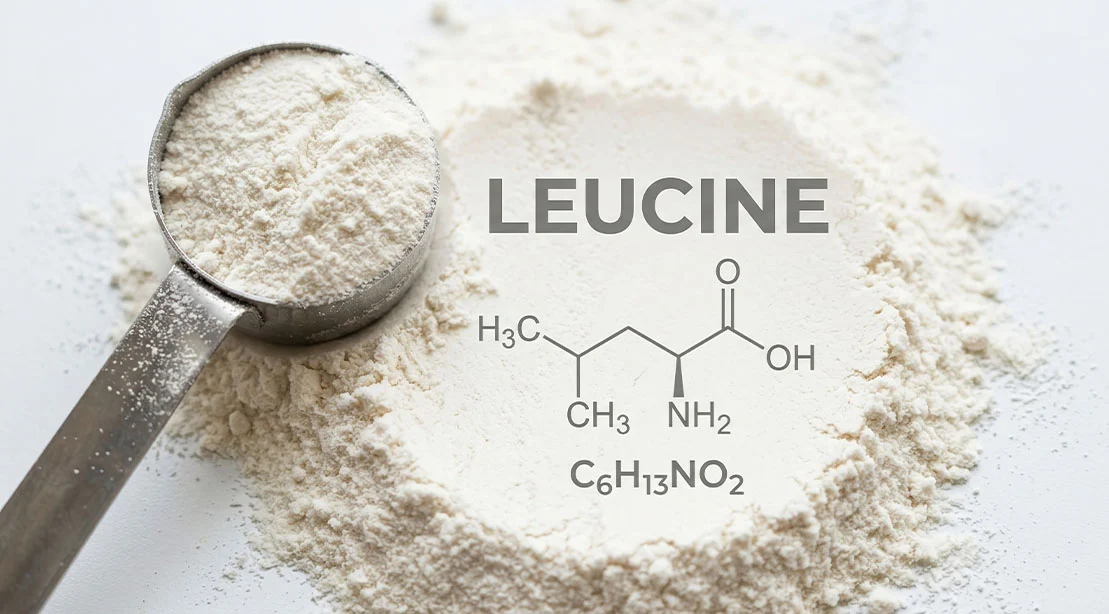
For decades, leucine has been the darling of the fitness world. Often found in the shaker bottles of bodybuilders and the dietary plans of high-performance athletes, this branched-chain amino acid (BCAA) has long been heralded for its foundational role in muscle protein synthesis. It is the molecular "on-switch" for muscle growth, the spark that tells your body to repair and build after a grueling workout.
However, a groundbreaking study recently published in Nature Cell Biology by researchers at the University of Cologne has propelled leucine out of the gym and into the spotlight of clinical medicine. The study suggests that leucine does far more than just build biceps; it acts as a metabolic regulator that governs the very "power plants" of our cells: the mitochondria. This discovery could redefine our understanding of human metabolism and open new frontiers in the treatment of diseases characterized by cellular energy failure, from metabolic syndrome to cancer.
Main Facts: The Discovery of a Metabolic Master Switch
At the center of this discovery is the realization that leucine is not merely a structural building block for proteins. Instead, it functions as a signaling molecule that directly interfaces with the mitochondria.
The mitochondria are the organelles responsible for generating adenosine triphosphate (ATP), the primary energy currency of the cell. When these power plants function efficiently, we experience vitality, metabolic health, and robust recovery. When they falter, the results are often fatigue, metabolic dysfunction, and cellular degradation.
The University of Cologne research team identified that leucine levels in the cell act as a barometer for energy availability. When leucine is abundant, it triggers a specific cascade that optimizes mitochondrial performance. It does this by "tweaking" the protein landscape on the surface of the mitochondria. Specifically, leucine downregulates proteins—such as the protein SEL1L—that typically act as inhibitors or "brakes" on mitochondrial processes. By clearing these regulatory bottlenecks, leucine effectively "overclocks" the mitochondria, allowing for a swift adaptation to the increased energy demands of the body.
Chronology: From Sports Nutrition to Cellular Science
The journey of leucine from a fitness supplement to a clinical research subject has been a decades-long evolution.
The Fitness Era (1990s–2010s)
During this period, sports science focused heavily on the anabolic properties of BCAAs. Studies consistently showed that leucine, specifically, was the most potent activator of the mTOR pathway (mammalian target of rapamycin), a protein complex that signals the body to synthesize new muscle tissue. Athletes adopted leucine-heavy diets and supplementation protocols to preserve muscle mass during caloric deficits.
The Mitochondrial Focus (2015–2020)
As the field of longevity research expanded, scientists began looking at the mitochondria not just as energy producers, but as sensors of nutritional status. Researchers theorized that if nutrients could signal muscle growth, they might also be signaling the underlying cellular machinery to ramp up production.
The Cologne Breakthrough (2025)
The recent study led by Dr. Qiaochu Li represents a shift in the paradigm. By utilizing advanced imaging and proteomic analysis, the team was able to map exactly how the cell "senses" leucine. They discovered that the mitochondria are not passive recipients of nutrients; they are active participants in a nutrient-sensing network that modulates energy output in real-time. This confirmed that the "nutrient status" of a cell is a primary driver of its physiological state.
Supporting Data: Quantifying the Need for Leucine
Understanding how much leucine we need is essential to harnessing its benefits. The body cannot synthesize leucine on its own; it is an "essential" amino acid, meaning it must be obtained through dietary sources.
Daily Intake Recommendations
The baseline requirement for a sedentary individual is approximately 17.7mg per pound of body weight. For a 180-pound adult, this translates to roughly 3.19 grams of leucine daily. However, current nutritional guidelines are being heavily debated in light of the new research, as these figures represent "survival" levels rather than "optimization" levels.
The Athlete’s Protocol
The International Society of Sports Nutrition (ISSN) suggests a more aggressive approach for those looking to maximize performance. They recommend doses of 3 grams of leucine taken every four hours during periods of intense training. This maintains a steady state of mTOR activation and, as the new study suggests, keeps mitochondrial "power plants" running at peak capacity.
High-Leucine Food Profiles
To reach these levels, one does not necessarily need synthetic supplements. Whole foods remain the most effective delivery system:
- Parmesan Cheese: The gold standard, containing roughly 3.4g per 100g.
- Lean Beef: Approximately 2.6g per 100g.
- Chicken Breast: Approximately 2.5g per 100g.
- Eggs: One large egg provides about 538mg of leucine.
Official Responses and Scientific Consensus
The findings from the University of Cologne have been met with significant enthusiasm within the metabolic research community. Dr. Qiaochu Li, the study’s first author, emphasized the adaptive nature of this mechanism.
"We were thrilled to discover that a cell’s nutrient status, especially its leucine levels, directly impacts energy production," Dr. Li stated in a recent press release. "This mechanism enables cells to swiftly adapt to increased energy demands during periods of nutrient abundance."
Independent experts are now looking at the broader implications. Dr. Elena Vance, a metabolic researcher not involved in the study, noted, "For years, we’ve treated mitochondria as these static entities that just burn fuel. We now know they are highly dynamic, responding to the specific amino acid profile of the cell. This research provides a molecular mechanism for what we’ve seen empirically in nutrition for years."
Implications: A New Frontier in Disease Treatment
The most exciting aspect of this research lies in its clinical application. If we can manipulate mitochondrial efficiency through leucine, we may be able to treat a variety of systemic diseases.
Metabolic Disorders
Conditions like Type 2 diabetes and obesity are often characterized by mitochondrial dysfunction. In these patients, the cells struggle to convert nutrients into energy, leading to insulin resistance. By understanding the protein-level "brakes" that leucine releases, clinicians may develop targeted therapies that help "re-prime" the mitochondria in insulin-resistant cells, potentially reversing metabolic stagnation.
Cancer Research
Cancer cells are notorious for their metabolic reprogramming, often hijacking mitochondrial pathways to fuel rapid growth. Conversely, some cancers involve mitochondrial failure. Researchers are now investigating whether modulating the leucine-sensing pathway could "starve" cancer cells of their preferred energy-switching mechanisms or, conversely, restore healthy mitochondrial function in tissues ravaged by cachexia (the muscle-wasting syndrome often seen in cancer patients).
Aging and Longevity
As we age, mitochondrial efficiency naturally declines. This contributes to sarcopenia (age-related muscle loss) and general fatigue. The discovery that leucine acts as a regulatory switch offers a potential roadmap for nutritional interventions designed to keep the "cellular power plants" firing well into old age. While not a "fountain of youth," it suggests that precise dietary management could be a pillar of healthy aging.
Integration with Emerging Technologies
The study arrives at a time when interest in mitochondrial health is at an all-time high. Many people are turning to red-light therapy, cold plunges, and targeted supplementation to boost energy. The leucine discovery provides a biological foundation for these trends, suggesting that while external stimuli like light or temperature can influence cellular health, the foundational fuel—specifically the amino acid profile—remains the most critical factor.
Conclusion: The Road Ahead
The University of Cologne’s research has effectively moved leucine from the locker room to the laboratory. We now understand that the fuel we ingest doesn’t just provide raw materials for tissue; it sends complex, encoded signals to our cells, dictating their energy output and operational efficiency.
As further research proceeds, we can expect to see a move toward "precision nutrition," where dietary leucine intake is calibrated not just for body composition, but for the optimization of internal metabolic processes. Whether through the inclusion of high-leucine foods like parmesan and lean proteins or through future therapeutic developments, the mastery of our cellular power plants appears to be well within our reach. The humble amino acid, once dismissed as a simple building block, may well be the key to unlocking a new era of metabolic health.