In a move that has ignited a firestorm within the medical community and reignited debates over the commercialization of collegiate athletics, a coalition of physicians and scientists has formally called on the National Collegiate Athletic Association (NCAA) and the Big 12 Conference to terminate a high-profile entitlement partnership with Monster Energy.
The campaign, spearheaded by the newly formed advocacy group Protect Young Fans, argues that the prominent display of energy drink branding on fields, courts, and athlete uniforms creates a dangerous "halo effect," subconsciously encouraging children and adolescents to consume products that medical experts warn are linked to severe cardiovascular risks, including sudden cardiac arrest.
The Genesis of the Partnership
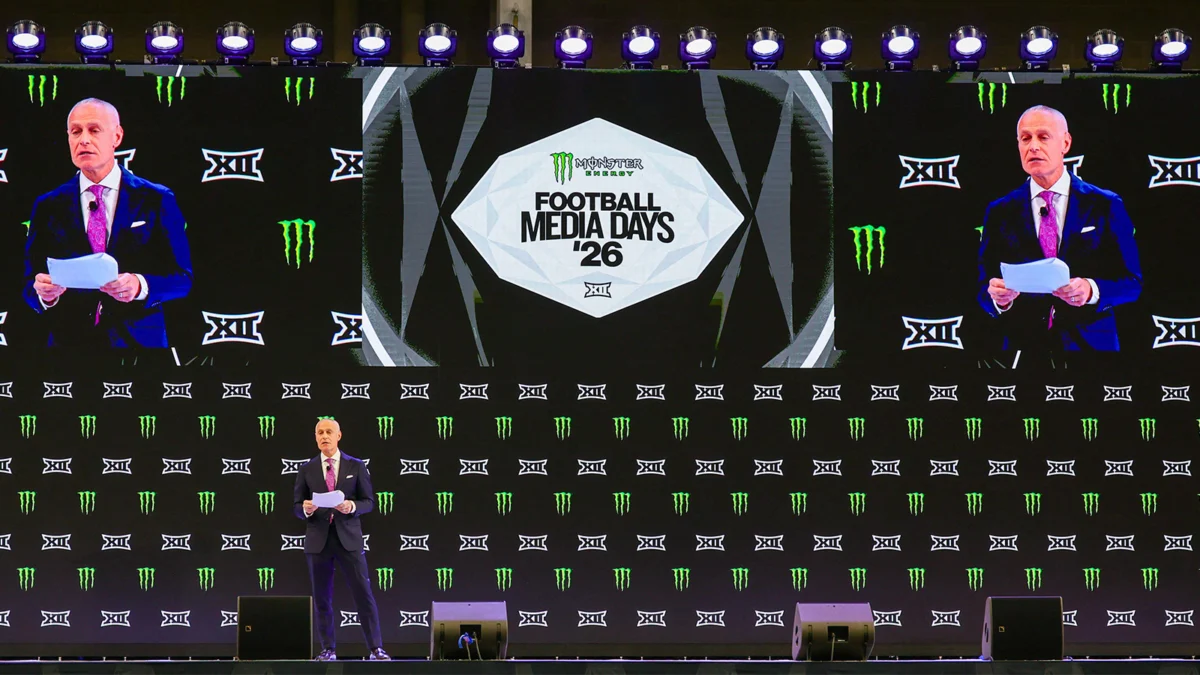
The controversy stems from a wide-reaching collaboration announced in July 2026. Under the terms of the deal, Monster Energy secured entitlement status for Big 12 football and basketball regular seasons. The agreement includes the branding of athletic jerseys, court decals, and field markings, ensuring that the company’s logo is a permanent fixture in the visual landscape of college sports.
For the NCAA and the Big 12, the partnership represents a lucrative expansion of commercial rights. However, for Dr. David Jacobs, an ophthalmologist based in Virginia, the sight of these logos at his alma mater’s campus served as a wake-up call. Observing the fervor with which young fans mimic their athletic idols, Jacobs grew concerned that the normalized presence of high-caffeine beverages in the athletic environment creates a predatory marketing dynamic.
"We’re concerned about an increase in energy drink consumption among children and youth," Dr. Jacobs told MedPage Today. "When impressionable kids see these brands associated with the peak of physical performance and the idols they look up to, the product becomes an aspirational lifestyle choice rather than a potent stimulant with significant health risks."
A Chronology of Concern
The movement to challenge this partnership did not emerge in a vacuum. It is the culmination of years of medical observation regarding the intersection of youth sports and stimulant consumption.
- Pre-2026: Medical organizations, including the American Academy of Pediatrics (AAP) and the American Medical Association (AMA), have consistently issued warnings regarding the consumption of energy drinks by those under 18, citing risks ranging from anxiety and sleep disruption to lethal cardiac events.
- July 2026: The Big 12 and Monster Energy announce their multi-year entitlement partnership.
- July 1, 2026: The NCAA officially lifts its longstanding ban on energy drink television advertising, a policy shift that coincided with the broader commercialization of the conference.
- Late 2026: Drs. David Jacobs and Matthew Nelson—a cardiologist based in Idaho—form Protect Young Fans. They mobilize a network of medical professionals to draft a formal letter to the NCAA leadership, demanding a policy overhaul.
- Present Day: The petition has garnered over 250 signatures from experts, and the conversation regarding the "moral responsibility" of collegiate governing bodies has moved to the forefront of the public health debate.
Supporting Data: The Cardiovascular Link
The core of the physicians’ argument rests on the biological reality of energy drinks, which often contain massive concentrations of caffeine, taurine, and other stimulants. The letter to the NCAA highlights a sobering reality: several American teenagers have died following cardiac events associated with the consumption of these products.
The physicians point to the tragic cases of 14-year-old Anais Fournier, 16-year-old Davis Allen Cripe, and 17-year-old Larissa Rodriguez. These cases are not viewed by the medical community as mere statistical anomalies, but as the tip of an iceberg.
Data cited by Protect Young Fans indicates that nearly 20% of young people who have experienced sudden cardiac arrest or death had reported regular consumption of energy drinks. Furthermore, randomized clinical trials in healthy pediatric populations have demonstrated measurable physiological changes, including:
- Increased Blood Pressure: A transient but significant spike that places immediate stress on the cardiovascular system.
- Supraventricular Extrasystoles: Premature heartbeats that originate in the upper chambers of the heart.
- Altered Heart-Rate Variability: An indicator of autonomic nervous system stress.
"These findings establish that the cardiovascular effects are real, reproducible, and measurable in children," the letter states. "A susceptible child may appear entirely healthy until the moment a stimulant trigger, an occult cardiac substrate, and physiologic stress converge."
The Expert Perspective
Dr. Gregory Marcus, a cardiac electrophysiologist at the University of California San Francisco, who is not affiliated with the petition, warns that the "performance-enhancing" image projected by sports sponsorships is entirely at odds with the physiological reality of energy drinks.
"There is a problematic implication that these energy drinks are somehow related to the athleticism or success of the people promoting them," Dr. Marcus noted. "There is really no evidence that these drinks improve health in any circumstance, nor is there evidence that they enhance performance."
Marcus highlights a specific danger during athletic activity: dehydration. "When you combine a highly concentrated, stimulant-heavy beverage with the volume depletion that occurs during sports, you are placing a significant burden on the heart. Even in young, otherwise healthy people, this can promote dangerous rhythms."
The Policy Disconnect: NCAA Rules vs. Reality
A significant irony identified by the Protect Young Fans group is the NCAA’s internal stance on caffeine. The organization maintains a threshold for caffeine consumption for its own athletes, listing caffeine alongside banned stimulants like cocaine and amphetamines on its substance-misuse prevention guidelines.
Critics argue that by allowing the promotion of these substances, the NCAA is fostering a double standard. While the organization restricts its athletes from using caffeine to gain a competitive edge, it is simultaneously profiting from the mass marketing of the same substance to the broader public, including the millions of children who watch college sports.
"Banning companies from marketing these products to adolescents is a commonsense action," an AMA spokesperson noted. The AMA’s official policy explicitly supports a ban on the marketing of energy drinks to anyone under 18, including sponsorships that target or appeal to minors.
Official Responses and Institutional Inertia
The NCAA’s response to the growing pressure has been characteristically procedural. In a statement to MedPage Today, an NCAA spokesperson emphasized that the organization’s national office acts as an interpreter of rules created by the membership. "If members want to make or change a policy, they can do so through the governance process," the statement read.
This response highlights the systemic challenge faced by the medical coalition: the NCAA functions as a decentralized entity. Changes in policy require a consensus among university presidents and athletic directors—individuals currently focused on the massive revenue streams generated by these types of corporate partnerships.
As of the time of publication, neither Monster Energy nor the Big 12 Conference had provided a formal response to the specific concerns raised by the physicians, nor had they addressed the request to terminate the partnership.
Implications for the Future of Sports Marketing
The campaign to end the Monster Energy-Big 12 partnership is part of a larger, evolving conversation about the ethics of sports sponsorships. Much like the transition away from tobacco advertising in the late 20th century, the scrutiny of energy drinks reflects a changing societal understanding of public health and corporate accountability.
The Protect Young Fans initiative is not merely asking for a logo removal; they are demanding a shift in the culture of collegiate athletics. They argue that the "youth-facing" nature of the Big 12—which hosts field days and extensive youth outreach programs—obligates the conference to prioritize the well-being of the next generation over short-term sponsorship revenue.
As the petition grows and more medical professionals lend their voices to the cause, the pressure on university leadership to justify the health implications of their brand associations will only increase. Whether the NCAA and the Big 12 will choose to prioritize the health of their youngest fans over the demands of their corporate partners remains one of the most significant moral tests currently facing American collegiate sports.
For now, the debate remains at a stalemate: the medical community stands on the side of preventative caution, while the athletic establishment continues to operate within the established bounds of commercialized, big-business sports. The question remains whether the risks of caffeine toxicity in youth will eventually outweigh the financial benefits of the energy drink industry’s presence on the field.