









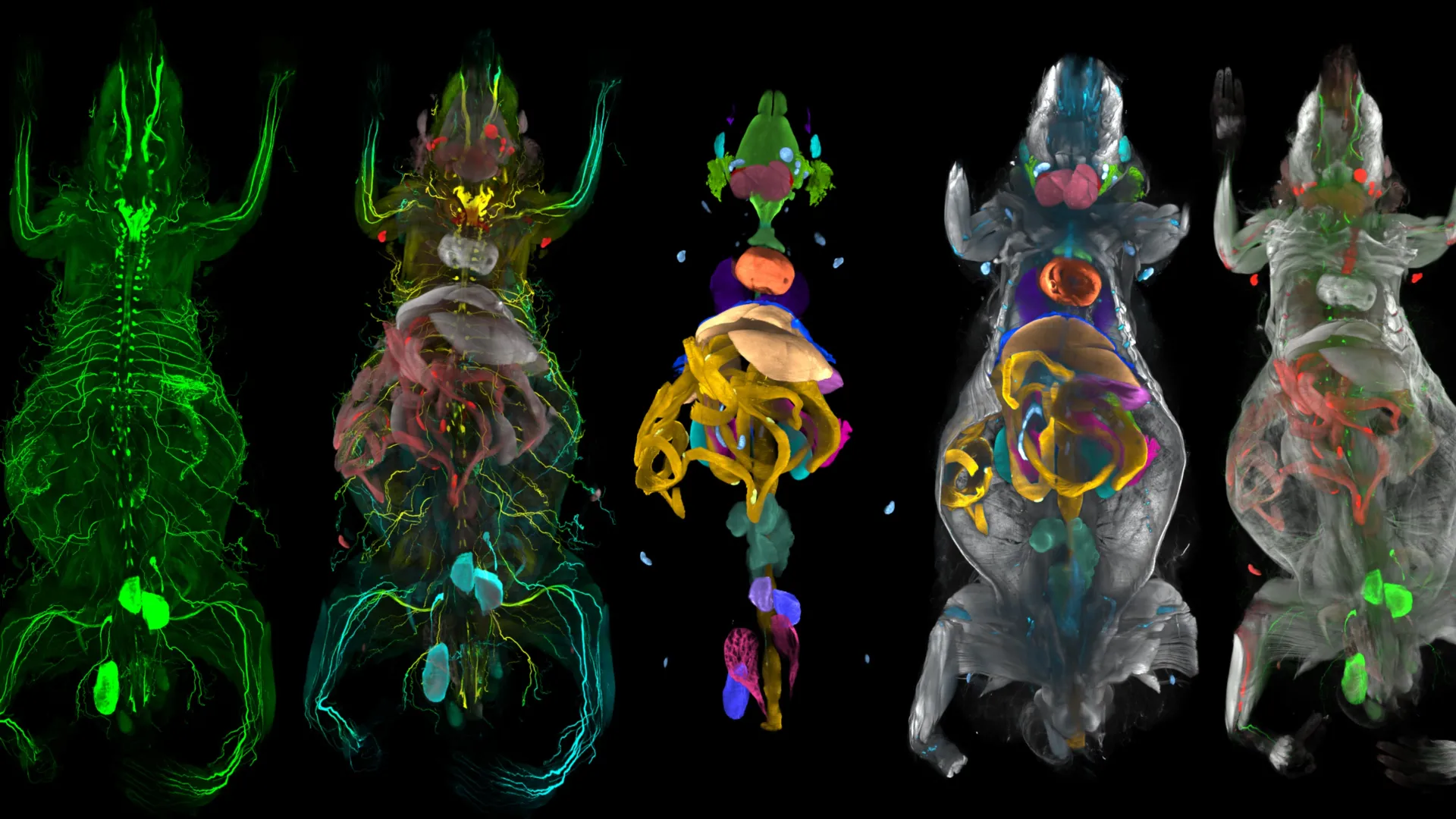
In a landmark development for biomedical research, a collaborative team from Helmholtz Munich, Ludwig Maximilians University Munich (LMU), and various international partners has unveiled a revolutionary artificial intelligence (AI) platform capable of mapping disease-related physiological changes across an entire mouse body at cellular-level resolution. The platform, dubbed "MouseMapper," represents a paradigm shift in how scientists visualize systemic disease, moving away from isolated organ analysis toward a holistic, "digital twin" perspective.
The study, recently published in the journal Nature, has already yielded its first significant breakthrough: the discovery of widespread, previously unknown nerve damage and systemic inflammation linked to obesity. Crucially, researchers identified identical molecular signatures in human tissue, suggesting that the neurological toll of obesity—often overlooked in clinical settings—is a conserved biological phenomenon that may be driving a host of secondary health complications.
The Genesis of MouseMapper: Bridging the Gap in Systemic Research
For decades, the study of chronic diseases like obesity, diabetes, and cancer has been hampered by a methodological bottleneck. Historically, researchers have been forced to select specific organs or tissues for analysis, effectively looking through a "keyhole" at a disease that, in reality, affects the entire organism. Because systemic diseases reshape immune activity, disrupt nerve architecture, and alter metabolic landscapes simultaneously, the traditional reductionist approach often misses the "big picture" of how these processes interact.
The development of MouseMapper was spearheaded by Prof. Ali Ertürk, Director of the Institute for Biological Intelligence (iBIO) at Helmholtz Munich. His team sought to create a tool that could bridge the gap between microscopic cellular detail and whole-organism anatomy. By leveraging foundation-model-based deep learning—AI systems trained on massive, generalized datasets—the researchers created an algorithm capable of segmenting 31 distinct organ and tissue types while simultaneously tracking the complex networks of nerves and immune cells that permeate the body.
Chronology: From Transparency to Digital Mapping
The methodology behind MouseMapper is as much an feat of chemical engineering as it is of computer science. To enable the AI to "see" inside the mouse, the team followed a rigorous multi-step protocol:
- Preparation (The Clearing Process): Researchers began by tagging specific nerve and immune cells with fluorescent markers. They then employed advanced tissue-clearing methods—chemical processes that render the mouse’s tissues transparent while preserving the spatial orientation of the glowing cells. This allows for imaging deep within the body without the need for invasive physical dissection, which would otherwise destroy the fragile connections between organs.
- Acquisition (Light-Sheet Microscopy): Once the specimens were made transparent, the team utilized high-speed light-sheet microscopy to capture three-dimensional imagery of the entire organism. This process generated enormous datasets, comprising tens of millions of individual cellular structures.
- Analysis (AI-Driven Mapping): Once the raw data was collected, MouseMapper was deployed to process the images automatically. The AI identifies anatomical regions, maps out the peripheral nervous system, and quantifies clusters of immune cells. Unlike manual annotation, which is prone to human bias and exhaustion, MouseMapper can process these massive datasets with high speed and precision.
Unmasking Obesity: The Discovery of Facial Nerve Damage
To test the efficacy of the platform, the researchers placed mice on a high-fat diet designed to induce obesity and metabolic dysfunction, mirroring the conditions of human metabolic syndrome. The results were immediate and startling.
Using MouseMapper, the team observed a body-wide reorganization of immune cells and, most significantly, extensive damage to the peripheral nervous system. One of the most critical findings concerned the trigeminal nerve, a major cranial nerve responsible for relaying sensory information from the face and controlling muscles for chewing.
In the obese mice, the trigeminal nerve exhibited a dramatic reduction in branching and nerve endings. Behavioral testing confirmed the functional impact: the obese subjects showed a significantly diminished response to sensory stimulation compared to their lean counterparts. By zooming in on the trigeminal ganglion—the hub of these sensory neurons—the team identified specific molecular pathways triggered by chronic inflammation that led to this nerve remodeling.
When the researchers compared these findings to samples of human trigeminal tissue obtained from patients with obesity, they discovered the same molecular "fingerprints." This validated the mouse model’s clinical relevance, providing the first concrete evidence that obesity induces structural nerve damage that could contribute to sensory deficits or chronic pain conditions in humans.
Official Perspectives: The Vision for "Digital Twins"
The research team views MouseMapper not just as a one-off experimental tool, but as the foundation for a new era of "systems medicine."
"MouseMapper is built on a foundation model, which means it generalizes far beyond the data it was originally trained on," explains Ying Chen, co-first author of the study. This generalization capability is what allows the platform to be applied to a variety of diseases beyond obesity.
Dr. Doris Kaltenecker, senior scientist at the Institute for Diabetes and Cancer (IDC) at Helmholtz Munich and co-first author, emphasized the necessity of this holistic approach. "We revealed previously unknown structural and molecular changes in the trigeminal ganglion and its facial branches, and the same molecular signature was conserved in human tissue. This kind of finding simply cannot emerge from studying one organ at a time."
Prof. Ali Ertürk, who oversees the long-term strategic vision for the platform, sees the ultimate goal as the creation of "digital twins" of biological organisms. "Our long-term vision is to build truly realistic digital twins of mice in health and disease: cell-level atlases that we can query, perturb, and screen in silico computationally," says Ertürk. By simulating how diseases progress in a virtual environment, researchers could potentially pinpoint the earliest molecular changes before physical symptoms appear, allowing for preemptive therapeutic intervention.
Implications for Future Medical Research
The implications of the MouseMapper platform for the broader scientific community are vast. By making the whole-body datasets publicly available, the researchers have invited global collaboration, allowing other labs to explore how their specific areas of interest—be it oncology, immunology, or neurodegeneration—interact with the rest of the body.
1. Accelerating Drug Discovery
By observing the effects of a drug across the entire body rather than just the target tissue, scientists can identify potential off-target effects or systemic side effects much earlier in the drug development pipeline. This could significantly reduce the time and cost associated with failed clinical trials.
2. Redefining Complex Diseases
Diseases like type 2 diabetes and cancer are rarely confined to a single organ. MouseMapper provides a framework to understand these conditions as systemic failures of communication between tissues. This could lead to a shift in treatment strategies, where multi-organ therapies become the standard of care.
3. Ethical Advancements
While the project involves the study of mice, the long-term goal of building "digital twins" is fundamentally geared toward reducing the reliance on animal testing. As these computational models become more sophisticated, they will eventually serve as a surrogate for certain types of physical experimentation, adhering to the principles of the "3Rs" (Replacement, Reduction, and Refinement) in laboratory animal research.
Conclusion: A New Frontier in Systems Biology
The debut of MouseMapper marks a definitive departure from the limitations of legacy imaging techniques. By combining the transparency of biological tissue with the predictive power of artificial intelligence, the researchers at Helmholtz Munich and LMU have illuminated the "dark matter" of disease—the complex, body-wide connections that were previously invisible to the human eye.
As the team continues to refine their algorithms and expand the atlas of healthy and diseased states, the medical community stands on the cusp of a more integrated, proactive approach to healthcare. By understanding the body as an interconnected system rather than a collection of independent parts, we move closer to a future where disease is caught not at the point of failure, but at the very moment it begins.
The study was supported by a wide array of international and national institutions, including the European Research Council, the German Research Foundation (DFG), the Nomis Foundation, and Novo Nordisk A/S, among others, reflecting the high-priority status of systemic disease research in the global scientific community.