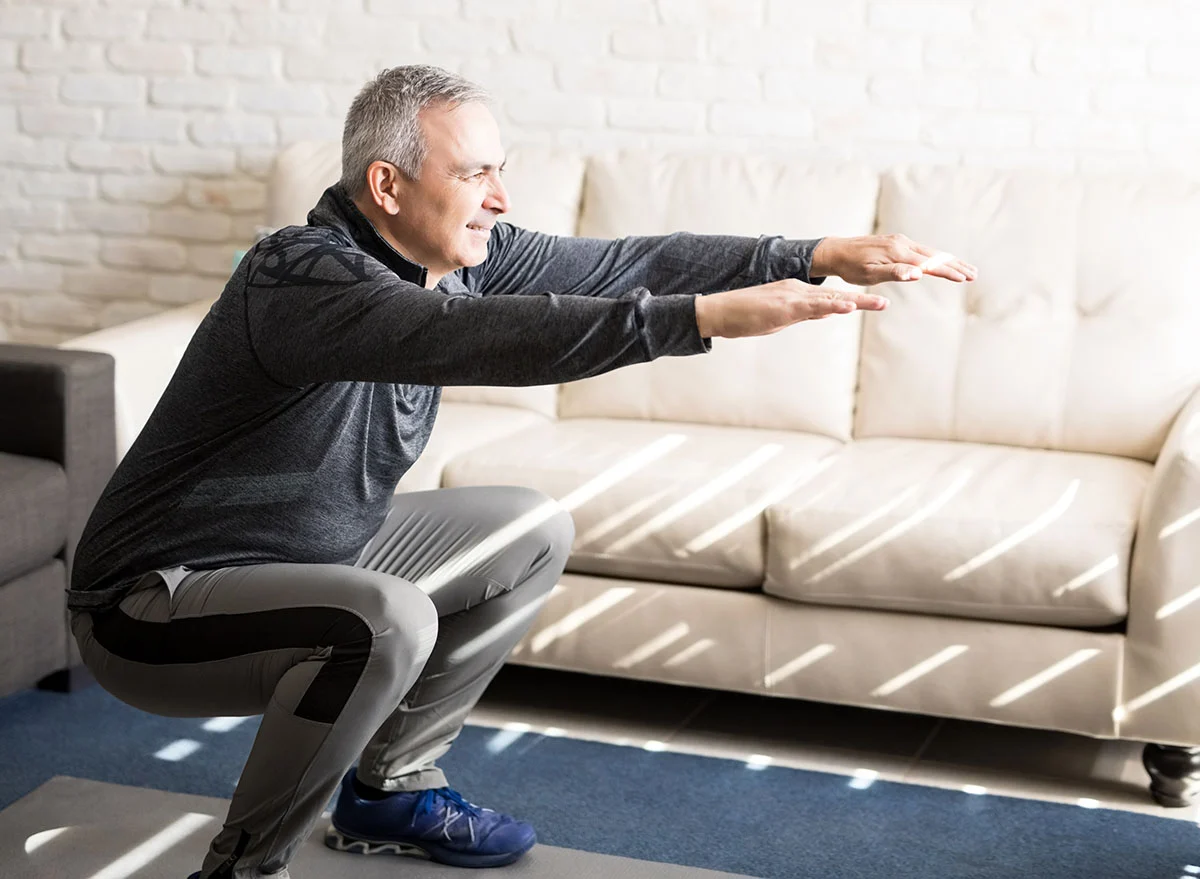
In the world of fitness and longevity, we are often obsessed with "one-rep maxes"—the singular, explosive feat of strength. However, for those navigating life after the age of 50, the true marker of vitality isn’t how much weight you can lift once, but how effectively your body handles the demands of daily life over time. Enter the "Squat Endurance Test," a simple, equipment-free diagnostic that reveals the state of your conditioning, joint integrity, and neuromuscular efficiency.
As we age, our focus must shift from purely maximal force production to muscular endurance—the ability to perform repeated contractions without the breakdown of form or the onset of premature fatigue. Whether you are navigating a long day of travel, hiking with family, or simply managing the repetitive transitions of daily household chores, your lower body serves as the foundation of your independence.
The Physiology of Endurance After 50
Strength is the capacity to produce force, but endurance is the capacity to maintain that force over time. After 50, muscle endurance becomes the silent guardian of our physical autonomy. According to research published in the Journal of Geriatric Physical Therapy, maintaining the functional capacity of the lower body is directly correlated with a reduced risk of falls and improved metabolic health.
When you squat, you are not just exercising your quadriceps. You are engaging a complex kinetic chain involving your glutes, hamstrings, calves, and the core musculature that stabilizes your spine. As the repetitions accumulate, the "honest" nature of the squat reveals your true conditioning. If your form breaks down at rep 10, it is a signal that your nervous system is struggling to coordinate movement under fatigue, or that your postural muscles are failing to keep pace with your prime movers.
Chronology of a Squat Test: Understanding the "Breakdown Point"
The squat test is not a race; it is a clinical observation of human movement. To understand where you stand, it is helpful to look at the "chronology" of a set.
Phase 1: The Initial 1–10 Repetitions
In the opening phase, your body relies on stored ATP and phosphocreatine. If you are well-conditioned, these reps should feel almost effortless. Your breathing is controlled, and your joints are well-lubricated. If you feel "stiff" or "creaky" during these first few reps, it may indicate a need for a more comprehensive dynamic warm-up.
Phase 2: The 11–25 Repetitions (The Endurance Threshold)
This is where the test begins to provide data. As your muscles begin to accumulate metabolic byproducts, you will feel the "burn." This is the moment to assess your breathing. Elite conditioning is characterized by a steady, rhythmic breath—inhaling on the descent, exhaling on the ascent. If you find yourself holding your breath (a Valsalva maneuver), you are likely compensating for a lack of core stability.
Phase 3: The 26+ Repetitions (The Integrity Check)
Beyond 25 repetitions, the test enters the realm of true muscular endurance. Here, the focus shifts to joint tracking. Are your knees caving inward? Is your torso tilting forward prematurely? Does your heel lift off the floor? If any of these "faults" appear, the test is over. Recording the number of clean, perfect repetitions is your benchmark.
Supporting Data: Why the Squat is the Gold Standard
The squat is a foundational movement pattern that mimics the most critical activity of daily living: the "sit-to-stand." Research into aging populations consistently shows that the ability to perform a sit-to-stand movement is a primary predictor of mortality and long-term disability.
The Biomechanical Benefits
- Joint Lubrication: The deep flexion of the knee and hip joints encourages the production of synovial fluid, which acts as a shock absorber for your cartilage.
- Proprioception: Repeated squats challenge your brain’s ability to coordinate your body in space. This improves balance and reduces the risk of stumbling.
- Core Activation: Because the squat requires an upright torso, your deep abdominal stabilizers (the transverse abdominis) are under constant tension. This builds a "natural corset" that protects the lower back.
Official Guidelines: How to Perform the Test Correctly
To ensure the data you collect is accurate, you must adhere to strict movement standards. If you cheat the depth, you are not testing your conditioning; you are only testing your ego.
The Proper Setup
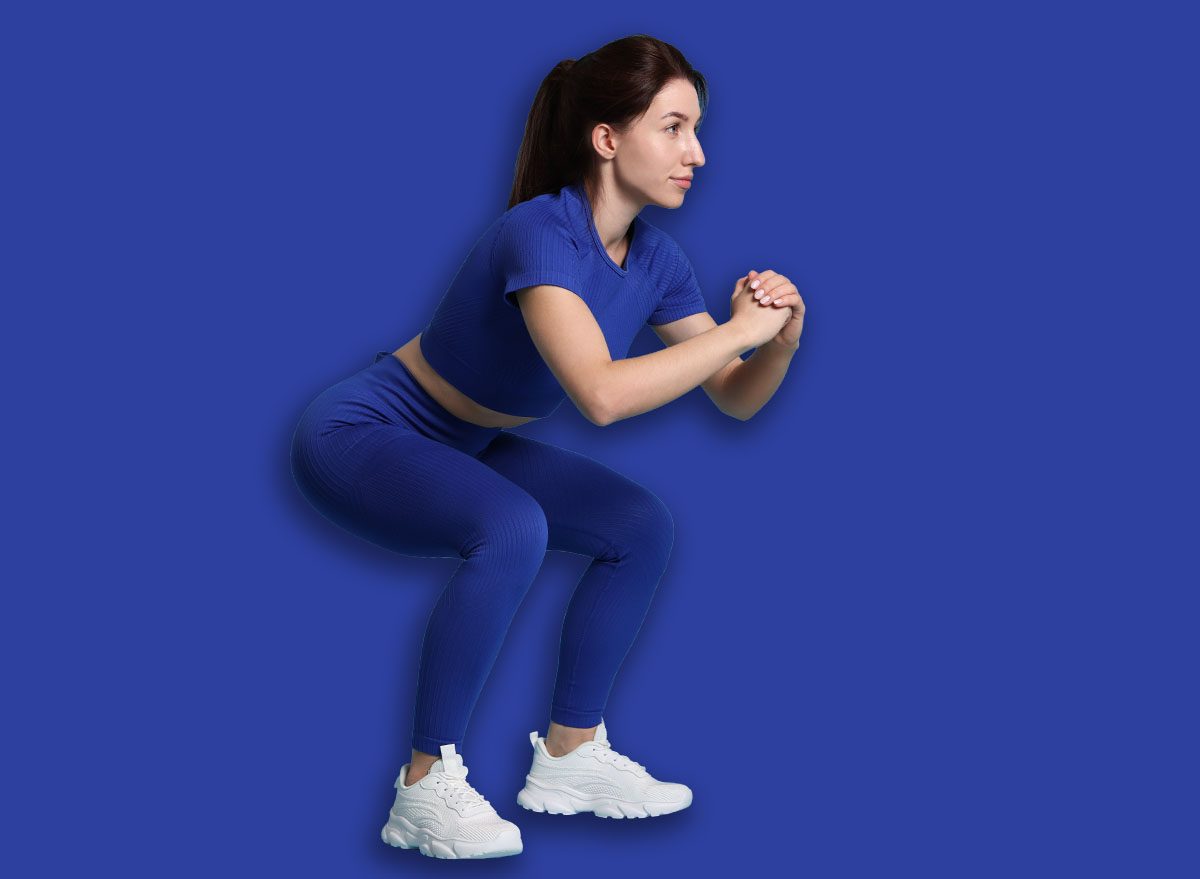
- Stance: Feet should be shoulder-width apart, with toes pointed slightly outward (about 15 degrees).
- The Descent: Initiate the movement by pushing your hips back as if you are reaching for a chair behind you. Keep your chest up and your gaze forward.
- The Depth: Your thighs must reach at least parallel to the ground. If you cannot hit this depth, place a chair or a box behind you to act as a target.
- The Ascent: Drive through your mid-foot and heels, maintaining a vertical spine. Avoid "knee valgus" (knees collapsing inward).
Interpreting Your Results
While these numbers are general guidelines, they provide a snapshot of where you fall on the fitness spectrum:
- 0–10 Reps: Indicates a need for foundational work. Focus on mobility and assisted squats.
- 11–25 Reps: Average conditioning. You have a solid base, but there is significant room to improve your metabolic threshold.
- 26–40 Reps: Above average. You possess high-level muscular endurance.
- 40+ Reps: Elite. You have developed the durability required to thrive well into your 70s and 80s.
Implications for Long-Term Health
The implications of this test go far beyond the gym. A high rep count in a squat test is a proxy for "functional reserve." Think of functional reserve as your physical "savings account." If you have a high balance of muscular endurance, a bout of illness, a long travel day, or an unexpected physical challenge won’t bankrupt your health. You have enough "reserves" to recover quickly and bounce back to baseline.
Furthermore, the act of training for this test builds bone density. Unlike non-weight-bearing exercises like cycling or swimming, the squat requires the skeleton to support the weight of the torso, which stimulates osteoblast activity (bone-building cells). This is a critical factor in preventing osteoporosis as you age.
Building Better Conditioning: A Strategy for After 50
If your score was lower than you’d like, don’t be discouraged. The beauty of the squat is that it is highly trainable. Use these strategies to improve your performance over the next 12 weeks:
1. Focus on Tempo
Don’t just rush through the reps. Spend 3 seconds on the descent and 1 second on the ascent. This "Time Under Tension" forces your muscles to adapt and builds significantly more endurance than "bouncing" through the movement.

2. Introduce Variations
If standard bodyweight squats become too easy, introduce a goblet squat (holding a light dumbbell or kettlebell at your chest). This shifts the center of gravity and forces your core to work even harder to maintain posture.
3. The "Volume Accumulation" Method
Rather than trying to hit a max every day, use an accumulation strategy. If your current max is 15 reps, perform 3 sets of 10 throughout the day. This keeps your joints healthy while increasing the total weekly volume, which is the primary driver of endurance adaptations.
4. Prioritize Mobility
You cannot have a great squat without great hip and ankle mobility. Incorporate daily calf stretches and hip flexor openers. Often, a "bad" squat isn’t a strength issue—it’s a flexibility bottleneck.
Conclusion: The Movement as Medicine
The squat is more than just a test; it is a declaration of your commitment to your future self. By mastering this movement and pushing your endurance capacity, you are not just "exercising"—you are engineering a body that is capable, resilient, and ready for whatever life throws your way.
The next time you find yourself standing up from a deep armchair or climbing a flight of stairs, remember: your ability to move with ease is the result of the work you put in today. Start where you are, stay consistent with your form, and watch as your functional independence grows stronger with every passing rep.