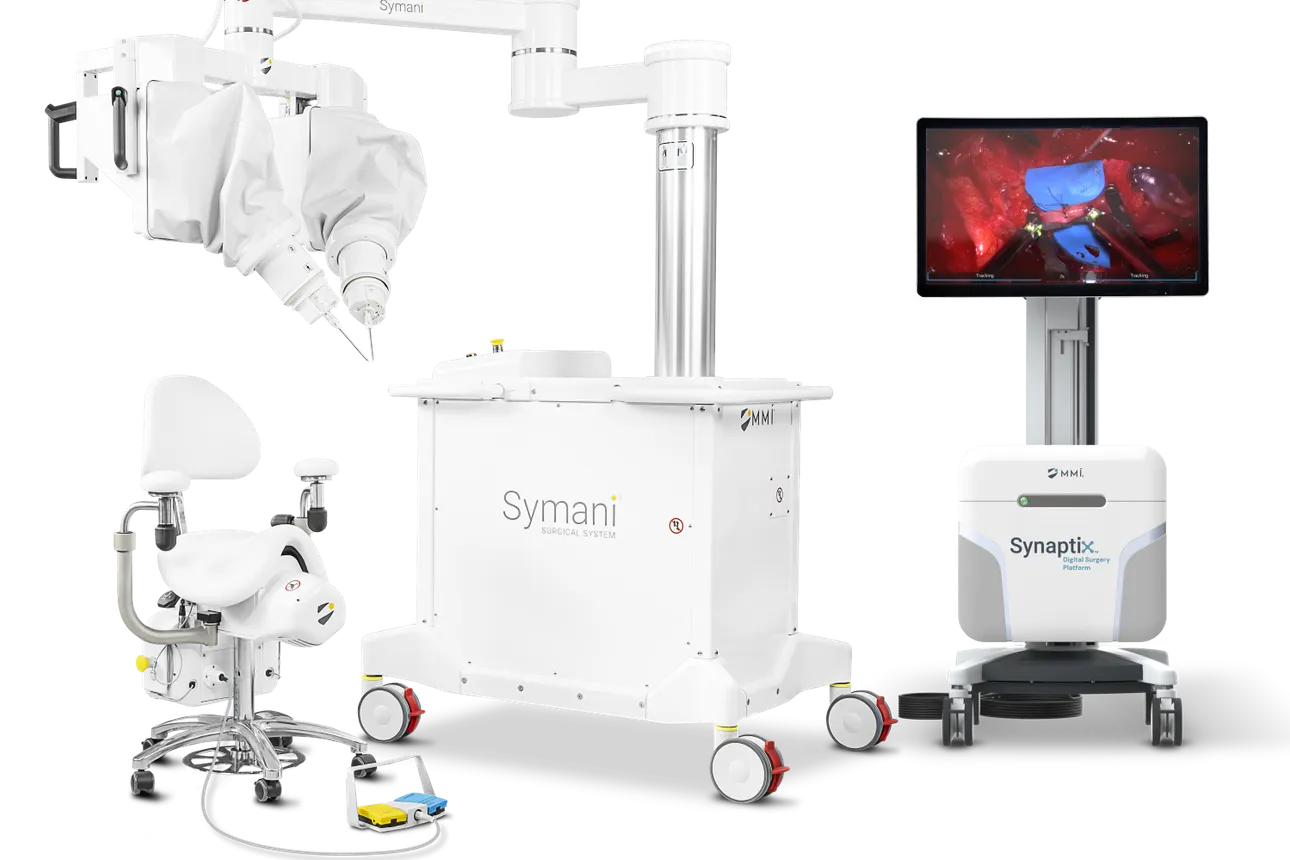
In the high-stakes theater of the operating room, the human hand is an instrument of remarkable dexterity, yet it possesses inherent physiological limits. Tremors, fatigue, and the physical constraints of maneuvering within sub-millimeter anatomical structures have long defined the boundary of what is possible in reconstructive surgery. However, a technological paradigm shift is currently underway. Medical Microinstruments (MMI), a company operating at the intersection of robotics and microscopic precision, is systematically dismantling these barriers with its Symani Surgical System.
As the seventh installment in our ongoing series profiling the innovators transforming robotic surgery, this report examines how MMI has transitioned from a promising startup to a market-defining force, securing the first-ever FDA authorization for a robot dedicated to microsurgery.
The Core Innovation: Democratizing Microsurgery
At its essence, the Symani system is designed to perform tasks that were previously considered nearly impossible for the human hand alone. By utilizing the world’s smallest robotic instruments, the platform allows surgeons to reconnect and repair delicate blood and lymphatic vessels—often less than one millimeter in diameter—with a level of stabilization and accuracy that far exceeds manual capabilities.
"When you think about surgery that’s small, the limitations of the human body are pretty real," says MMI CEO Mark Toland. "The robot comes in and what we call ‘democratizes’ vessel size."
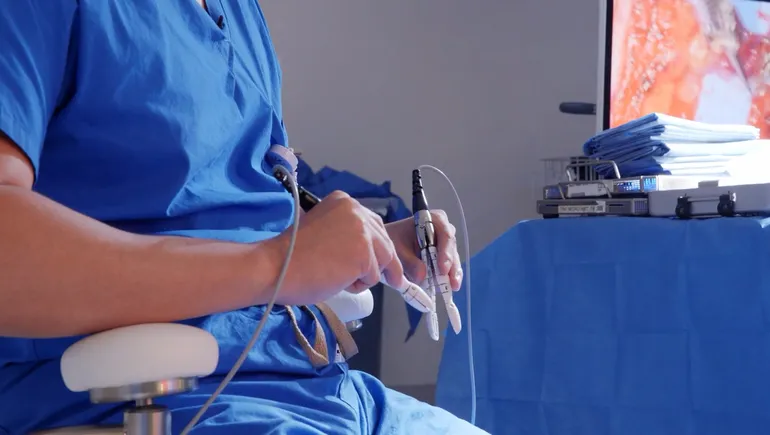
The technology functions by capturing a surgeon’s natural hand and wrist motions through specialized controllers, filtering out physiological tremors, and translating these movements into micro-scaled actions. The system allows surgeons to select a motion-scaling factor ranging from 7x to 20x, effectively turning a macro-level hand movement into a microscopic, precise adjustment.
Chronology of a Medical Breakthrough
The journey of MMI from a 2015 startup in Pisa, Italy, to a U.S. clinical leader has been marked by a rapid succession of regulatory milestones and technological advancements.
- 2015: MMI is founded in Pisa, Italy, establishing a base for research, development, and high-precision manufacturing.
- 2021: Mark Toland, a veteran of the medtech industry, joins as CEO, steering the company toward a aggressive global growth strategy.
- 2022: The company expands its footprint by opening a state-of-the-art Innovation and Operations Center of Excellence in Pisa to scale production.
- 2024: MMI achieves a landmark regulatory victory, receiving a de novo classification from the U.S. Food and Drug Administration (FDA). This authorization made Symani the first surgical robot in the United States specifically cleared for reconstructive microsurgery.
- December 2025: The FDA grants additional clearance for the system, expanding its scope to include soft tissue dissection, further solidifying its versatility.
- 2026: MMI begins high-profile clinical research, including the REMIND study, testing the application of robotics in Alzheimer’s disease treatment.
Supporting Data and Clinical Scope
The clinical utility of the Symani system is as broad as it is deep. Unlike many existing robotic platforms that focus primarily on internal organ surgery within the abdomen or pelvis, MMI has positioned itself in the "white space" of surgical care.
The Breadth of Application
The Symani system is currently being deployed in a variety of complex scenarios:
- Reconstructive Surgery: Transplanting skin, bone, and tissue following traumatic injuries, including life-changing repairs for industrial accident victims and combat veterans.
- Lymphedema Treatment: Addressing the abnormal buildup of lymphatic fluid, a common and debilitating side effect of cancer treatment.
- Head and Neck: Performing complex reconstructions for cancer patients where precision is paramount to preserve function and aesthetics.
- Specialized Microsurgery: Supporting procedures such as cochlear implants, ophthalmic surgeries, intracranial brain procedures, liver transplantation, and the removal of spinal tumors.
The "PRECISE" Trial
To validate the long-term efficacy of this technology, MMI has launched the PRECISE post-market study. This trial aims to follow up to 455 patients, providing a robust data set to evaluate the robot’s performance in reconstructive and lymphatic repair. According to Dr. Bohdan Pomahac, a surgeon who leads the PRECISE study and serves as the director of the face transplant program at Yale Medicine, the motion-scaling feature is the primary differentiator that sets MMI apart from competitors like Intuitive Surgical’s da Vinci.
"What’s very unique about this technology is the scaling," says Dr. Pomahac. "The advantage of the system and technology is that it’s intended to be a high-precision tool."

Official Responses and Strategic Vision
The leadership at MMI is acutely aware of the competitive landscape. While giants like Intuitive Surgical dominate the general robotic surgery market, MMI has carved out a distinct niche.
"Laparoscopic stuff is in the belly," notes Toland. "We’re kind of doing all the other stuff, which is a great situation to be in, because you’re really not ever competing against the 800-pound gorilla. We’re trying to move the line of complexity for all physicians who want to do microsurgery, or supermicrosurgery."
With nearly 3,000 procedures completed to date, the company is moving beyond the proof-of-concept phase and into widespread clinical integration. Supported by $270 million in funding from prominent backers—including Fidelity Management and Research, Deerfield Management, and RA Capital—the company has the capital depth to continue its innovation trajectory.
Implications: Pushing the Boundaries of Medicine
The implications of MMI’s success reach far beyond the operating room. Perhaps most indicative of the company’s ambition is its foray into neuro-restoration.
In May 2026, the company announced the first use of the Symani system to treat a patient with Alzheimer’s disease as part of the REMIND study. This investigation explores whether the robot can be used to restore lymphatic drainage pathways in deep cervical lymph nodes, potentially helping the brain clear the neurotoxins hypothesized to drive Alzheimer’s progression.
This is a bold pivot. By applying microsurgical robotics to a neurodegenerative condition, MMI is attempting to shift the conversation from "performing surgery" to "treating disease at the cellular level."
Market Outlook
The market opportunity is substantial. Toland estimates that 40 million open surgical procedures are performed annually in the U.S.—roughly four times the volume of laparoscopic procedures. As MMI continues to train surgeons and gather clinical data through its six active clinical trials, the barrier to entry for other potential competitors remains high. While companies like Microsure (with its MUSA-3 system) are emerging, MMI currently holds the "first-mover" advantage in the U.S. market.
A New Era of Surgery
As the technology matures, the definition of a "standard" surgery is likely to evolve. The ability to perform delicate, sub-millimeter repairs consistently and safely, regardless of the surgeon’s natural physiological limitations, promises to reduce recovery times, improve patient outcomes, and enable procedures that were once considered technically impossible.
"This isn’t just surgery," Toland stated recently. "This is pushing the boundaries of medicine."
As MMI moves forward, the medical community will be watching closely. If the data from the PRECISE trial and the REMIND study continue to reflect the initial promise, the Symani system may well become the gold standard for a new generation of reconstructive and microsurgical care. By focusing on the smallest structures in the human body, MMI is proving that the greatest impact in medicine often comes from the smallest movements.