








For over two millennia, the medical community’s approach to oncology has been defined by a singular, violent imperative: to hunt down and destroy cancer cells. From the radical surgeries of the ancient Greeks to the modern-day arsenals of chemotherapy, radiotherapy, and high-tech immunotherapy, the objective has remained steadfastly binary—eradicate the malignancy or succumb to it.
However, a provocative, paradigm-shifting movement is gaining momentum among top-tier researchers. Led by Professor Indraneel Mittra at the Advanced Centre for Treatment, Research and Education in Cancer (ACTREC) in Mumbai, India, this school of thought posits that the traditional “scorched earth” policy may be fundamentally flawed. Instead of attempting to annihilate tumors, what if we could coax them into healing?
The Philosophical Shift: Cancer as a "Non-Healing Wound"
The conceptual foundation for this shift dates back to 1986, when Dr. Harold Dvorak famously hypothesized in the New England Journal of Medicine that cancer behaves less like a foreign invader and more like a "wound that never heals."
In biological terms, both chronic wounds and malignant tumors share a distinct molecular architecture: they are sites of constant inflammation, tissue remodeling, and cellular distress. Professor Mittra argues that by treating cancer cells as enemies to be bombed into submission, we often induce further trauma, which may, paradoxically, trigger the very inflammatory pathways that drive tumor progression.
His alternative proposal is deceptively simple: shift the biological environment to encourage the tumor to move toward a quiescent, "healed," and less aggressive state. In a recent pilot study published in BJC Reports, this philosophy moved from theory to clinical observation, utilizing a low-cost, non-toxic combination of two nutraceuticals: resveratrol and copper.
The Glioblastoma Challenge: A Clinical Case Study
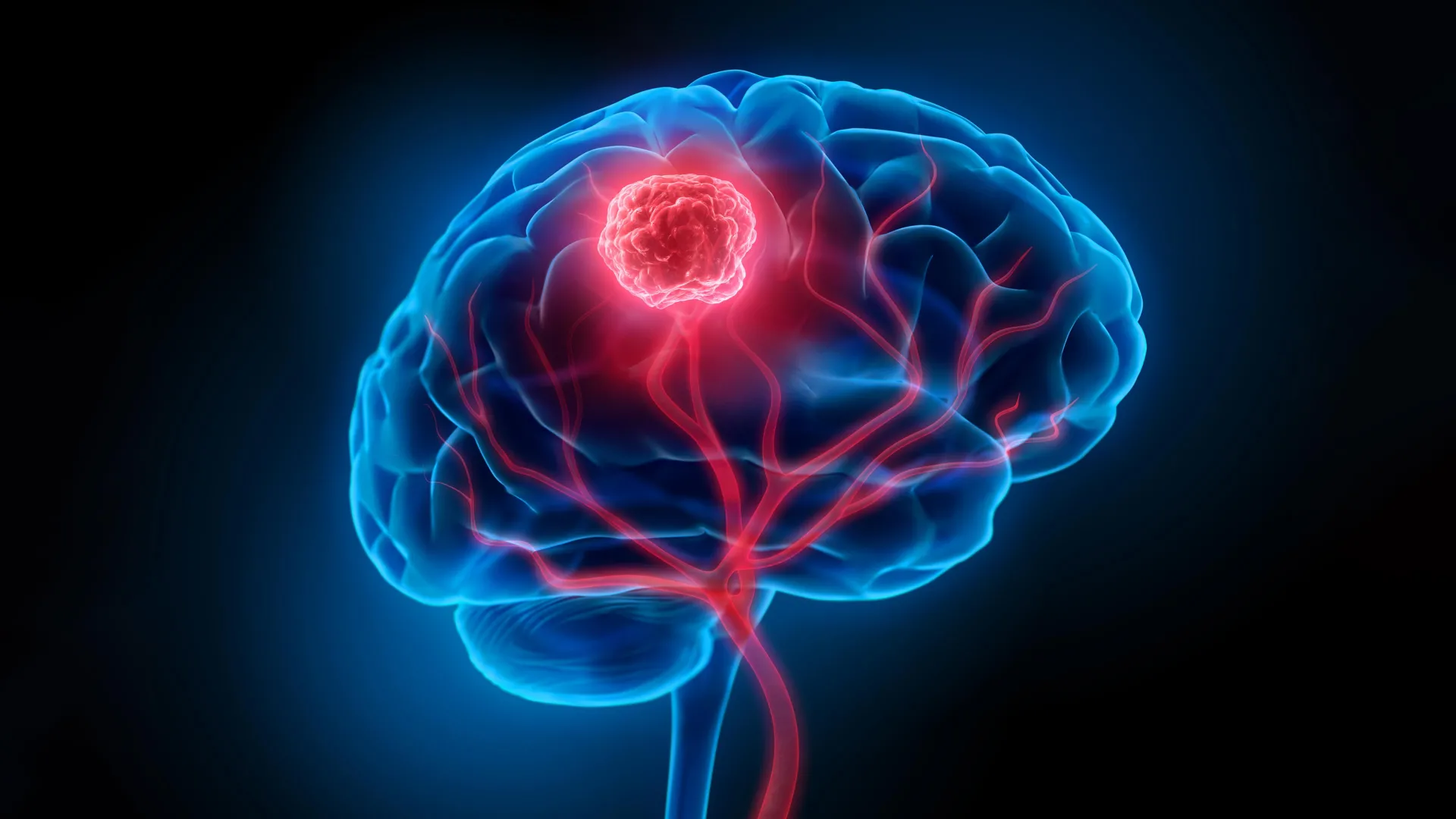
Glioblastoma multiforme (GBM) remains one of the most lethal diagnoses in medicine. It is a fast-growing, highly invasive brain tumor that defies nearly all current interventions. Even when patients undergo the gold-standard trifecta of neurosurgery, aggressive chemotherapy, and radiation, the median survival time remains a grim 15 months.
In the BJC Reports study, Professor Mittra’s team enrolled ten patients diagnosed with glioblastoma. For an average of 11.6 days prior to their scheduled craniotomy, these patients were administered a tablet containing small, specific doses of resveratrol and copper. A control group of ten patients with similarly aggressive tumors received no such intervention.
During the surgical procedures, the research team harvested tissue samples from both groups. These samples underwent rigorous multi-modal analysis, including advanced microscopy, immune-staining, immunofluorescence, and transcriptome analysis. The results were not merely statistically significant; they were biologically transformative.
Mechanisms of Action: The Role of Cell-Free Chromatin
The central mechanism behind this "healing" effect lies in the mitigation of Cell-Free Chromatin Particles (cfChPs).
When cancer cells die—whether through natural tumor turnover or as a result of traditional chemotherapy—they release fragments of their DNA, known as cfChPs, into the bloodstream and the surrounding tumor microenvironment. While one might assume the death of a cancer cell is inherently good, the release of these DNA fragments is catastrophic. According to Professor Mittra, these particles act as inflammatory agents, "infecting" surviving cancer cells with a pro-tumorigenic signal that increases their aggressive behavior.
"The cell-free chromatin particles released by dying cancer cells inflame the surviving cancer cells, making the disease more aggressive," Professor Mittra explains.
The resveratrol-copper combination works by generating targeted oxygen radicals that effectively deactivate or destroy these cfChPs. In the study, the researchers observed that while the control group’s tumors were teeming with cfChPs, the treated tumors were almost entirely devoid of them. By neutralizing these particles, the treatment essentially prevents the "contagion" of inflammation, forcing the tumor cells into a state of apoptosis—programmed, orderly cell death—rather than chaotic, inflammatory necrosis.
Implications for Modern Oncology
The findings from the ACTREC study carry profound implications for how we view the cost and accessibility of cancer care. One of the most striking outcomes was the downregulation of immune checkpoints.
In recent years, immune checkpoint inhibitors—drugs that essentially "remove the brakes" from the body’s immune system to help it recognize and destroy cancer—have revolutionized oncology. However, these drugs are prohibitively expensive and frequently cause severe, systemic immune-related side effects.
The resveratrol-copper regimen achieved a similar downregulation of these checkpoints without the exorbitant price tag or the toxicity profile. This opens the door to a potential "democratization" of cancer therapy. If a simple, inexpensive, and non-toxic nutraceutical can modulate the immune landscape of a tumor as effectively as a pharmaceutical drug, the economic and human burden of cancer care could be fundamentally altered.
Addressing the Skepticism: Limitations and Next Steps
As with any paradigm-shifting research, the scientific community remains cautious. The study’s sample size—ten patients in the treatment group and ten in the control—is undeniably small. While the results are "striking," as Professor Mittra himself admits, they represent a preliminary signal rather than a definitive cure.
However, the consistency of the findings across the various analytical platforms (transcriptomics, microscopy, and immune-staining) lends weight to the hypothesis. The researchers emphasize that the treated patients experienced zero side effects, a stark contrast to the grueling regimen of standard chemotherapy.
The next phase for the ACTREC team involves larger, multi-center trials to determine if this "healing" approach can extend overall survival times and translate into long-term remission. The goal is to determine whether, with sustained use, this therapy can indeed turn malignant, high-grade tumors into benign, manageable entities.
Official Responses and Future Outlook
The study was supported by the Department of Atomic Energy, Government of India, through its grant CTCTMC to the Tata Memorial Centre. This institutional backing highlights the growing interest from national health bodies in exploring cost-effective, non-traditional avenues for chronic disease management.
Professor Mittra, who serves as the Dr. Ernest Borges Chair in Translational Research and Professor Emeritus in the Department of Surgical Oncology, remains undeterred by the skepticism that often meets radical departures from established norms.
"We have been trying to kill cancer cells for 2,500 years, since the time of the ancient Greeks, without success," he states. "Maybe it is time to look at cancer treatment differently and work towards healing tumors, rather than annihilating them."
Conclusion: A New Horizon?
The history of medicine is a graveyard of "unthinkable" ideas that eventually became the standard of care. From the acceptance of germ theory to the adoption of minimally invasive surgery, progress often requires a fundamental rejection of the status quo.
While it is too early to declare an end to chemotherapy or radiation, the work coming out of Mumbai offers a compelling alternative narrative. By focusing on the tumor microenvironment and the systemic inflammatory triggers that sustain malignancy, researchers like Professor Mittra are challenging us to reconsider the definition of "treatment."
If we are, as Professor Mittra suggests, on the brink of a transformation, the future of oncology may look remarkably different: less like a battlefield, and more like a garden, where the objective is to nurture health and suppress the weeds of disease through gentle, targeted intervention. For the millions of patients currently navigating the harsh realities of cancer treatment, that shift in perspective is not just academic—it is a beacon of hope.