
For many, the transition into their late 40s and beyond marks a frustrating paradox: the desire for physical health remains high, yet the bandwidth to pursue it evaporates. Between the demands of a mid-career workload, family responsibilities, and the general fatigue that accompanies aging, the traditional "hour at the gym" often becomes a logistical impossibility.
However, a new paradigm in exercise science suggests that the "all or nothing" approach—believing that if you can’t commit to a grueling hour-long session, you might as well do nothing—is the single greatest obstacle to longevity and fitness. Drawing on four decades of experience in personal training and twenty years of leadership at TRAINFITNESS, the UK’s premier fitness education provider, experts are now advocating for a high-efficiency alternative: the 12-minute standing routine.
The Myth of the "Gym-Centric" Lifestyle
The failure of most adult fitness programs is not a lack of willpower; it is a failure of structural design. When an individual over 45 attempts to replicate the workout intensity of a 25-year-old, they are often met with debilitating muscle soreness, joint inflammation, and a recovery timeline that stretches into days.
"The gym session itself is rarely the problem," explains a veteran trainer. "The problem is the friction surrounding it." When factoring in the commute, changing time, waiting for equipment, and the post-workout recovery period, a "one-hour" session often ballooning into a two-to-three-hour ordeal. For a busy professional, this is unsustainable.
Furthermore, traditional gym culture often prioritizes "punishing" the body. After 45, the goal must shift from pure intensity to sustainable consistency. When a workout leaves a person unable to perform daily tasks comfortably, the body sends a biological signal to stop. This leads to the cycle of "start-stop" fitness, where enthusiasm is quickly extinguished by physical exhaustion.
The Science of 12-Minute Efficiency
Consistency is the ultimate metric of success in fitness. By shifting the focus to a 12-minute window, the barrier to entry is dismantled. A 12-minute routine performed four to five times per week results in nearly an hour of focused, high-quality movement every seven days. Over a year, this accumulates into a significant volume of activity that far exceeds the erratic attendance records of many gym members.
The "Standing Format" is the strategic core of this methodology. By utilizing standing exercises, the body engages its deep stabilizer muscles and core simultaneously, without the need for floor-based movements like sit-ups, which can strain the neck and lower back. This approach elevates the heart rate, builds foundational strength, and improves balance—all while respecting the integrity of the joints.
The Six Pillars of the 12-Minute Routine
To maximize the efficacy of this short window, the exercises are ordered to prioritize large muscle groups while the body is fresh, moving into functional movements that mimic daily life.

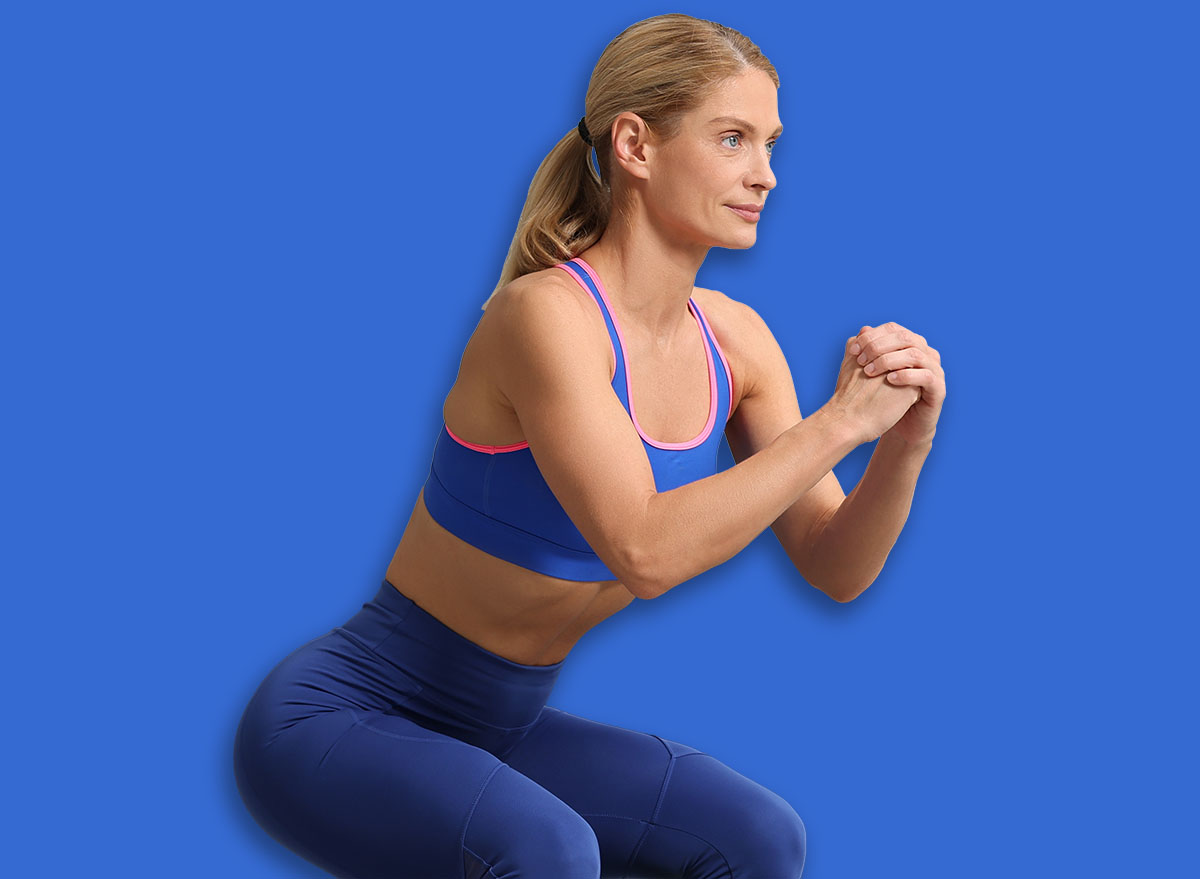
1. Bodyweight Squats: The Foundation
Squatting is the cornerstone of functional longevity. It engages the glutes and quadriceps—the two largest muscle groups in the body, which are prone to rapid atrophy after age 45. Proper squatting also synchronizes the ankles, hips, and trunk, providing essential protection for the lower back during daily tasks.
- Pro-Tip: If balance is an issue, perform these by tapping your glutes to the edge of a sturdy chair or sofa.
2. Counter Press-Ups: Restoring Pushing Power
Upper-body pushing strength is often the first to vanish as we age, largely because we stop reaching and carrying heavy items overhead. Counter press-ups (done against a kitchen worktop or sturdy table) build chest, shoulder, and tricep strength while forcing the spine to remain rigid.
- Pro-Tip: The more upright your posture, the easier the load. Start against a wall if necessary.
3. Reverse Lunges: Addressing Asymmetry
Most people have hidden strength imbalances between their left and right sides. The reverse lunge is superior to the forward lunge because it is easier on the knees and places a greater emphasis on stability and glute activation.
- Pro-Tip: Use a worktop for balance until you feel confident in your coordination.
4. Doorway Rows: The Posture Antidote
Desk-bound workers often suffer from rounded shoulders and weak upper backs. The doorway row forces the shoulder blades to retract, strengthening the muscles responsible for upright posture.

- Pro-Tip: A sturdy banister or the edge of a doorframe provides the perfect anchor point.
5. High-Knee Marches with Arm Punches
This movement serves as the cardiovascular engine of the routine. By incorporating arm punches, you force the trunk to stabilize against rotation, creating a "cardio-core" hybrid that is gentle on the joints but effective for heart health.
- Pro-Tip: Keep the movements controlled; speed is less important than the range of motion.
6. Lateral Lunges: The Missing Link
Most human movement occurs in a forward-backward plane. Lateral (side-to-side) lunges train the hips and inner thighs, which are critical for preventing the hip and knee pain often associated with aging.
- Pro-Tip: Start with a shallow step and gradually increase your range of motion over several weeks.
Chronology of Adaptation: What to Expect
The human body is remarkably adaptive, provided the stimulus is consistent.
- Weeks 1–2: The primary change is neural. The brain begins to "learn" the movements, making the routine feel less cumbersome. You will notice that mundane tasks, like climbing stairs or carrying groceries, feel noticeably lighter.
- Weeks 4–6: Structural changes begin to manifest. The waist may trim slightly, and posture will likely improve as the upper back muscles strengthen. Many practitioners report a 4–8 beat-per-minute reduction in their resting heart rate—a clear indicator of improved cardiovascular efficiency.
- Beyond 6 Weeks: Strength gains typically plateau at a 30–50% increase from your starting baseline. At this stage, the habit is formed, and the psychological benefits—improved mood and increased energy levels—become the primary motivators.
Strategic Implementation: How to Structure Your Time
To get the most out of your 12 minutes, follow this protocol:

- Work/Rest Ratio: Perform each of the six exercises for 40 seconds, followed by 20 seconds of rest.
- The Circuit: Complete all six exercises (6 minutes), take a 30-second breather, and repeat the circuit once more.
- Frequency: Aim for 4–5 days per week. Three days is the absolute minimum to stimulate change, but 7 days is perfectly acceptable if you feel energized.
Safety and Medical Considerations
While this routine is designed to be low-impact, it is not "no-impact." Before beginning any new exercise regimen, individuals with unmanaged blood pressure, history of heart conditions, or recent orthopedic surgery should consult a medical professional.
Red Flags:
If you experience sharp, localized pain (distinct from general muscle fatigue), chest tightness, dizziness, or numbness, stop immediately. Exercise should be challenging, but it should never be dangerous. If you have chronic back or knee pain, seek advice from a physiotherapist to ensure your form is optimal.
Implications for Long-Term Health
The movement toward "micro-workouts" represents a shift in how society views aging. We are moving away from the era of "no pain, no gain" and into an era of "consistent movement for longevity." By removing the barriers of travel, equipment, and high-intensity fatigue, the 12-minute standing routine offers a sustainable pathway to maintaining independence and vitality.
Ultimately, the goal is not to become a competitive athlete, but to ensure that your body remains a capable vessel for the life you want to live. In the battle against sedentary decay, 12 minutes isn’t just enough—it is the exact amount needed to win.