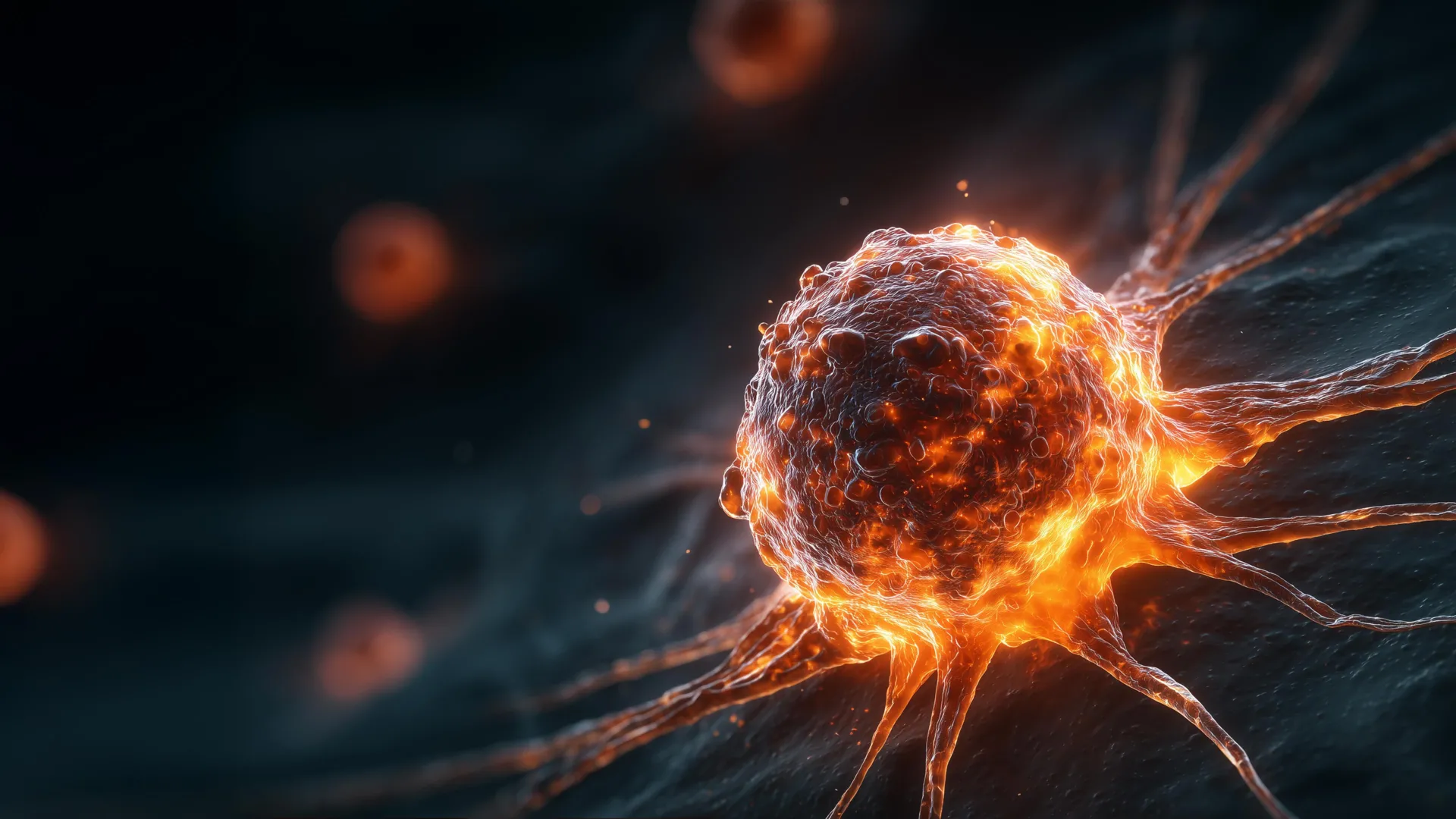
In the ongoing war against cancer, the medical community has long focused on the primary objective: stopping the unchecked proliferation of tumor cells. However, a groundbreaking discovery by researchers at the MRC Laboratory of Medical Sciences (LMS) and Imperial College London has illuminated a dangerous, often overlooked secondary enemy: senescent cells. Often referred to as "zombie cells," these dormant entities occupy a precarious state of existence, refusing to die despite no longer dividing. New research published in Nature Cell Biology suggests that by exploiting a specific biological shield these cells rely on for survival, scientists may have uncovered a powerful new avenue for cancer treatment and therapies targeting age-related diseases.
The Nature of the "Zombie": Why Senescent Cells Are a Double-Edged Sword
For decades, the clinical understanding of senescence was largely positive. In the context of cancer therapy, when chemotherapy agents force cells into a state of senescence, it is viewed as a victory—the cells are effectively "retired," their ability to replicate and propagate the tumor halted. However, this view has shifted as longitudinal research revealed the dark side of these quiescent cells.
Senescent cells are not inert; they are metabolically active and highly disruptive. They secrete a complex cocktail of inflammatory molecules, growth factors, and proteases known as the Senescence-Associated Secretory Phenotype (SASP). This "secretome" can degrade the surrounding tissue architecture, fuel the migration and metastasis of nearby cancer cells, and recruit immune cells that inadvertently promote tumor aggressiveness.
Furthermore, these cells are not exclusive to cancer. As the human body ages, senescent cells accumulate in various tissues, contributing to chronic inflammation and conditions such as fibrosis. Because they persist where they should ideally be cleared by the immune system, they act as biological "zombie" anchors that impair tissue function and recovery.
Chronology of a Discovery: Screening 10,000 Candidates
The journey to this discovery began with a massive, high-throughput screening effort. Recognizing that traditional drug discovery often ignores the metabolic specificities of senescent cells, the team at the MRC LMS and Imperial’s Department of Medicinal Chemistry set out to identify "senolytic" therapies—drugs specifically designed to induce the death of senescent cells without harming healthy, functional cells.
The researchers tested 10,000 distinct chemical compounds, focusing their efforts on a class of molecules known as "covalent compounds." Unlike standard inhibitors that may bind transiently to their targets, covalent compounds form permanent bonds with specific proteins. This provides a level of precision and potency that allows scientists to modulate proteins previously deemed "undruggable."
Through a rigorous vetting process, the team narrowed the list to four candidates that displayed the highest selectivity for senescent cells. Upon further investigation, they identified a common denominator: three of these four compounds were targeting a single, crucial protein known as GPX4.
Supporting Data: The GPX4 Achilles’ Heel and Ferroptosis
To understand why GPX4 is the "Achilles’ heel" of the zombie cell, one must understand the biological process of ferroptosis. Ferroptosis is a distinct, iron-dependent form of programmed cell death characterized by the accumulation of lipid peroxides—a type of oxidative damage that leads to membrane rupture and cell collapse.
In a healthy cell, GPX4 acts as a guardian, neutralizing these lipid peroxides and preventing the cell from succumbing to ferroptosis. The research team discovered that senescent cells exist in a state of high oxidative stress, making them inherently prone to this form of death. To survive, these cells overproduce GPX4, essentially "masking" their internal damage to keep the cell alive.
Mariantonietta D’Ambrosio, a postdoctoral researcher at the LMS and the lead author of the study, provides an apt analogy: "It is like taking painkillers while continuing to run on a badly injured ankle. The underlying damage remains, but the symptoms are temporarily suppressed." By deploying covalent inhibitors to block GPX4, the researchers effectively stripped the senescent cells of their only defense. Without the shield provided by GPX4, the senescent cells were unable to cope with their internal stress and succumbed to rapid, programmed death.
Official Perspectives: The Experts Speak
The study’s success in laboratory settings has generated significant excitement, but the research team remains focused on the methodical path toward clinical application.
Mariantonietta D’Ambrosio, reflecting on the shift in how the scientific community views senescence, noted: "Senescence was considered for a long time to be positive, because senescent cells don’t proliferate. Normal chemotherapy induces senescence, blocking the proliferation of cancer cells. But with time, you also see the negative side. For this reason, we tried to find drugs that were able to kill the senescent cells."
Professor Jesus Gil, senior author of the study and Head of the Senescence group at the LMS, emphasized that the next phase of the research is critical. "In mouse models, we saw that these drugs reduced tumor size and improved survival," said Professor Gil. "Now, we need to see the effect on the immune system. Is the improvement also awakening the ‘good side’ of the immune system—such as T cells and natural killer cells—that helps to kill the tumor?"
Professor Gil’s team is now working to bridge the gap between mouse models and human patients. "Once we know more, the next step is to understand which cancer cell types or specific patients might better respond to this treatment. For example, if a patient undergoing chemotherapy overexpressed GPX4, then you could use this approach in combination with existing drugs to improve efficacy."
Implications: A New Era of Combination Therapy
The implications of this study are profound, suggesting a future where cancer treatment is not just about killing dividing cells, but about clearing the "toxic debris" that allows tumors to thrive and recur.
1. Augmenting Standard Chemotherapy
Traditional chemotherapy often acts as a double-edged sword. While it succeeds in stopping the tumor’s growth, it inadvertently creates a field of senescent cells that can facilitate a later recurrence. By administering senolytic agents alongside chemotherapy, clinicians could theoretically "mop up" the zombie cells as they are created, preventing the inflammatory environment that fuels resistance and relapse.
2. Beyond Cancer: Regenerative Medicine
While the current study focuses on oncology, the potential for senolytic therapies extends to age-related pathologies. If GPX4 inhibition can safely eliminate senescent cells in humans, it could provide a novel strategy for treating age-related fibrosis, neurodegeneration, and even the natural decline of tissue function that characterizes aging.
3. Precision Medicine
The research opens the door to a more nuanced form of precision medicine. By identifying which patients exhibit high levels of GPX4-dependent senescent cells, doctors could tailor treatment plans to include these new compounds, moving away from "one-size-fits-all" chemotherapy and toward a more integrated, biological approach to cancer management.
4. Global Collaboration
The success of this study was made possible by a wide network of international cooperation. Alongside the MRC LMS and Imperial College London, the study benefited from the expertise of researchers at the Institute of Oncology Research (IOR) in Bellinzona, Switzerland, and the M3 Research Centre at the University of Tübingen in Germany. This cross-border collaboration highlights the complexity of the challenge and the necessity of pooling resources to tackle the biological nuances of cancer.
Conclusion: The Road Ahead
While the laboratory results in mouse models are highly promising, the path to the clinic requires careful, systematic investigation into the safety and systemic effects of GPX4 inhibition. The human body requires GPX4 in healthy tissues as well, meaning that any therapeutic application must be highly targeted to ensure that only the "zombie" cells are affected, sparing the vital organs.
The research marks a significant departure from the traditional paradigm of oncology. By identifying the fragility of senescent cells, the team at the LMS has provided a roadmap for a new generation of drugs. As scientists continue to unravel the complex relationship between senescence, the immune system, and tumor growth, the prospect of turning the tide against cancer looks more promising than ever. The "zombie" cells, long thought to be a static byproduct of treatment, may soon become the target that determines the success or failure of the next generation of cancer therapies.