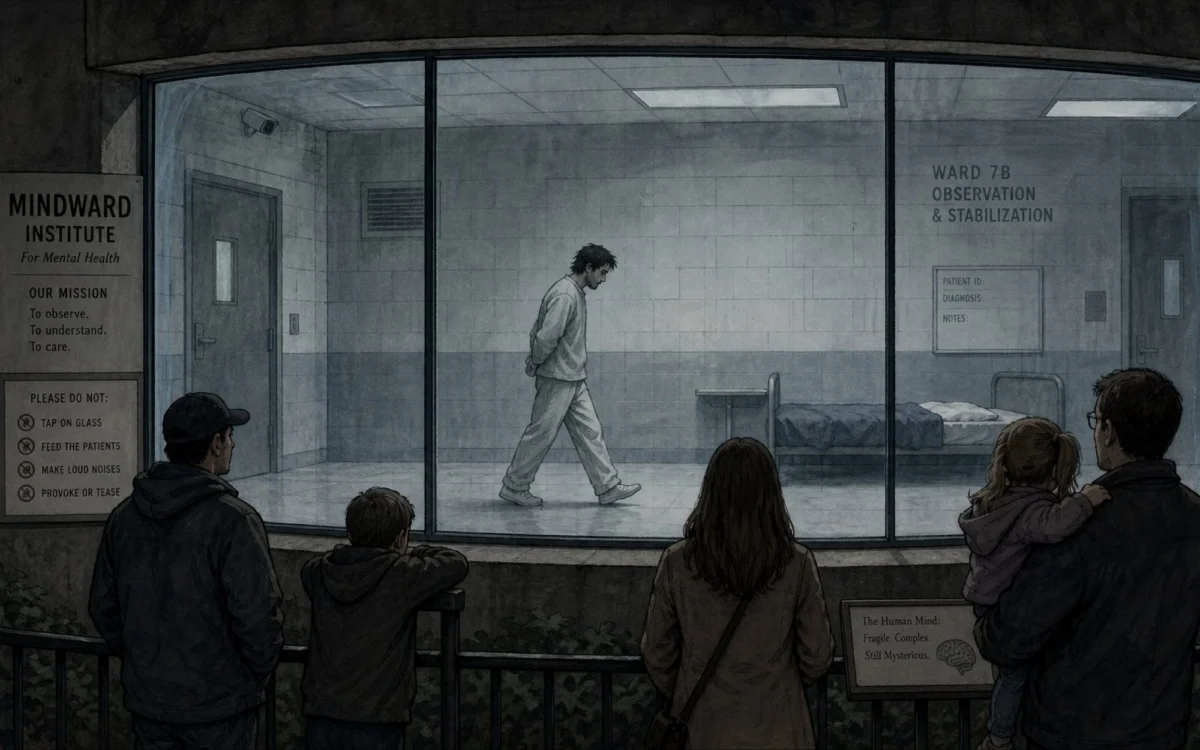
The following report examines a harrowing account of psychiatric institutionalization originally published via Mad in America. It details the experiences of a young individual who, seeking refuge from a mental health crisis, instead encountered a system defined by polypharmacy, dehumanization, and a profound lack of informed consent. This narrative serves as a critical entry point into a broader journalistic investigation regarding the efficacy and ethics of acute psychiatric care in the modern era.
Main Facts: The "Prestigious" Failure of Acute Care
In the mid-1990s, a 25-year-old individual—referred to hereafter as the protagonist—voluntarily entered the emergency department of a local hospital during a period of acute psychological distress. At the time, the facility was regarded as one of the most prestigious psychiatric units in the country. However, the ensuing three-month stay in the acute ward resulted in what medical historians call "iatrogenic harm"—injury caused by the medical treatment itself.
The core facts of the case highlight several systemic failures:
- Clinical Gaslighting: Upon admission, the protagonist experienced an immediate "wall of distrust" from psychiatrists and psychologists who refused to accept the patient’s self-reported history or symptoms at face value.
- Excessive Polypharmacy: Despite never having experienced a psychotic episode, the patient was prescribed a high-potency "cocktail" of psychotropics, including Clozapine (an antipsychotic), Lorazepam (a potent sedative), and Lithium (a mood stabilizer).
- Lack of Informed Consent: Severe physical side effects, including the loss of gross motor skills and strength, were never disclosed to the patient, leading to significant trauma when these symptoms manifested.
- Dehumanizing Ward Culture: The environment was characterized by staff callousness, including the mocking of fragile patients, a lack of supervision regarding sexual harassment between patients, and the physical "torture" of forced inactivity leading to compulsive pacing.
- Erroneous Prognosis: The lead psychiatrist predicted a 90% chance of re-hospitalization within two years. Thirty years later, the protagonist has never been readmitted, calling into question the validity of the original clinical assessment.
Chronology: From Crisis to Long-Term Recovery
The Catalyst (Age 25)
The protagonist’s descent into crisis was fueled by a "tumultuous breakup" and a deep-seated fear of hereditary mental illness. Having watched an older sister suffer a debilitating breakdown at the same age—a crisis from which she never fully recovered due to heavy medication—the protagonist viewed their own burgeoning anxiety, insomnia, and cognitive "fog" as a "psychological cancer." Fearing they would follow their sister’s path toward a loss of autonomy, they sought help at a hospital to prevent self-harm.
The Institutionalization (Months 1–3)
Upon entering the acute ward, the expectation of a therapeutic environment was quickly replaced by a "waking nightmare." The protagonist describes a power divide where patients were treated as "crazy" and "lesser than" by the staff.
The environment was chaotic. On the first day, the protagonist was subjected to unwanted sexual advances from a fellow patient, an issue that was dismissed with a "snicker" by the nursing staff. This lack of oversight created a hostile atmosphere where unstable individuals were left to navigate complex social tensions without professional mediation.
The Physical Toll of Medication
During the second month, the effects of the "standard psychiatric playbook"—prescribing multiple heavy medications simultaneously—began to manifest. The most traumatic moment occurred in the hospital courtyard. An avid basketball player, the protagonist attempted a free throw and found they could no longer throw the ball more than eight feet. The loss of motor control and strength, a side effect of Clozapine that had not been disclosed, led to a terrifying realization that their body was no longer their own.
The Discharge and the "90% Prediction"
At the end of the three-month stay, the protagonist was discharged with a grim prognosis. The head doctor confidently asserted a 90% likelihood of relapse and readmission. The protagonist left the hospital not with a clear diagnosis, but with a bag of "dirty drugs" and a shattered sense of self.
The Long Road Back (Post-Hospitalization)
It took more than six months for a community psychiatrist to wean the protagonist off the hospital-prescribed cocktail. This doctor described the previous treatment as "very bad medicine." The protagonist spent years unlearning the "institutionalized" behaviors, such as compulsive pacing, and overcoming the "shadow of fear" that they were a ticking time bomb—a belief instilled more by the hospital’s labeling than by their original condition.
Supporting Data: The Rise of Polypharmacy and Ward Trauma
The protagonist’s experience is not an isolated incident but reflects broader trends in psychiatric care that have come under fire from researchers and human rights advocates.
The Prevalence of Polypharmacy
The use of multiple psychotropic drugs—known as polypharmacy—has increased significantly over the last three decades. Studies published in journals like Psychiatric Services indicate that a substantial percentage of patients in acute wards are discharged on three or more psychotropic medications. Critics argue that this "shotgun approach" makes it impossible to determine which drug is working or which is causing specific side effects, such as the motor impairment experienced by the protagonist.

Iatrogenic Harm in Mental Health
Iatrogenesis is a well-documented phenomenon in medicine, but in psychiatry, it often takes a psychological form. The "self-fulfilling prophecy" mentioned in the narrative—where a patient adopts the "broken" identity forced upon them by a diagnosis—is a key concern for the "Recovery Model" of mental health. According to data from the World Health Organization (WHO), coercive environments and over-medication can actually prolong disability rather than shorten it.
The "Pacing" Phenomenon
The protagonist’s description of "robotic pacing" is clinically recognized as akathisia—a movement disorder characterized by a feeling of inner restlessness and a compelling need to be in constant motion. It is a well-known side effect of antipsychotic medications like Clozapine. When left unaddressed by staff, akathisia is often cited by patients as one of the most "torturous" aspects of psychiatric treatment, sometimes even contributing to suicidal ideation.
Official Responses and Clinical Context
While the specific hospital in the narrative remains unnamed, the psychiatric establishment generally defends the use of acute wards as necessary for "stabilization."
The Medical Defense
Organizations like the American Psychiatric Association (APA) maintain that in cases of extreme distress or potential self-harm, inpatient care provides a controlled environment to adjust medications and ensure safety. Proponents of the biological model of psychiatry argue that the "cocktail" approach is often a desperate but necessary attempt to find a chemical solution for patients who are not responding to single-drug treatments.
The Critical Counterpoint
In recent years, the United Nations and the WHO have called for a "revolution" in mental health care, moving away from the "biomedical model" that prioritizes drugs and institutionalization. In a 2017 report, the UN Special Rapporteur on the right to health stated that "mental health services should move away from ‘treatment’ as an objective and toward ‘recovery’ and ‘inclusion’." This aligns with the protagonist’s assertion that the most harmful part of their experience was the loss of dignity and the "dehumanizing" power dynamic of the ward.
Informed Consent Standards
Legally, doctors are required to inform patients of the potential side effects of medications. However, in acute psychiatric settings, this standard is often bypassed under the guise of the patient’s "lack of insight" or "cognitive impairment." The protagonist’s case highlights a significant ethical gap: the assumption that a patient in distress does not need—or cannot understand—the risks of the drugs being administered.
Implications: A Word of Caution for the Future
The protagonist’s story, written thirty years after the fact, serves as a powerful indictment of a system that often prioritizes "management" over "healing." The implications for current and future patients are profound.
The Fallibility of Prognosis
The failure of the "90% relapse" prediction suggests that clinical expertise in psychiatry can be deeply flawed when it relies on labeling rather than individual resilience. The protagonist’s ability to lead a successful, independent life for three decades without readmission proves that a "breakdown" is not necessarily a permanent "deterioration."
The Need for Human-Rights-Based Care
The narrative underscores the necessity for "trauma-informed care," where the environment is designed to soothe rather than restrict. The "pacing" and the "zoo-like" atmosphere described are symptoms of a system that has failed to provide meaningful therapeutic engagement.
The Importance of Patient Advocacy
The protagonist’s final "word of caution" encourages individuals to weigh the risks of institutionalization carefully. It suggests that for many, community-based support, peer-led crisis centers, or non-drug-centered therapies might offer a safer path to recovery.
In conclusion, the case of this 25-year-old—now a survivor of both a crisis and its "cure"—remains a vital testimony. It challenges the psychiatric community to reconcile its "prestigious" reputations with the lived realities of those who walk through its doors, demanding a shift toward a more transparent, respectful, and evidence-based approach to human suffering.