Low Lunge, or Anjaneyasana, is a foundational pillar of modern yoga practice. Whether you are moving through a vigorous Vinyasa flow or holding a restorative Yin posture, this shape serves as a primary tool for opening the hip flexors and stabilizing the lower body. Yet, despite its ubiquity, many practitioners unintentionally turn this therapeutic pose into a source of chronic discomfort.
The primary culprit? Spinal compression. For many, the desire to achieve a "deep" stretch in the hips overrides the structural integrity of the lower back, leading to a collapse that can trigger pain or injury. By understanding the biomechanics of the pelvis and adopting a more mindful approach to engagement, practitioners can unlock the benefits of Anjaneyasana while preserving the health of their lumbar spine.
The Anatomy of the Misstep: Why We Compromise Our Backs
To understand why Low Lunge often leads to lower back pain, one must first look at the relationship between the hip flexors and the lumbar spine. The hip flexors, particularly the psoas, attach to the lumbar vertebrae. When these muscles are tight—a common side effect of prolonged sitting—they pull the lumbar spine into a state of chronic extension.
The "Collapse" Phenomenon
In a yoga class, the instruction to "sink your hips deeper" is frequently misunderstood. When students prioritize depth over stability, they often shift the hips forward and down with such momentum that the pelvis tilts anteriorly. This movement causes the lumbar vertebrae to "crunch" together at the back, sacrificing spinal length for a perceived increase in hip depth.
The Role of Anterior Pelvic Tilt
For those who live with a natural anterior pelvic tilt (a forward-tilting pelvis), this compression is exacerbated. Without the conscious engagement of the core—specifically the transverse abdominis—the body defaults to a "hanging on the ligaments" posture. Instead of a controlled stretch, the practitioner creates a structural bottleneck, putting undue stress on the intervertebral discs.
Supporting Data: The Biomechanics of Pelvic Neutrality
Research into movement patterns suggests that the key to spinal health in lunging positions is not the range of motion in the hips, but the stability of the pelvis.
Neutrality vs. Tucking
A common correction provided by instructors is to "tuck the tailbone." However, this can be misleading. A hard tuck can flatten the natural curve of the spine, which is equally problematic. Instead, the goal is lengthening the tailbone toward the earth. This action creates a posterior rotation of the pelvis, which serves as a counter-weight to the forward-pulling psoas.
By maintaining a neutral pelvis, the practitioner keeps the lumbar spine elongated. This alignment ensures that the stretch is isolated in the hip flexors and quadriceps, rather than being "borrowed" from the fragile joints of the lower back.
Chronology of a Safe Practice: A Step-by-Step Approach
To transform your Low Lunge from a source of strain into a therapeutic release, follow this progressive approach. Consistency in these steps will rewire your neuromuscular habits over time.
1. The Setup (Active Engagement)
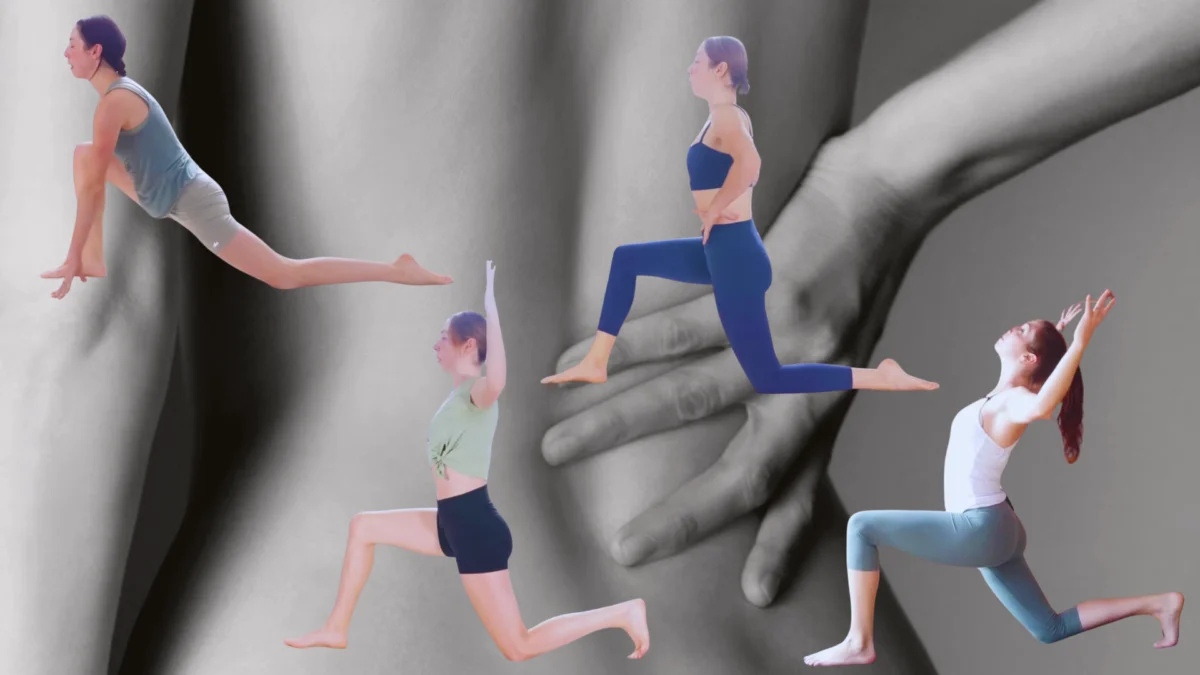
Start from a table-top position. Step one foot forward between your hands. Before you sink your hips, push down through your front heel and your back knee. This isometric action—pushing the earth away—is the "activation phase." It engages the quadriceps and prevents the joints from locking into a passive, collapsed state.
2. Finding Length (The Abdominal Connection)
As you maintain that upward energy, draw your lower abdominals in and up. This is not a "sucking in" of the belly, but a firming of the core wall. As you lift through the torso, imagine your tailbone growing long toward the back knee. You will immediately feel a more intense, yet safer, stretch in the front of the back leg’s hip.
3. The Vertical Expression
Lengthen both sides of your waist as you reach your arms upward. The goal here is to grow taller rather than to lean back. If you choose to gaze upward, ensure that the lift is coming from the thoracic (upper) spine, not the lumbar (lower) spine.
4. The Backbend (Optional)
If you wish to introduce a backbend, keep the engagement in your core constant. Bend your elbows into a "cactus" shape and focus on lifting your heart center toward the ceiling. If you feel any pinching in your lower back, back off immediately. Remember: the depth of the backbend is secondary to the length of the spine.
Expert Perspectives: Insights from Yoga Educators
Yoga educators, such as Kassandra Reinhardt of Yoga With Kassandra, emphasize that the transition into a pose is as important as the final expression. In her tutorials, she highlights that many students fail because they enter the pose passively.
"The moment you stop engaging your quads, you lose the support system for your pelvis," notes the consensus among modern movement specialists. When the muscles surrounding the pelvis are active, they act as a "girdle," protecting the lumbar spine from the forces of gravity.
Official guidance from the yoga community suggests that for students with existing back pain, using props—such as blocks under the hands—can be transformative. By elevating the torso, the student can maintain a neutral, upright spine, which prevents the temptation to collapse into the lumbar curve.
Implications for Long-Term Spinal Health
The implications of improper form in yoga go beyond a single uncomfortable class. Chronic compression of the lumbar spine can lead to long-term wear and tear on the vertebral discs. Conversely, a practice that emphasizes "functional alignment" builds resilience.
Building Resilience
When you practice Low Lunge with intentional engagement, you are not just stretching; you are strengthening the stabilizers of the pelvis. Over months and years, this leads to:
- Improved Postural Habits: The ability to maintain a neutral pelvis translates into better posture when sitting at a desk or standing.
- Reduced Psoas Tension: A properly stretched psoas relieves the constant pulling sensation on the lower back.
- Increased Body Awareness: Learning to identify when you are "hanging" in a pose versus "working" in a pose is a skill that prevents injury in every other aspect of life.
The Shift in Philosophy
The transition from a "results-oriented" practice to a "process-oriented" practice is essential. If your goal is to have your hips touching the floor, you will likely sacrifice your spine to get there. If your goal is to maintain the integrity of your spine while exploring the limits of your flexibility, you will find that the "depth" of the stretch becomes a byproduct of your structural alignment rather than the end goal.
Conclusion: Refining Your Practice
Low Lunge is a testament to the fact that simple movements often require the most complex awareness. By shifting your focus from how low your hips can go to how long your spine can stay, you protect your body from the very issues yoga is meant to heal.
Next time you find yourself on your mat, pause before you sink into that lunge. Engage your legs, lengthen your tailbone, and draw your core inward. By choosing integrity over intensity, you ensure that your practice remains sustainable, safe, and profoundly effective for years to come.
For more guided instruction and to keep your practice accessible on the go, consider utilizing resources like the Outside+ app, which offers extensive video libraries to help you refine your form and deepen your understanding of yoga biomechanics.