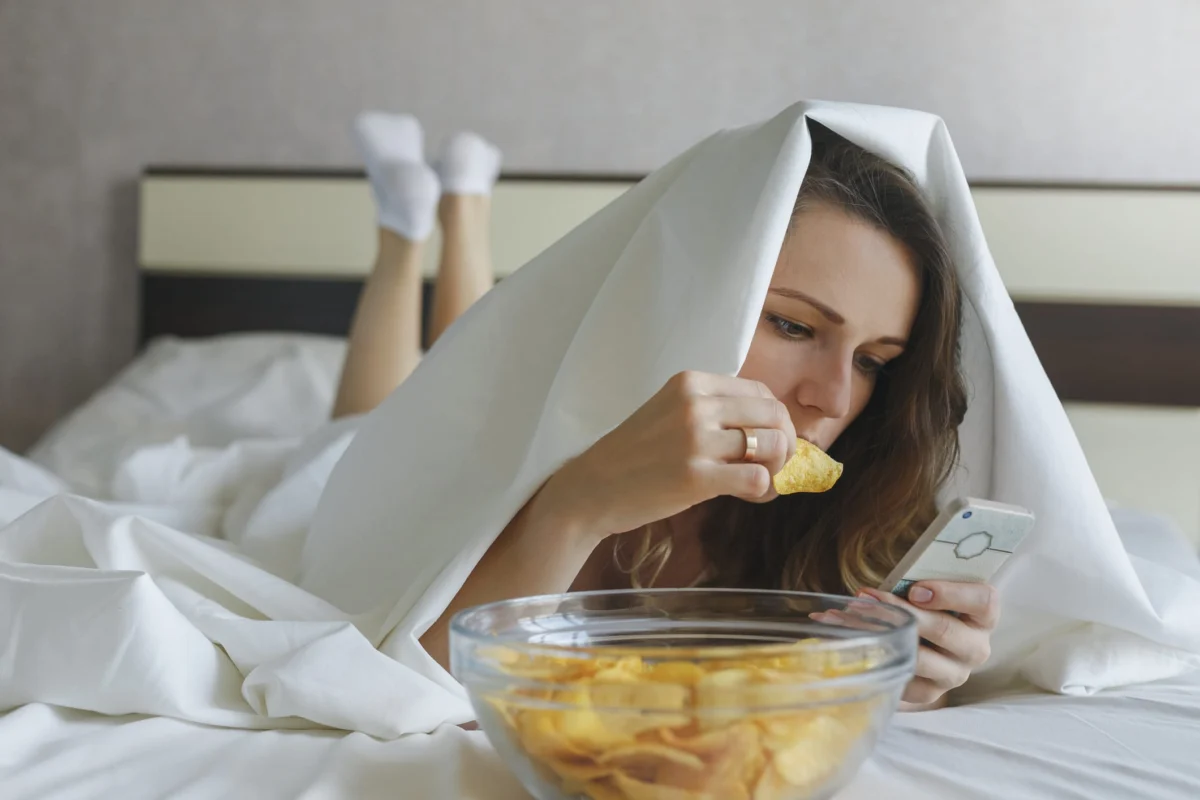
For generations, the archetypal image of a restless night involved a person staring at the ceiling, mind racing with the anxieties of the day, counting sheep to stave off the intrusive thoughts of tomorrow’s to-do list. However, a seismic shift has occurred in the nocturnal habits of young adults. According to a new study conducted by the healthy eating app Lifesum, the primary barrier to a restorative night’s sleep for Gen Z and millennials is no longer the existential weight of stress or overthinking—it is the hypnotic pull of the smartphone.
The research paints a stark picture of a generation tethered to digital stimuli well into the early hours of the morning, prioritizing viral video feeds over circadian hygiene. This phenomenon, which researchers are calling "TikTok snacking," is fundamentally altering how young people interact with their beds, their diets, and their mental recovery.
The Decline of the Quiet Night: Main Facts and Findings
The data collected by Lifesum reveals that for nearly one-third (29.5%) of young adults, the most significant disruptor to their sleep quality is the habit of scrolling through TikTok. This figure notably eclipses the 19.4% of respondents who identified stress and overthinking as their primary sleep hurdles.
The sheer prevalence of this behavior is alarming. Nearly half (47.9%) of Gen Z and millennials report scrolling through social media while in bed every single night. A further 17.6% admit to engaging in this behavior several nights per week. The smartphone, once a tool for communication and utility, has become a permanent, glowing fixture in the bedroom—a device that serves as both a sleep-prevention mechanism and a source of nocturnal distraction.
Beyond the screen time itself, the study highlights a troubling intersection between digital consumption and dietary choices. Approximately 60.1% of Gen Z users reported eating while using TikTok in the evening. This behavior—dubbed "TikTok snacking"—sees individuals mindlessly consuming food while their attention is captured by short-form video content. This dual-tasking approach to the evening hours appears to be driven by a desire for comfort rather than physiological hunger, as snack choices were split almost evenly between sweet (28.8%) and savory (28.9%) options.
A Chronology of the Nocturnal Shift
To understand how we reached this point, one must look at the evolution of the "pre-sleep" ritual. Historically, the hour before sleep was reserved for wind-down activities: reading a book, listening to music, or light conversation. The rise of high-speed mobile internet and the algorithmic brilliance of platforms like TikTok have effectively colonized this "buffer zone."
- The Pre-Digital Era: Sleep hygiene was primarily influenced by environmental factors (light, noise, temperature) and physiological states (stress, caffeine).
- The Early Smartphone Era: Screens were introduced to the bedroom, but primarily for utility—checking emails or setting alarms.
- The Algorithmic Era: With the rise of "infinite scroll" interfaces, the dopamine feedback loop became the dominant force. The brain is no longer "shutting down" for sleep; it is being actively stimulated by personalized content designed to maximize engagement, effectively keeping the user in a state of high alertness long after they should have turned out the lights.
- The Integration Phase: The current stage, identified by Lifesum, sees the convergence of eating and entertainment. The smartphone has become the centerpiece of the evening meal, replacing the dining table and, eventually, the sleep cycle.
Supporting Data: The Anatomy of Sleep Disruption
While digital routines have taken center stage, the study also highlights a complex ecosystem of factors currently undermining the sleep of young adults.
Caffeine and Substance Use
While social media is the new disruptor, traditional antagonists remain potent. Caffeine was cited by 33.1% of respondents as their most significant sleep factor. Furthermore, alcohol consumption continues to be a major contributor to poor sleep quality. Over a quarter (25.3%) of participants admitted to consuming alcohol within three hours of bedtime almost every night, with an additional 35.7% doing so two to three nights per week. The physiological impact of alcohol—which fragments sleep and prevents the body from entering deep, restorative REM cycles—is clearly ignored by a significant portion of this demographic.
Environmental and Emotional Variables
The study also highlights that for many, the bedroom is no longer a sanctuary. Nearly half (47.7%) of respondents reported that sleeping with pets disrupts their sleep, suggesting that our furry companions, while beloved, may be interfering with the quality of our rest. Additionally, while social media may be the primary barrier, emotional turbulence remains a persistent threat. More than half of those surveyed reported that stress, overthinking, or interpersonal arguments regularly interfere with their ability to fall asleep, with 14.2% experiencing these disturbances on a near-nightly basis.
Official Perspectives and Expert Analysis
Victoria Strandlund, a nutritionist at Lifesum, emphasizes that the modern sleep crisis is a symptom of a broader issue: the erosion of the boundary between our waking lives and our need for recovery.
"Sleep no longer offers a break from the day," Strandlund noted in a press release accompanying the study. "Instead, increasing numbers of young adults are affected by modern life, shaped by screens, stress, and constant stimulation. We are witnessing a cycle where the very tools meant to entertain us are actively preventing the biological processes required for health."
Strandlund’s recommendation is rooted in mindfulness and behavioral adjustment. She suggests that "small behavioral changes—particularly reducing late-night screen use and being mindful of nutrition—can significantly improve sleep quality." The goal is not necessarily to ban technology entirely, but to re-establish the bedroom as a space for recovery rather than an extension of the digital workspace or social arena.
In response to these findings, there has been a growing interest in "connected health." Lifesum has recently announced a partnership with the mental health app Calm. By combining nutritional insights with mindfulness and meditation tools, the companies hope to provide users with a roadmap for reclaiming their sleep, helping them to transition from a state of "digital snacking" to one of intentional rest.
Implications: The Long-Term Cost of Poor Sleep
The implications of this "digital insomnia" extend far beyond the morning fog of a tired individual. Chronic sleep deprivation is linked to a host of long-term health issues, including metabolic disorders, weakened immune systems, cardiovascular disease, and heightened mental health risks such as anxiety and depression.
The "TikTok snacking" phenomenon is particularly concerning because it creates a double-negative effect. Not only does the blue light from screens suppress melatonin production—the hormone essential for sleep onset—but the act of late-night eating, particularly with high-sugar or high-salt foods, places additional stress on the digestive system. This can lead to acid reflux, blood sugar spikes, and disrupted metabolic health, all of which further degrade sleep quality.
Furthermore, the psychological impact of the "infinite scroll" cannot be understated. By engaging with content that is often curated for emotional resonance or shock value, the user is keeping their brain in a state of cognitive arousal. When they finally attempt to put the phone down, the brain is often too "wired" to settle, creating a cycle of frustration that often leads the user right back to the phone for distraction.
Moving Toward a Better Night’s Rest
The findings from the Lifesum study serve as a wake-up call for a generation that has grown up with the internet in their pockets. The data makes it clear: the path to better sleep lies in reclaiming the final hour of the day.
Experts suggest a few key strategies to combat these modern barriers:
- The Digital Sunset: Establishing a hard cut-off time for social media usage, ideally 60 minutes before bedtime.
- The Dining Boundary: Moving eating habits out of the bedroom and away from the screen to encourage mindful eating and improve digestion.
- Sanctuary Spaces: Treating the bedroom as a sacred space for rest, which may involve removing pets or using analog alarm clocks to avoid the temptation of the phone.
- Mindfulness over Distraction: Replacing the infinite scroll with activities that require less cognitive engagement, such as reading a physical book or practicing gentle stretching.
As the lines between work, play, and rest continue to blur, the challenge for Gen Z will be to exert agency over their own downtime. While TikTok may be designed to capture attention indefinitely, the biological necessity of sleep is a force that cannot be negotiated. Recognizing that our evening habits are being hijacked is the first step toward reclaiming a healthy, restorative night’s sleep.