











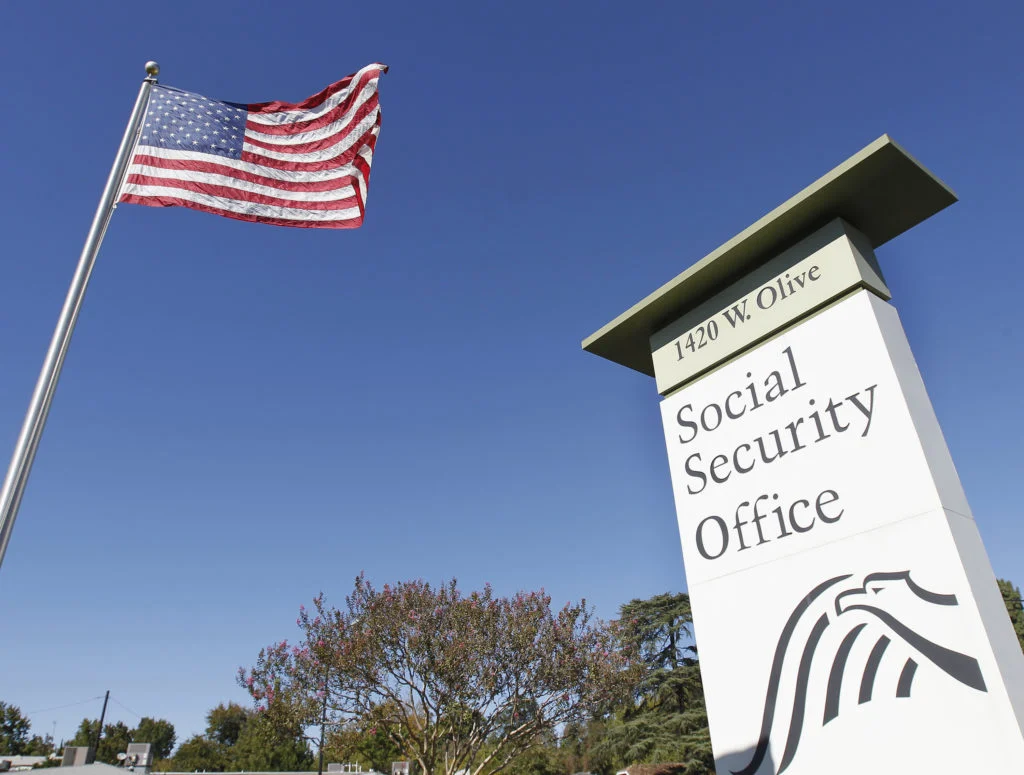
WASHINGTON — In an era defined by political volatility and economic recalibration, the structural foundations of America’s social safety net are facing their most significant stress test in nearly a century. An annual report released Tuesday by the Social Security and Medicare Boards of Trustees paints a sobering picture of the nation’s two most vital entitlement programs. According to the findings, the Social Security retirement trust fund is projected to face a funding shortfall by 2032—a full year earlier than previously estimated—while the Medicare hospital insurance trust fund remains on a precarious trajectory toward insolvency by 2033.
These projections, which arrive against a backdrop of shifting demographic trends and contentious economic policy, underscore a reality that policymakers have long acknowledged but consistently failed to address: the math governing America’s social contract is becoming increasingly unsustainable.
The Core Data: Understanding the Insolvency Timeline
To grasp the severity of the situation, one must first distinguish between "insolvency" and "collapse." The trustees’ report is careful to clarify that the depletion of these trust funds does not mean the programs will cease to exist or that payments will vanish entirely. Instead, insolvency marks the point at which the dedicated tax revenue flowing into these funds will no longer be sufficient to cover 100% of the benefits mandated by law.
Social Security’s Shrinking Runway
The combined trust funds for Old-Age and Survivors Insurance (OASI) and Disability Insurance (DI) are currently projected to reach a point where they can no longer pay full benefits by 2034. Once the reserves are exhausted, the system will shift to a "pay-as-you-go" model, where incoming tax revenue is projected to cover only about 83% of scheduled benefits. This would result in an immediate, mandatory reduction in payments for millions of retirees—an outcome that would represent the largest involuntary cut to household income in American history.
The Medicare Impasse
Medicare’s Hospital Insurance (HI) trust fund, which finances Part A coverage for inpatient hospital care, is currently projected to be unable to pay full benefits by 2033. This estimate remains unchanged from the previous year, though the program remains under constant pressure from rising healthcare costs and an aging population that is living longer than previous generations. With over 70.1 million Americans currently enrolled in Medicare, the scale of this fiscal challenge is unprecedented.
A Chronology of Decline: How We Got Here
The financial health of these programs is not a static figure; it is a reflection of the nation’s broader economic and social health.
- The 1983 Reform Era: The last time the federal government enacted significant, lasting reform to Social Security was roughly 40 years ago. During that period, the eligibility age for full benefits was raised from 65 to 67, a move that successfully shored up the system for several decades.
- The Mid-2010s: For many years, the depletion dates for these programs were pushed further into the future as the economy stabilized. However, the last decade has seen a consistent contraction in those timelines.
- The 2024-2025 Period: The latest report highlights a "perfect storm" of negative indicators. Lower projected birth rates have reduced the ratio of workers paying into the system compared to those drawing from it. Simultaneously, reduced levels of immigration have stunted the growth of the workforce.
- The Impact of Recent Legislation: The report explicitly points to the costs associated with the massive tax and spending bill signed into law by President Donald Trump last summer. By reducing the overall revenue flowing into the trust funds, the legislation has accelerated the exhaustion of reserves, according to the trustees.
Official Responses and Political Posturing
The release of the report has triggered a predictable, yet intensified, round of finger-pointing in the nation’s capital.
Social Security Commissioner Frank Bisignano, representing the administration, sought to frame the issue through the lens of program integrity. "The administration remains steadfastly committed to protecting and strengthening Social Security," Bisignano said in a statement. He emphasized a focus on "eliminating waste, fraud, and abuse" as a primary mechanism for preserving the program’s long-term viability.
However, critics argue that such measures are insufficient to address the structural deficit. Nancy Altman, president of the advocacy group Social Security Works, offered a scathing critique of the current administration’s role in the shortfall. "The latest report takes into account the policies of Donald Trump’s second term," Altman noted. "A tax bill that disproportionately benefited the wealthy, combined with economy-wrecking tariffs and a hostile stance toward immigration, has systematically drained the resources intended for the American worker."
Altman and other advocates argue that the shortfall is not an inevitable demographic destiny, but rather a policy choice. By choosing to prioritize tax cuts over the strengthening of the social safety net, they argue, the government has essentially borrowed from the future of current retirees to fund present-day political agendas.
The Economic and Societal Implications
The potential implications of these shortfalls extend far beyond the balance sheets of federal agencies. For the 70 million Americans reliant on Medicare and the millions more drawing Social Security, the uncertainty creates a climate of anxiety.
The "Wake-Up Call" for Congress
AARP CEO Myechia Minter-Jordan did not mince words in her response to the report. "This should be a wake-up call," she said. "Americans have worked hard and paid into Social Security their entire lives, and they deserve to count on it when they retire. No family should see any cuts to what they’ve earned."
The pressure on Congress is mounting, yet the political incentives for reform remain toxic. Any meaningful fix—whether it involves raising the retirement age, increasing the payroll tax cap, or reducing benefits for high-earners—is likely to alienate a significant portion of the voting base. Consequently, lawmakers have historically opted to delay action, "kicking the can down the road" to be handled by the next generation of representatives.
The Demographic Reality
The fundamental issue remains that the ratio of workers to beneficiaries is shrinking. When Social Security was first established 90 years ago, the demographic pyramid was robust, with many workers supporting each individual retiree. Today, that pyramid has inverted. As the "Baby Boomer" generation exits the workforce, the strain on the system intensifies, and without significant immigration or a surge in domestic birth rates, the tax base remains stagnant.
Conclusion: A Test of Democratic Governance
The trustees—comprising the Treasury Secretary, the Labor Secretary, the Secretary of Health and Human Services, and the Social Security Commissioner—have made it clear that the time for incremental adjustments is drawing to a close. The latest findings serve as a stark reminder that Social Security and Medicare are not just line items in a budget; they are the pillars upon which the American middle class relies for dignity in retirement.
The question moving forward is whether the legislative branch can transcend partisan divides to engage in a comprehensive, long-term stabilization plan. As the 2032 and 2033 deadlines loom, the cost of inaction grows daily. The debate will inevitably revolve around competing visions of fiscal responsibility, tax policy, and the role of government.
For the average American, the message from the report is clear: the system is fraying. Whether it is mended through structural reform or left to face the inevitability of reduced benefits will depend on the political courage of those currently sitting in the halls of power. As the report concludes, these programs have faced dire projections for decades, but the window to act—without inflicting severe hardship on the most vulnerable—is narrowing rapidly. The future of American retirement is currently in the balance, awaiting a resolution that has been deferred for far too long.