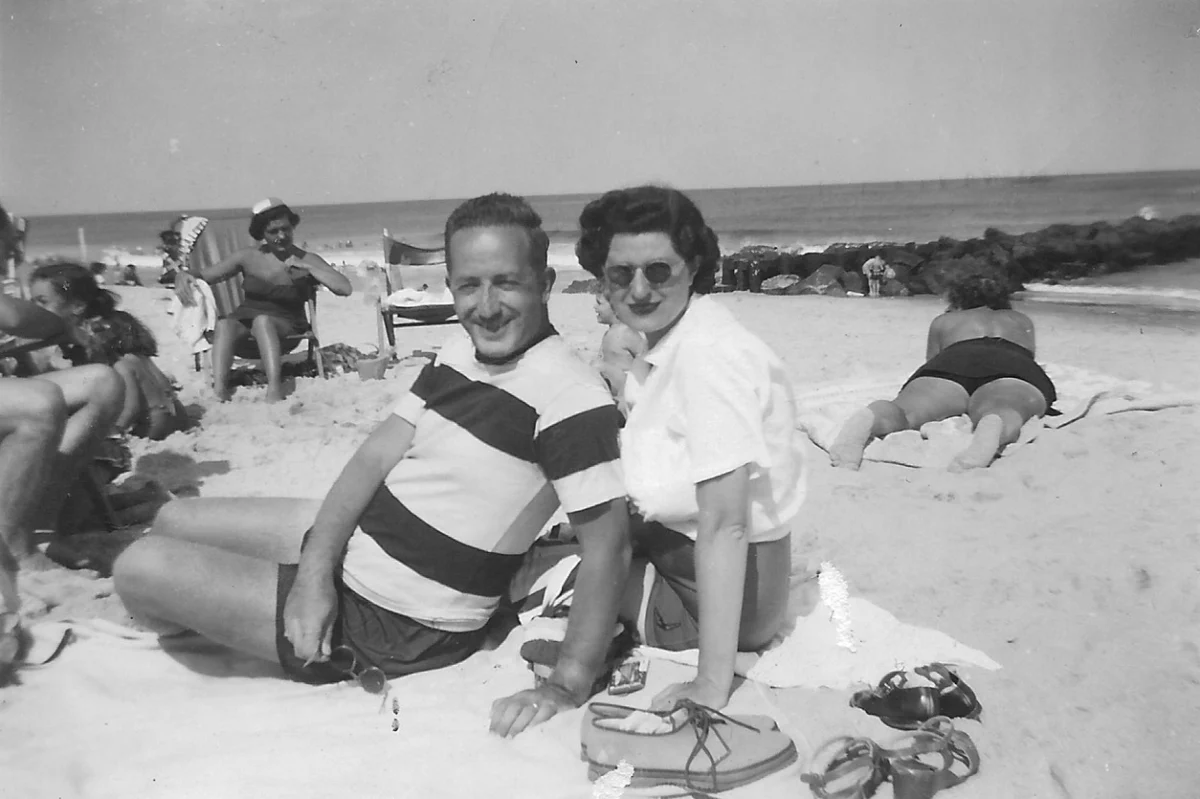
Main Facts: The Life and Institutionalization of Morton Rosenthal
The narrative of mental healthcare in 20th-century America is often told through cold statistics and policy shifts, but the human cost is best understood through the lived experiences of those caught in the transition between private care and the "snake pits" of state institutions. The story of Morton Rosenthal (1910–1969) serves as a poignant microcosm of this era.
Morton Rosenthal was a man whose life was bifurcated by a diagnosis of schizophrenia. A "snappy dresser" and a devoted father in his early years, he spent the final two decades of his life incarcerated at the Essex County Hospital Center, commonly known as Cedar Grove, in New Jersey. His journey—from a bustling family life in Newark to a terminal stay in a state psychiatric ward—highlights the limitations of mid-century "state-of-the-art" treatments, including unregulated electroshock therapy (ECT) and the eventual shift to purely custodial care.
Today, his son, Arthur Rosenthal—now a therapist himself—has reconstructed his father’s history from fragmented memories and genealogy records. His findings reveal not only a personal tragedy but a systemic failure where patients who did not show "clear improvement" within six months were effectively abandoned by the medical establishment.
Chronology: From the Haberdashery to the State Ward
1910–1940: The Early Years and Unspoken Grief
Morton Rosenthal was born in New York in August 1910, the youngest of what were believed to be four brothers. However, recent genealogical research by Arthur Rosenthal revealed a darker family history: Morton was actually the sixth child. Two older siblings, Irving and Moishe, had died in early childhood—tragedies that were never discussed in the family. This culture of silence and "moving on" likely shaped Morton’s psychological landscape.
Morton was known as a shy, withdrawn youth, deeply attached to his mother, Rose Rubinstein. Her early death from Type 1 diabetes was a blow from which he reportedly never fully recovered. Despite these early vulnerabilities, he entered adulthood with promise, working in his father Philip’s haberdashery store in Newark, where he became known for his impeccable style.
1941–1947: Marriage, War, and the First "Breakdowns"
During World War II, Morton worked at Newark Airport on airplane electrical systems. It was here he met and married Roslyn. At the time, Morton appeared to be a successful, vibrant man, though his brothers later revealed he had suffered a "nervous breakdown" prior to the marriage—a fact Roslyn did not fully grasp as an indicator of chronic illness.

By the time Arthur was born in the mid-1940s, Morton’s stability was fracturing. He was kind and protective—once famously stepping in to shield his son from a mother’s discipline—but he was increasingly "elsewhere." Arthur recalls his father trying to play catch in a park, but Morton’s eyes were blank, his hands unable to grasp the ball—a dissociation likely exacerbated by early antipsychotic medications.
1948–1955: The Cycle of Hospitalization
Morton’s illness was cyclical. He would maintain a semblance of normalcy for months before descending into pacing, crying, and visual hallucinations. During these years, the family relied on the financial support of Morton’s successful brothers, Sydney and Norman, who owned an insurance agency.
Morton was initially sent to Fair Oaks, a private mental hospital, for six-week intervals. These stays allowed him to return home temporarily, but the reprieve was always short-lived. Eventually, the financial burden became too great for the extended family. When Morton’s condition deteriorated again when Arthur was seven, the decision was made to commit him to the state system.
1956–1969: The Cedar Grove Years and Final Departure
Morton entered the state mental hospital in Cedar Grove, New Jersey, and never left. For the next twelve years, he was a ward of the state. The transition was brutal. The family’s visits were marked by the "snake pit" atmosphere of the era: polished linoleum, orderlies in white, and patients in various states of decompensation.
The trauma of the institution eventually led Roslyn to cut off contact with Morton’s side of the family and, eventually, Morton himself. Arthur did not see his father from age eight to eighteen. Their final meeting in 1965 was a study in tragic disconnect: Morton did not recognize his son, and his only substantive comment was a critique of Arthur’s long hair. Morton died four years later, in 1969, from head trauma sustained after falling out of a hospital bed.
Supporting Data: The "State of the Art" in Mid-Century Psychiatry
To understand Morton Rosenthal’s trajectory, one must look at the clinical environment of the 1950s. During this period, American psychiatry was in a state of flux, caught between the waning influence of psychoanalysis and the rise of "biological" interventions that were often primitive and poorly regulated.

The Role of Electroshock Therapy (ECT)
Arthur Rosenthal’s memoir notes that Morton was subjected to frequent electroshock sessions. In one instance, a private psychiatrist administered ECT and then sent Morton home on a bus alone—a practice that left him so disoriented he tried to break into the wrong apartment. Later, in the state hospital, the treatments continued until Morton’s heart stopped during a session, at which point doctors finally deemed the procedure "contraindicated."
The "Custodial Care" Policy
A critical data point in Morton’s case was the state hospital’s policy regarding psychotherapy. According to family accounts, the facility refused to provide talk therapy to patients who did not show "clear improvement" within the first six months of admission. After that window, patients were relegated to "custodial care," which consisted primarily of heavy sedation and basic maintenance. This policy effectively created a "permanent underclass" of patients who were expected to live out their lives in wards without hope of rehabilitation.
The Environment of the State Hospital
The Essex County Hospital Center during Morton’s stay was typical of the era’s overcrowded institutions. The "snake pit" description used by the family was a common cultural touchstone, popularized by the 1948 film of the same name. These institutions were often understaffed, leading to a reliance on physical restraints and chemical "straightjackets" (early antipsychotics like Thorazine, which became widely available in the mid-1950s).
Official Responses and Historical Context
While there is no specific record of an official response to Morton’s death—which was attributed to an accidental fall—the broader psychiatric establishment of the time operated under a philosophy of "social death" for the chronically ill.
The Medical Establishment’s View
In the 1950s and 60s, schizophrenia was often viewed through the lens of "refrigerator mother" theories or purely biological "deterioration." If a patient like Morton did not respond to the blunt instruments of ECT or insulin shock therapy, they were often written off as "incurable." The medical response was not to innovate treatment for the individual, but to manage the population through institutionalization.
The Shift Toward Deinstitutionalization
It is a bitter irony that Morton Rosenthal died in 1969, just as the movement toward deinstitutionalization was gaining momentum. The Community Mental Health Act of 1963, signed by John F. Kennedy, aimed to move patients out of state "warehouses" and into community-based care. However, for patients like Morton, who had already spent a decade in the system, the "community" had long since vanished. His family had moved on, and his social ties had been severed by years of "custodial" neglect.

Implications: The Legacy of Institutional Silence
The story of Morton Rosenthal carries profound implications for our understanding of mental health, family systems, and the evolution of care.
Intergenerational Trauma and Erasure
One of the most striking aspects of Morton’s story is the "erasure" that occurred. To protect the child (Arthur) and the surviving spouse (Roslyn), the sick father was treated as if he had already died. This "living ghost" phenomenon was a common coping mechanism in the mid-20th century, driven by the intense stigma surrounding schizophrenia. The discovery of the "lost" siblings, Irving and Moishe, further suggests a family pattern of dealing with tragedy through total silence—a pattern that Arthur, as a therapist, identifies as a barrier to healing.
The Ethics of "Custodial Care"
The policy of withdrawing active treatment after six months remains a haunting reminder of the dangers of resource-based medicine. When a healthcare system decides that a human being is "no longer worth the effort" of psychotherapy or rehabilitative care, it ceases to be a medical system and becomes a carceral one. Morton’s death from a fall in a state ward was the logical conclusion of a system that had stopped seeing him as a person decades earlier.
The Importance of Narrative Reconstruction
For Arthur Rosenthal, the process of writing his father’s memoir is an act of "personal growth" and a gift to his adult children. It serves as a necessary correction to the "state of the art" that failed Morton. By reconstructing the narrative of the "snappy dresser" who loved silk ties and protected his son, Arthur restores the humanity that the state hospital system stripped away.
In conclusion, Morton Rosenthal’s life was not just a medical failure; it was a casualty of an era that chose incarceration over compassion. His story stands as a testament to the thousands of "forgotten" patients of the mid-century state hospital system, reminding us that behind every clinical diagnosis is a complex human history that deserves to be remembered.