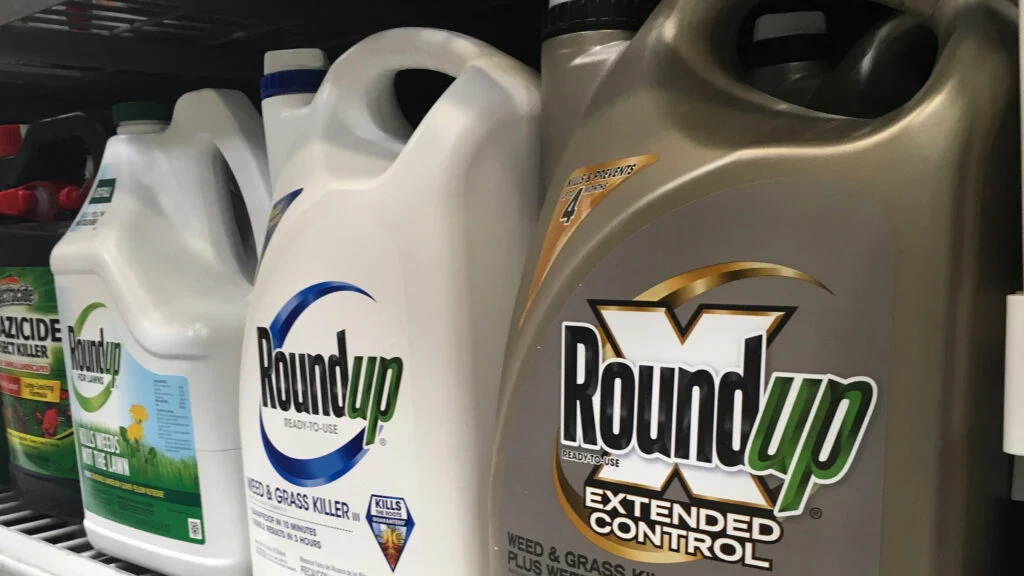
WASHINGTON — In a sweeping decision that fundamentally alters the landscape of toxic tort litigation, the U.S. Supreme Court ruled on Thursday that agrochemical giant Bayer AG cannot be held liable in state courts for failing to warn consumers that its flagship weedkiller, Roundup, might cause cancer. The 7-2 ruling marks a significant victory for the company, effectively curbing a decade-long wave of litigation that has seen billions of dollars in jury verdicts against the German multinational.
The court’s decision hinges on the principle of federal preemption. The justices found that because the Environmental Protection Agency (EPA) has consistently concluded that glyphosate—the active ingredient in Roundup—is unlikely to cause cancer in humans, and because the agency did not require a cancer warning on the product’s label, state-level lawsuits alleging a "failure to warn" are effectively superseded by federal regulatory standards.
For Bayer, which acquired the Monsanto brand—the original producer of Roundup—in 2018 for $63 billion, the ruling provides a long-sought regulatory shield. However, the victory arrives amidst a complex political backdrop, as the company faces a public health movement that is increasingly skeptical of industrial chemical use.
The Legal Battlefield: A Chronology of Conflict
The litigation against Monsanto and subsequently Bayer has been one of the most contentious chapters in American corporate history. The conflict began in earnest after 2015, when the World Health Organization’s International Agency for Research on Cancer (IARC) classified glyphosate as "probably carcinogenic to humans." This classification triggered a seismic shift in public perception and a rush to the courthouse.
- 2015: The IARC releases its report, casting doubt on the safety of glyphosate.
- 2018: A California jury awards Dewayne Johnson, a school groundskeeper, $289 million (later reduced) after finding that Roundup contributed to his terminal non-Hodgkin’s lymphoma.
- 2019–2021: Massive, headline-grabbing verdicts continue to pile up, with some totaling billions of dollars, though many are later slashed by trial judges.
- 2020: Bayer announces a massive $16 billion settlement plan to resolve roughly 125,000 pending and future claims.
- 2024–2025: The Supreme Court agrees to hear the case of John Durnell, a Missouri gardener who contracted non-Hodgkin’s lymphoma after two decades of residential use, to determine if federal EPA labeling standards preempt state failure-to-warn claims.
- Thursday: The Supreme Court issues its 7-2 ruling, favoring Bayer’s argument that federal law dictates labeling requirements, thereby barring state-level litigation on the specific issue of warning labels.
Supporting Data and Scientific Divergence
The crux of the legal argument lies in a fundamental disagreement between international health bodies and U.S. federal regulators.
The EPA maintains that glyphosate is not likely to be carcinogenic when used according to label instructions. The agency has repeatedly rejected calls to mandate cancer warning labels, arguing that the scientific evidence does not support such a requirement. Bayer has leveraged this regulatory stance as its primary defense, arguing that it cannot be penalized by state courts for failing to include a warning that federal authorities explicitly deemed unnecessary.
Conversely, plaintiffs point to the IARC classification and internal documents discovered during the discovery phase of previous lawsuits. These documents, according to plaintiffs’ attorneys, suggest that Monsanto was aware of potential risks and actively sought to influence the scientific narrative surrounding glyphosate.
As of the current filing, approximately 200,000 claims have been lodged against Bayer. While the Supreme Court ruling provides a major tactical advantage for the company regarding "failure-to-warn" claims, it does not necessarily extinguish all litigation. Legal experts suggest that plaintiffs may pivot their strategy toward "design defect" claims—arguing that the product itself is inherently dangerous—rather than focusing on the adequacy of the warning label.
Official Responses and Corporate Strategy
Bayer’s executive leadership expressed relief following the decision, framing it as a triumph for regulatory consistency and scientific rigor.
"This decision is good for science, farmers, and industries that depend on regulatory clarity for innovation," the company stated in a press release. "It should help significantly contain the Roundup litigation after nearly a decade of legal battles."
Despite the ruling, Bayer remains committed to a $7.25 billion class-action settlement fund, which is intended to resolve the remaining backlog of claims. The company’s legal team is currently navigating the approval process for this settlement in Missouri state court, where a significant portion of the litigation is concentrated.
Public health advocates and environmental groups were quick to condemn the ruling. Christopher Seeger, a prominent attorney representing claimants, labeled the decision a "tragic setback" that "wrongly slams the courthouse door on Americans sickened by pesticides."
"The fact that the EPA approved a pesticide label does not mean a product is safe," said Patti Goldman, a senior attorney at the environmental advocacy group Earthjustice. "It should not become a shield for companies that fail to warn about cancer risks, neurological harm, and other serious dangers."
Broader Implications: Politics and Public Health
The Supreme Court’s decision creates a curious political paradox. While it aligns with the deregulatory philosophy often championed by corporate-friendly administrations, it sits in direct opposition to the "Make America Healthy Again" (MAHA) movement, which includes close allies of the current executive branch.
The MAHA movement, led by figures like Health Secretary Robert F. Kennedy Jr., has built a significant platform on the promise of curbing pesticide use and reforming the regulatory capture they claim exists within federal agencies like the EPA. The tension is palpable: an administration that claims to prioritize national health is now presiding over a legal environment where the Supreme Court has bolstered the legal protection of a major chemical manufacturer.
Kennedy has previously expressed skepticism toward glyphosate, suggesting that the EPA’s approval process was flawed. However, he has also acknowledged that the executive branch faces the difficult task of balancing public health concerns against the needs of the agricultural sector.
The Agricultural Dilemma
Agricultural industry groups, led by organizations like the Missouri Farm Bureau, have lauded the ruling. They argue that Roundup is an essential tool for modern farming, enabling efficient weed management, soil conservation, and affordable food production.
"Today’s decision protects our access to the tools that let us care for our soil, protect our crops, and keep food affordable for your family and mine," said Blake Hurst, a former president of the Missouri Farm Bureau.
The threat of litigation has already forced Bayer to pivot its business model; the company has stopped selling glyphosate-based Roundup for the residential lawn and garden market in the United States. However, it continues to defend the product’s use in industrial agriculture. The company has warned that if it cannot find relief from the constant threat of state-court litigation, it might be forced to withdraw glyphosate from the agricultural market entirely, a move that experts say would send shockwaves through the global food supply chain.
Conclusion: A Shift in the Legal Tide
The Supreme Court’s ruling does not end the debate over the safety of Roundup, nor does it provide a definitive scientific verdict on the link between glyphosate and cancer. Instead, it clarifies the jurisdictional boundaries between federal regulatory authority and state-level tort law.
For thousands of plaintiffs like John Durnell, the decision represents a significant barrier to seeking redress through the court system. For Bayer, it offers a path toward ending a period of intense legal instability. As the dust settles, the focus will likely shift from the courtroom to the halls of Congress and the regulatory offices of the EPA, where the struggle over the future of chemical regulation—and the competing interests of corporate profitability and public health—is set to continue for the foreseeable future.