As the global population ages, the medical community has shifted its focus from reactive treatment to proactive, secondary prevention of neurodegenerative diseases. A landmark longitudinal study conducted in Sweden, published in JAMA Network Open, provides compelling evidence that dietary choices may serve as a critical lever for individuals who already show early biological indicators of Alzheimer’s disease.
The study, which tracked nearly 1,900 older adults over eight years, suggests that adopting an anti-inflammatory dietary pattern—one rich in whole foods and low in processed sugars and meats—can significantly reduce the risk of developing dementia, even among those who already possess specific blood-based biomarkers associated with neurological decline.
Main Facts: A New Frontier in Neuro-Nutrition
For years, the scientific consensus has emphasized that a healthy diet is beneficial for brain health. However, a lingering question has persisted: Does "eating right" still matter once the biological machinery of Alzheimer’s has begun to churn?
The research team, led by Anja Mrhar, MSc, of the Karolinska Institutet and Stockholm University, investigated whether specific dietary patterns could influence outcomes for individuals with elevated levels of p-tau217, neurofilament light chain (NfL), and glial fibrillary acidic protein (GFAP). These biomarkers are key indicators of Alzheimer’s-related pathology, neuronal injury, and glial activation—processes that often precede the clinical onset of dementia by years.
The study’s core finding is that adherence to an anti-inflammatory eating pattern—quantified by the Empirical Dietary Inflammatory Index (EDII)—is associated with a substantial reduction in the risk of dementia. Unlike generic "healthy eating" guidelines, the EDII is an empirically derived metric that evaluates how dietary patterns influence systemic inflammation, a known driver of neurodegeneration.
Chronology: Following the Swedish Cohort
To reach these conclusions, the researchers utilized data from the Swedish National Study on Aging and Care in Kungsholmen (SNAC-K). The cohort consisted of 1,865 participants who were dementia-free at the study’s inception. With a mean age of 70.5 years, the group was predominantly female (60.3%).
The Timeline of Observation
- Baseline: Researchers established the participants’ dietary habits using a detailed 98-item food frequency questionnaire. Simultaneously, they performed baseline blood measurements of p-tau217, NfL, and GFAP to establish the participants’ biological risk profiles.
- Ongoing Monitoring: The study conducted comprehensive follow-up visits at the three-year and six-year marks to track changes in cognitive health and dietary adherence.
- Final Assessment: Over an average follow-up period of 8.4 years, 240 participants received a formal diagnosis of dementia. These diagnoses were made by two independent physicians who reviewed clinical examinations, comprehensive medical records, and, where applicable, death certificates to ensure diagnostic accuracy.
By linking longitudinal dietary data with standardized clinical outcomes, the team was able to map how sustained nutritional choices interact with baseline physiological risk.
Supporting Data: Quantifying the Protective Effect
The statistical analysis revealed a clear, inverse relationship between the quality of the diet and the risk of cognitive decline. Each z-score increase in adherence to an anti-inflammatory eating pattern was correlated with a lower dementia risk. The results were particularly striking when segmented by the presence of specific biomarkers:
- Elevated p-tau217: Participants with these markers who followed a low-inflammatory diet saw their dementia risk drop by 29% (HR 0.71, 95% CI 0.58-0.88).
- Elevated NfL: Individuals with markers of neuronal injury experienced a 21% lower risk (HR 0.79, 95% CI 0.66-0.95).
- Elevated GFAP: Those showing signs of glial activation benefited from a 27% reduction in risk (HR 0.73, 95% CI 0.60-0.89).
Perhaps most notably, for those with elevated p-tau217, high adherence to an anti-inflammatory diet was associated with living nearly one additional year (0.89 years) free from the symptoms of dementia compared to those with lower adherence.
Comparing Dietary Patterns
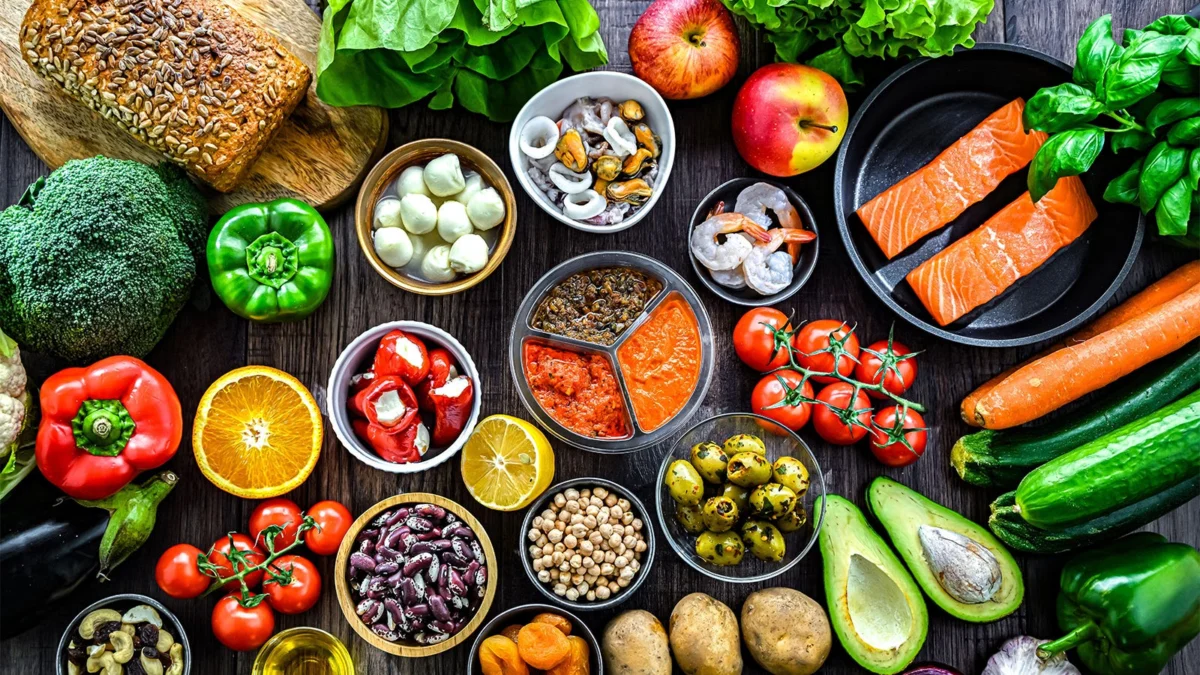
The study also evaluated the Alternate Mediterranean Diet and the Alternative Healthy Eating Index. Interestingly, these patterns were found to be protective primarily in individuals with lower baseline biomarker levels. This suggests that while Mediterranean-style diets are excellent for general health, the "anti-inflammatory" dietary approach may be more potent for those already displaying early signs of neuro-biological distress. All three patterns emphasized the consumption of vegetables, fruits, nuts, and whole grains while strictly limiting processed sugars and red meats.
Official Responses and Expert Perspective
The medical community has greeted the study with cautious optimism, noting that it provides a necessary evidence base for future clinical interventions.
In an accompanying editorial, Sokratis Charisis, MD, of Harvard Medical School, and Nikolaos Scarmeas, MD, MS, PhD, of the National and Kapodistrian University of Athens, emphasized the significance of these findings. They noted that as blood-based Alzheimer’s tests become more accessible and accurate, the ability to identify "at-risk" individuals has increased, but the ability to intervene has lagged.
"The results of this study represent an important step in this direction," the authors wrote. They argued that these findings "lay the groundwork for future clinical trials to test certain dietary interventions… as effective strategies for cognitive decline and dementia prevention."
However, lead researcher Anja Mrhar remains measured in her interpretation. "Overall, the findings do not prove that diet prevents dementia," she told MedPage Today. "Rather, they suggest that diet quality may remain relevant for dementia risk even when early biological signs of increased risk are already detectable."
Implications: A Shift Toward Precision Nutrition
The implications of this study are profound for both public health policy and individual patient care.
For Public Health
The study underscores the necessity of moving away from "one-size-fits-all" nutritional advice. If different biological profiles respond better to different dietary interventions, public health messaging could eventually shift toward "precision nutrition"—where recommendations are tailored to a patient’s specific biomarker profile.
For Clinical Practice
For physicians, these findings provide a non-pharmacological tool to discuss with patients who show early, asymptomatic signs of Alzheimer’s. While diet cannot reverse established structural damage, it may be a powerful tool for extending the "healthspan" of the brain, pushing the onset of symptomatic dementia further into the future.
Addressing Limitations
The researchers were careful to acknowledge the limitations of their work. The study relied on self-reported dietary data, which is prone to recall bias. Furthermore, the biomarkers were measured in serum rather than cerebrospinal fluid, and the observational nature of the study means that while a correlation is clear, a direct causal link cannot be definitively proven without randomized controlled trials.
The Road Ahead
As the global healthcare system struggles to manage the economic and social burden of dementia, the prospect of using diet to modulate the progression of neurodegenerative disease is highly attractive. The Swedish cohort study provides the strongest evidence to date that our plates may hold more power over our neurological destiny than previously thought.
The next phase of research will likely involve formal, large-scale clinical trials designed to test these dietary patterns under controlled conditions. Until then, the message for the aging population is clear: reducing inflammation through thoughtful, plant-forward, and nutrient-dense eating is not just a general recommendation for longevity—it may be a targeted defense strategy against the onset of Alzheimer’s disease.