











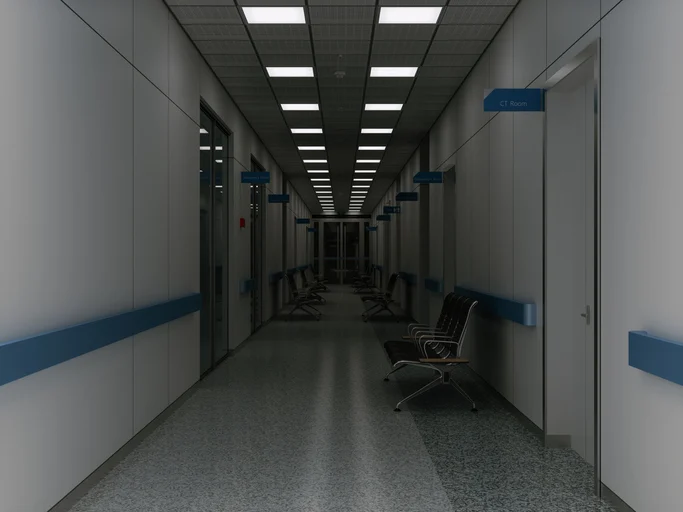
For years, the primary barometer for the health of the American medical landscape has been the "hospital closure" count. Headlines frequently broadcast the final shuttering of rural and safety-net facilities, painting a picture of an industry collapsing in sudden, dramatic fashion. However, according to industry experts, this metric is fundamentally flawed. By focusing solely on total closures, policymakers, analysts, and the public are missing the much more pervasive—and perhaps more dangerous—crisis unfolding in slow motion: the quiet, systematic hollow-out of essential medical services.
Duane Fitch, a partner and leader of the national healthcare management division at Plante Moran, argues that the binary "open vs. closed" narrative masks the reality of a sector in decline. "If you just look at the metric of hospitals closing, you will miss the big picture," Fitch asserts. The reality is that for every facility that bolts its doors, dozens more are undergoing a process of "service shedding"—a clinical cannibalization where hospitals strip away vital departments to stay solvent, often leaving communities with little more than an emergency room and a shell of a building.
The Anatomy of a Slow-Motion Crisis
The narrative of a hospital being "full-service on Monday and closed on Tuesday" is, according to Fitch, a myth. In reality, the deterioration of a healthcare facility is a grueling, multi-year process of financial triage.
"There’s a lot of downsizing before [a final closure]," Fitch notes. "It is a long process of continually evaluating what services can be provided within the budget and eliminating services that cannot. Just because a hospital is open doesn’t mean it’s financially sustainable."
This erosion usually begins with the departments that are most expensive to run or have the lowest reimbursement-to-cost ratios. Obstetrics and labor and delivery units are frequently the first casualties. A hospital might start by downsizing its Neonatal Intensive Care Unit (NICU), followed by a reduction in labor and delivery capacity, before eventually shuttering maternal health services entirely. Once those essential services are gone, the hospital moves down the line: surgery, oncology, dialysis, inpatient rehabilitation, and finally, psychiatric care.
A Chronology of Decline
The trajectory of a failing hospital typically follows a predictable, albeit painful, timeline.
Phase 1: The "Optimization" Phase
In the early stages of financial distress, hospitals often attempt to consolidate services. This includes merging departments, reducing staff through attrition, and deferring maintenance on facilities. During this period, the hospital remains "open," but the patient experience begins to degrade.
Phase 2: The Service Shedding Phase
When operational efficiency gains fail to close the budget gap, leadership shifts to "service line optimization." This is the period where the hospital begins to shed loss-leading departments. The goal is to focus on core competencies, but this often leaves the local population without access to specialized care, forcing patients to travel hours for procedures that were previously available in their own zip codes.
Phase 3: The Critical Access Pivot
In the final years before potential closure, many facilities pivot to a "bare-bones" model. They may rely heavily on temporary staffing—"traveler" nurses and locum tenens physicians—which further inflates the cost of operations. By this stage, the hospital is often functioning more like an urgent care center than a full-service hospital, incapable of handling complex medical cases or trauma.
Phase 4: The Inevitable Sunset
Fitch observes that the cuts made during Phase 2 and 3 rarely succeed in long-term stabilization. "These types of cuts are made with the intention of stabilizing the hospital’s finances, but they rarely buy more than a little time," he explains. "It’s more common that these service cuts delay the inevitable rather than prevent it."
Supporting Data: Why the Vulnerable Stay Vulnerable
The geography of this crisis is not random. The facilities most at risk are concentrated in two areas: critical access hospitals in rural regions and safety-net hospitals serving low-income urban populations.
The financial reality for these institutions is a "perfect storm" of economic pressures:
- Payer Mix Disparity: These facilities serve a patient population overwhelmingly covered by Medicare, Medicaid, or no insurance at all. Because these programs have historically lower reimbursement rates compared to private commercial insurance, the hospitals are essentially operating at a deficit from the moment a patient walks through the door.
- The Labor Premium: Recruiting and retaining skilled physicians and nurses in rural or distressed urban environments is a massive hurdle. To attract talent to areas with fewer amenities or higher stress, these hospitals must often pay a significant premium above what a suburban, well-funded hospital system would offer.
"You have a dynamic where provider expenses are significantly greater, and their reimbursement is significantly less," Fitch notes. This structural deficit forces administrators into a corner where they must choose between financial viability and the mission of providing comprehensive care.
Implications for Public Health and Policy
The cumulative effect of this systemic decay is a growing "healthcare desert." When a hospital eliminates oncology or psychiatric services, the burden of care is shifted onto the patients. For elderly or low-income patients without reliable transportation, a 50-mile drive to the nearest provider effectively means the loss of care entirely.
The Question of Identity
The trend begs an uncomfortable philosophical and regulatory question: If a hospital strips away the services that made it essential to the community, at what point does it cease to be a "hospital" in any meaningful sense?
"These hospitals can become unrecognizable compared to what they once were—and that is not an unusual dynamic these days," says Fitch. We are seeing the rise of "zombie hospitals"—facilities that remain on the map, maintain their license, and keep their emergency rooms open, yet provide only a fraction of the services required for a healthy community.
The Policy Gap
Current healthcare policy often focuses on the "death" of a hospital rather than the "illness" of the system. Federal funding and state-level interventions frequently trigger only when a facility is on the brink of total collapse. There is a notable lack of support for the "middle-stage" of decline—the period where strategic investment or regional consolidation could save a department before it is permanently eliminated.
The Future of Community Healthcare
As we look toward the remainder of the decade, the industry must grapple with the fact that simply keeping the lights on is not the same as providing care. If the current trajectory continues, we will see a landscape dominated by consolidated, large-scale systems in affluent areas and hollowed-out facilities in the rest of the country.
The solution, according to experts, lies in moving away from a one-size-fits-all model of hospital funding. Policies must account for the high costs of maintaining essential services in underserved areas, perhaps through adjusted reimbursement rates or public-private partnerships that incentivize keeping specialized units like obstetrics and behavioral health open.
Ultimately, the hospital crisis is not just about the buildings that disappear from the landscape. It is about the hundreds of thousands of people who find themselves in an emergency room that can no longer treat them, in a town that can no longer serve them, and in a healthcare system that measures its failures only when it is far too late to do anything about them. The erosion is silent, but the consequences are loud and echoing across the American heartland.